What Whole Home Rewiring Is and When It Matters
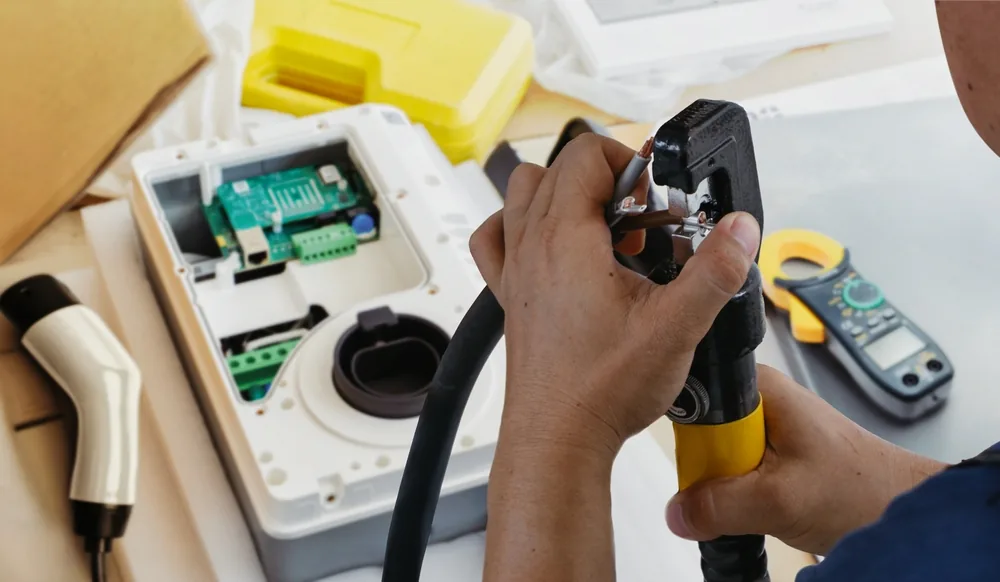
Whole home rewiring is the complete replacement of a house’s electrical wiring, panel, and protective devices so the system meets current California Electrical Code standards and safely handles modern power demands. It is not a repair. It is not a partial upgrade. It is the removal of every conductor that has outlived its safe service life and the installation of a new system designed for the way your household actually uses electricity today.
The reason this matters more in Southern California than in most parts of the country comes down to housing stock. A significant share of the homes across the region were built between the late 1920s and early 1970s, and many still carry the original wiring. That wiring was engineered for a time when the heaviest electrical load in a home was a toaster and a few ceiling lights. It was never designed for central air conditioning, EV chargers, home offices drawing constant power, or kitchens with six dedicated appliances running simultaneously.
Research from the National Fire Protection Association found that electrical failures and malfunctions were responsible for an estimated 44,880 home fires per year in the United States between 2012 and 2016, causing an average of 440 civilian deaths annually. Wiring and related equipment accounted for two-thirds of those fires involving electrical distribution and lighting. Aging wiring buried behind finished walls is especially dangerous because it can overheat for months or years before anyone detects a problem.
Types of Rewiring Services
Not every older home has the same wiring, and not every rewire starts from the same condition. The type of existing wiring determines the scope, the urgency, and the specific hazards being addressed.
Knob-and-Tube Replacement
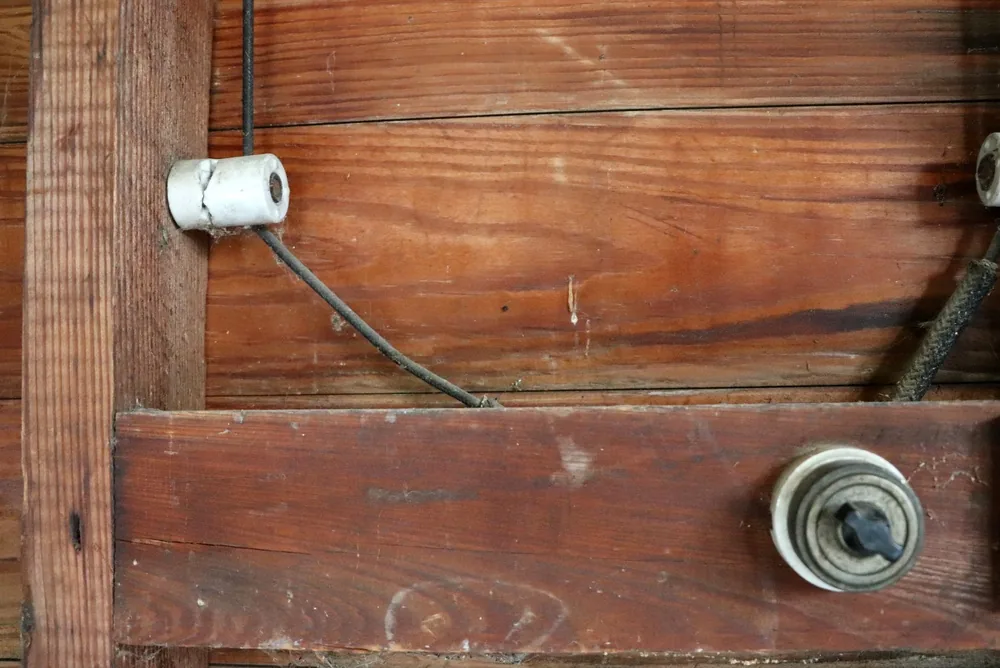
Knob-and-tube wiring was the standard in homes built before 1950. It uses individual conductors strung between ceramic knobs and tubes through open framing. The insulation was originally cloth or rubber, and after seven or eight decades it cracks, falls away, and leaves bare copper exposed inside wall and attic cavities. The wiring also carries no ground conductor, which means every outlet connected to it is ungrounded and cannot safely serve three-prong appliances or surge-sensitive electronics.
A critical issue specific to Southern California: knob-and-tube wiring cannot legally be buried in thermal insulation under the California Electrical Code. Homeowners who want to add attic or wall insulation to reduce cooling loads must first replace any active knob-and-tube runs in those cavities. This makes rewiring a prerequisite for one of the most effective energy upgrades available to older homes in the region.
Aluminum Branch Circuit Replacement
Between roughly 1965 and 1973, builders used aluminum for 15-amp and 20-amp branch circuits as a cost-saving alternative to copper. The U.S. Consumer Product Safety Commission found that homes wired with pre-1972 aluminum are 55 times more likely to have connections reach fire hazard conditions than copper-wired homes. The problem is not the aluminum conductor itself but the connections: aluminum oxidizes, expands, and contracts at a different rate than the copper or brass terminals it is attached to, and over decades those connections loosen and overheat. A full replacement removes the aluminum branch circuits entirely and replaces them with copper.
Panel Upgrade and Service Expansion
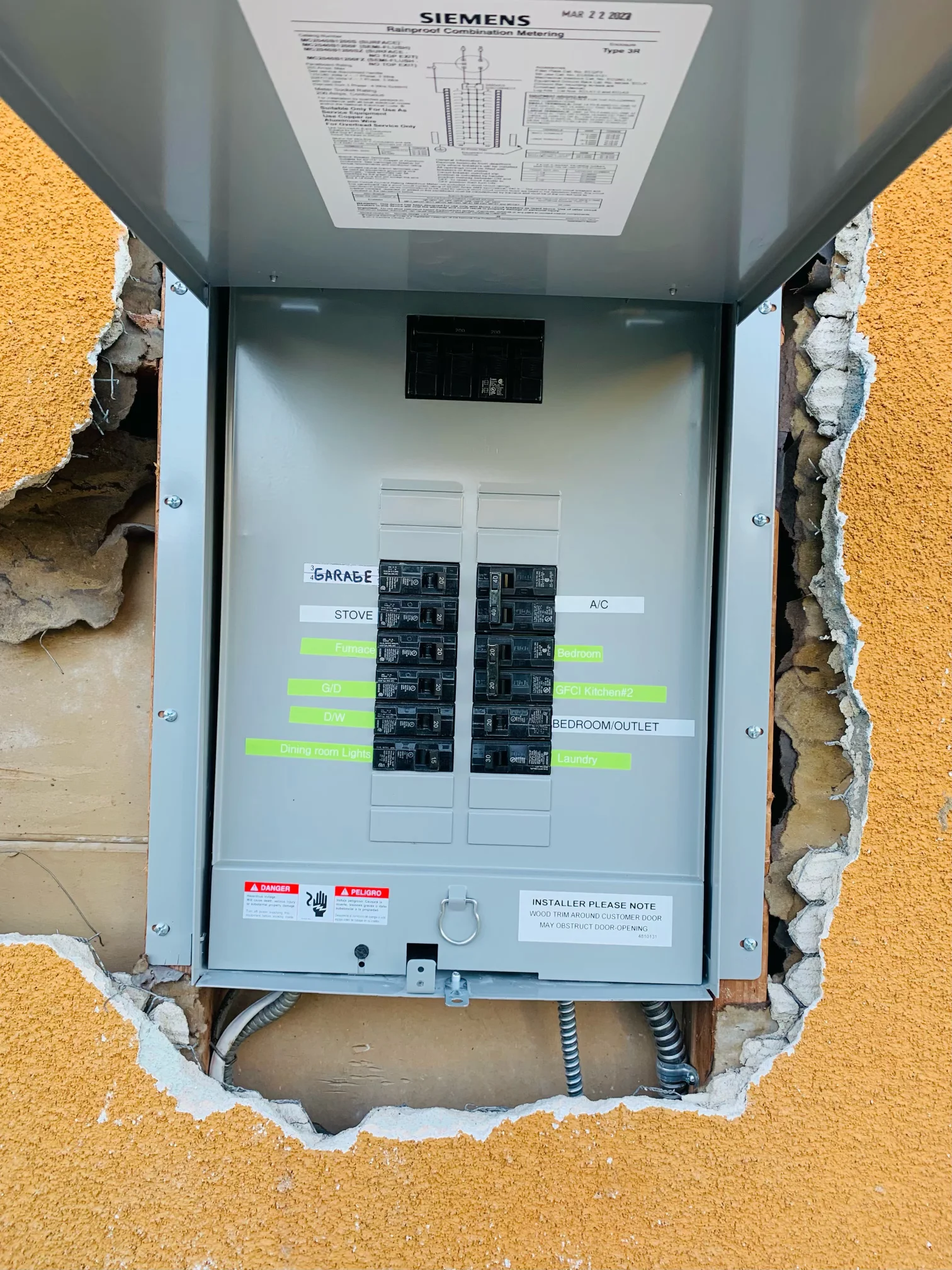
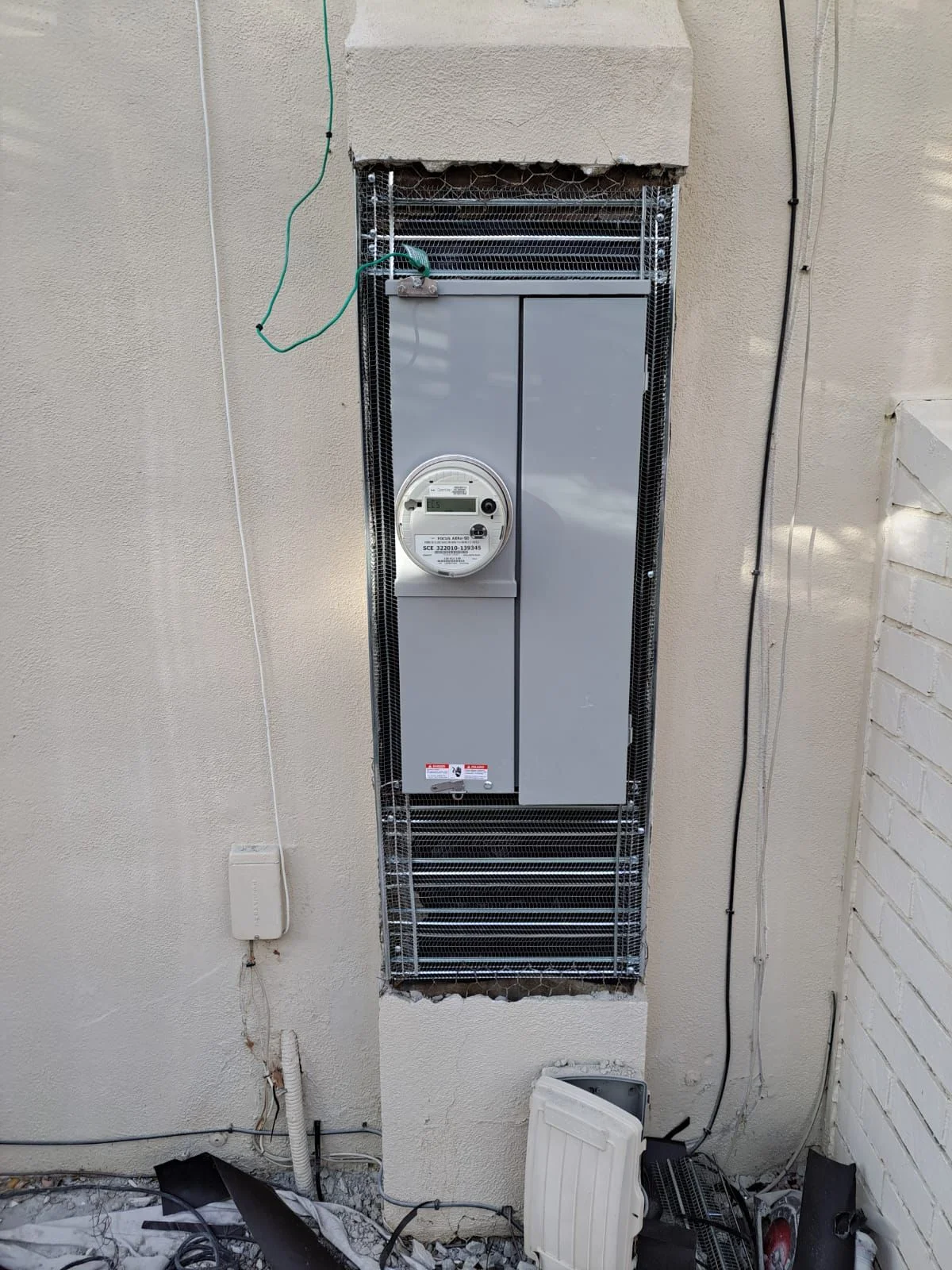
Most homes built before 1980 have 60-amp or 100-amp service panels. That capacity cannot support the load profile of a modern household, especially one adding air conditioning, an EV charger, or a heat pump. A panel upgrade to 200-amp service is almost always part of a full rewire because the new circuits need a panel that can feed them without tripping main breakers under normal use.
Dedicated Circuit Installation
Current code and practical safety both require dedicated circuits for high-draw appliances. A rewire includes individually protected circuits for the range, dryer, dishwasher, garbage disposal, microwave, HVAC condenser, and any other fixed appliance that draws enough current to warrant its own breaker. This is also the right time to run a dedicated 240-volt circuit for an EV charger, whether you own an electric vehicle now or expect to within the life of the home.
AFCI and GFCI Protection Upgrades
California’s 2025 Electrical Code, based on the 2023 National Electrical Code, requires arc-fault circuit interrupter (AFCI) protection on nearly all 120-volt branch circuits in habitable rooms and ground-fault circuit interrupter (GFCI) protection in kitchens, bathrooms, laundry areas, garages, and exterior locations. A whole-home rewire brings every circuit into compliance by installing combination AFCI/GFCI breakers where both protections are required. The current code also mandates a whole-house surge protective device at the main service panel.
Whole-House Surge Protection
A surge protective device (SPD) installed at the panel guards every circuit against voltage spikes from lightning, utility switching, and large motor cycling. This is now required on every dwelling unit service under the current California code and is included as part of a full rewire scope.
Warning Signs Your Home Needs Rewiring
Some symptoms are obvious. Others are easy to dismiss until they become dangerous. Here is what to watch for, and more importantly, what each symptom actually means about the condition of the wiring behind your walls.
Breakers that trip under normal loads are telling you the circuit is either overloaded beyond its rated capacity or the breaker itself is failing. In an older panel, both conditions are common. Outlets that feel warm when nothing is plugged in signal a connection that is generating heat through resistance, which is exactly how electrical fires start inside wall cavities. A faint smell of hot plastic near a switch or outlet means insulation is being heated past its rated temperature. Lights that dim when an appliance cycles on indicate a shared circuit that cannot supply the combined load without voltage drop. Discolored or cracked outlet covers suggest sustained heat exposure at the device. Two-prong outlets throughout the home confirm the absence of a grounding conductor, which is a code and safety deficiency regardless of wiring age.
Here is the scenario that brings it home: a 1958 postwar ranch in Southern California, original cloth-wrapped Romex and a 100-amp panel. The homeowner plugs a window AC unit into the bedroom outlet. The breaker trips. They reset it. A month later, they notice a warm spot on the hallway wall near an outlet and a faint smell of hot plastic behind the cover plate. That is not a loose wire that can be tightened at the outlet. That is insulation failing inside the wall cavity. That is the call that starts a rewire.
Wiring Types in Southern California Homes by Era
| Era Built | Typical Wiring | Primary Hazard | Grounding | Insurable |
|---|---|---|---|---|
| Pre-1950 | Knob-and-tube | Bare conductors, no ground, cannot be insulated | None | Often denied or restricted |
| 1950s to early 1960s | Cloth-wrapped Romex | Brittle insulation cracking and exposing copper | Undersized or absent | Case-by-case |
| 1965 to 1973 | Aluminum branch circuits | Connections overheat due to oxidation and thermal expansion | Present but connections degrade | Often restricted without remediation |
| 1970s to 1980s | Early NM-B (Romex) | Undersized panels, no AFCI/GFCI, aging connections | Present | Generally yes |
| Post-1990 | Modern NM-B with ground | Typically adequate; may lack AFCI or need panel capacity | Full | Yes |
This table is not academic. It tells you what is behind your walls based on when your home was built, what specific hazard that wiring type creates, and whether your insurance carrier is likely to have an opinion about it. Southern California’s housing stock spans every row on this chart, and many homes have been partially updated over the decades, creating a patchwork where knob-and-tube shares a panel with modern Romex through amateur junction-box splices that no inspector ever saw.
Our Whole Home Rewiring Process
A rewire is a significant project, and the process matters as much as the materials. Here is how it works from the first phone call through closeout.
Step 1: On-Site Assessment and Written Estimate
A project manager visits your home, opens a sample of outlets and junction boxes, inspects the panel, and documents the wiring type, condition, and circuit layout. The assessment includes a load calculation based on your current and planned electrical needs. You receive a written estimate within a few business days that details the full scope, materials, timeline, and warranty terms. The visit typically takes 60 to 90 minutes and costs nothing.
Step 2: Permit Filing and Project Scheduling
Wise Choice files the electrical permit with LADBS (for City of Los Angeles properties) or the applicable county building department. The project start date is confirmed, and you receive a day-by-day schedule showing when each room will be affected, when temporary power will be routed, and when the rough-in inspection is expected.
Step 3: Rewire Execution
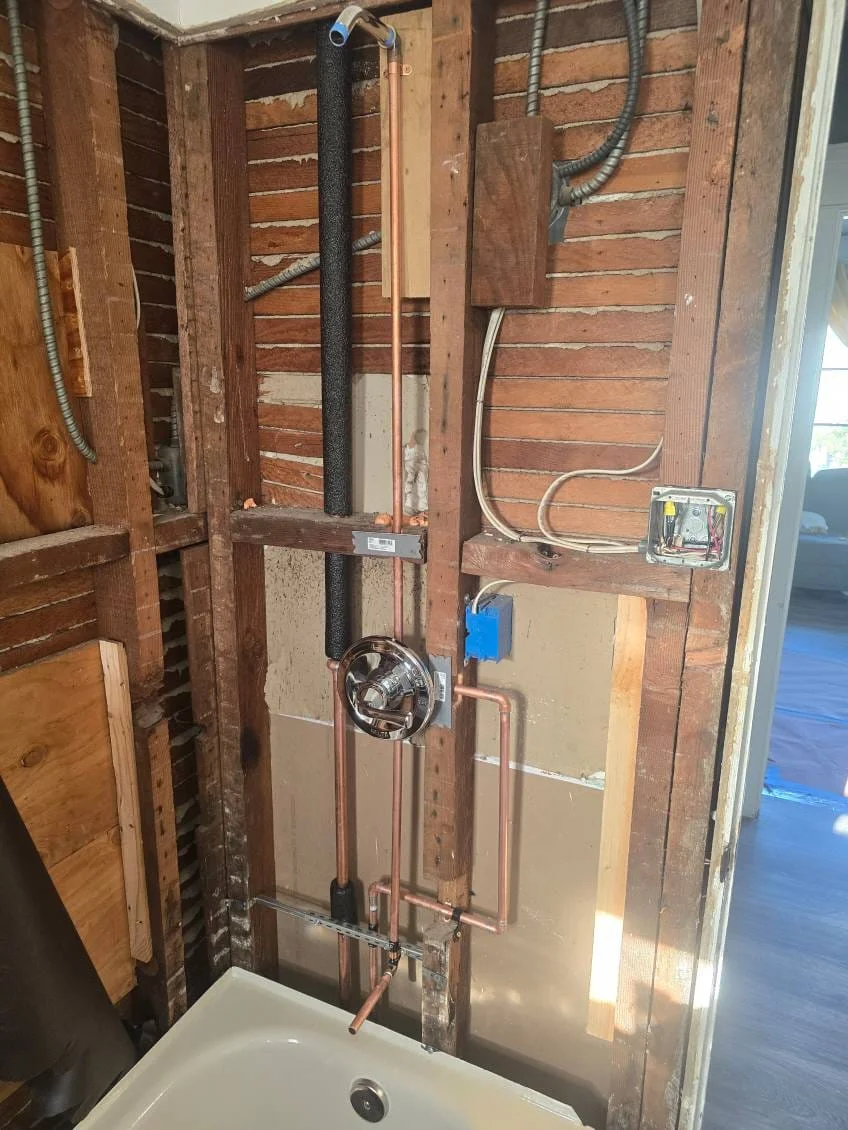
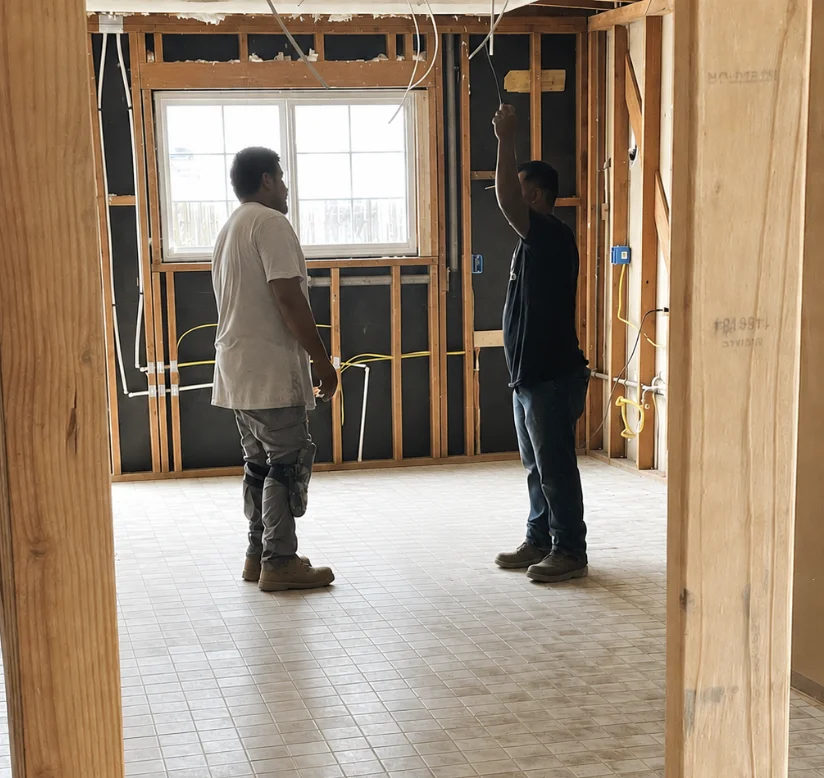
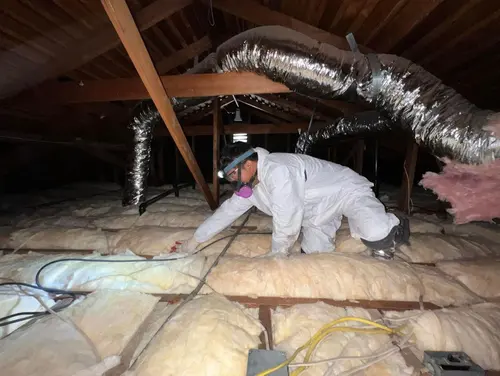
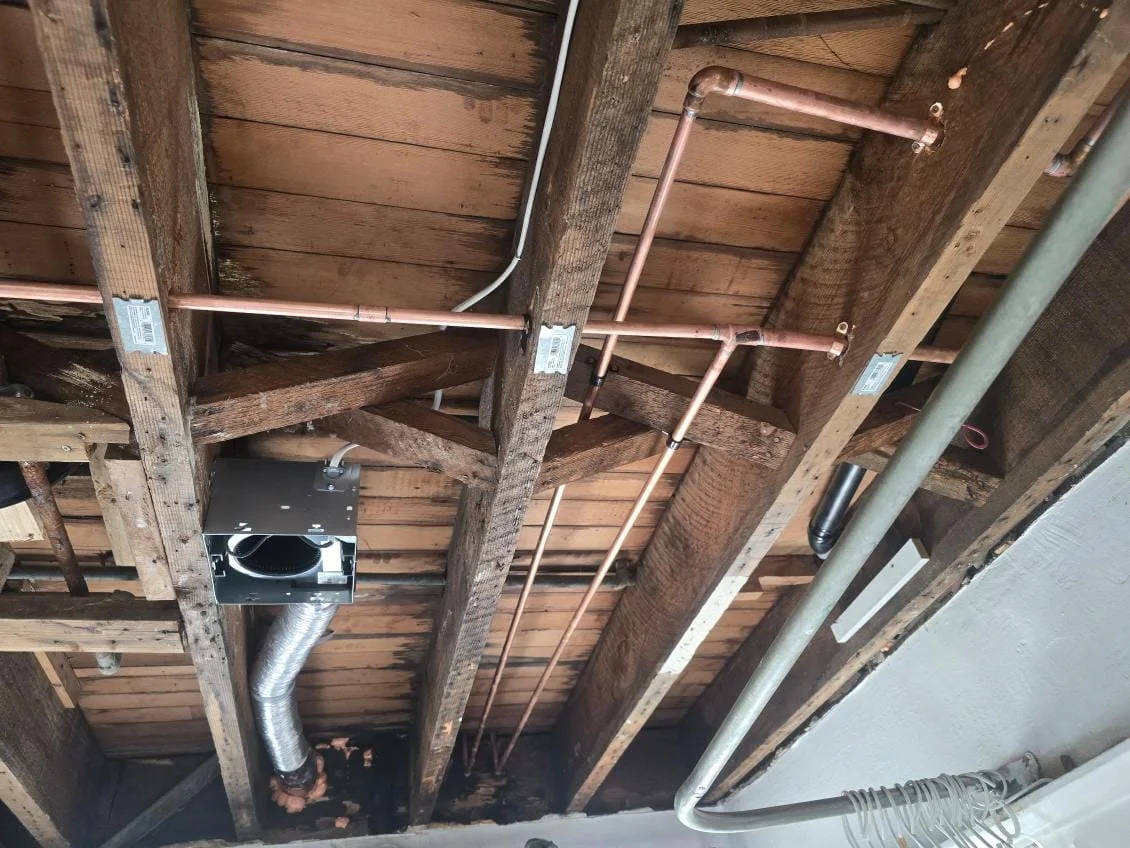
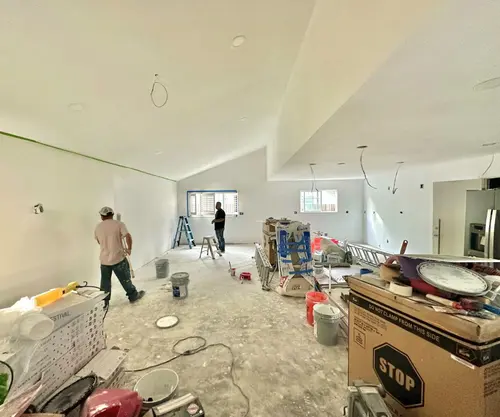
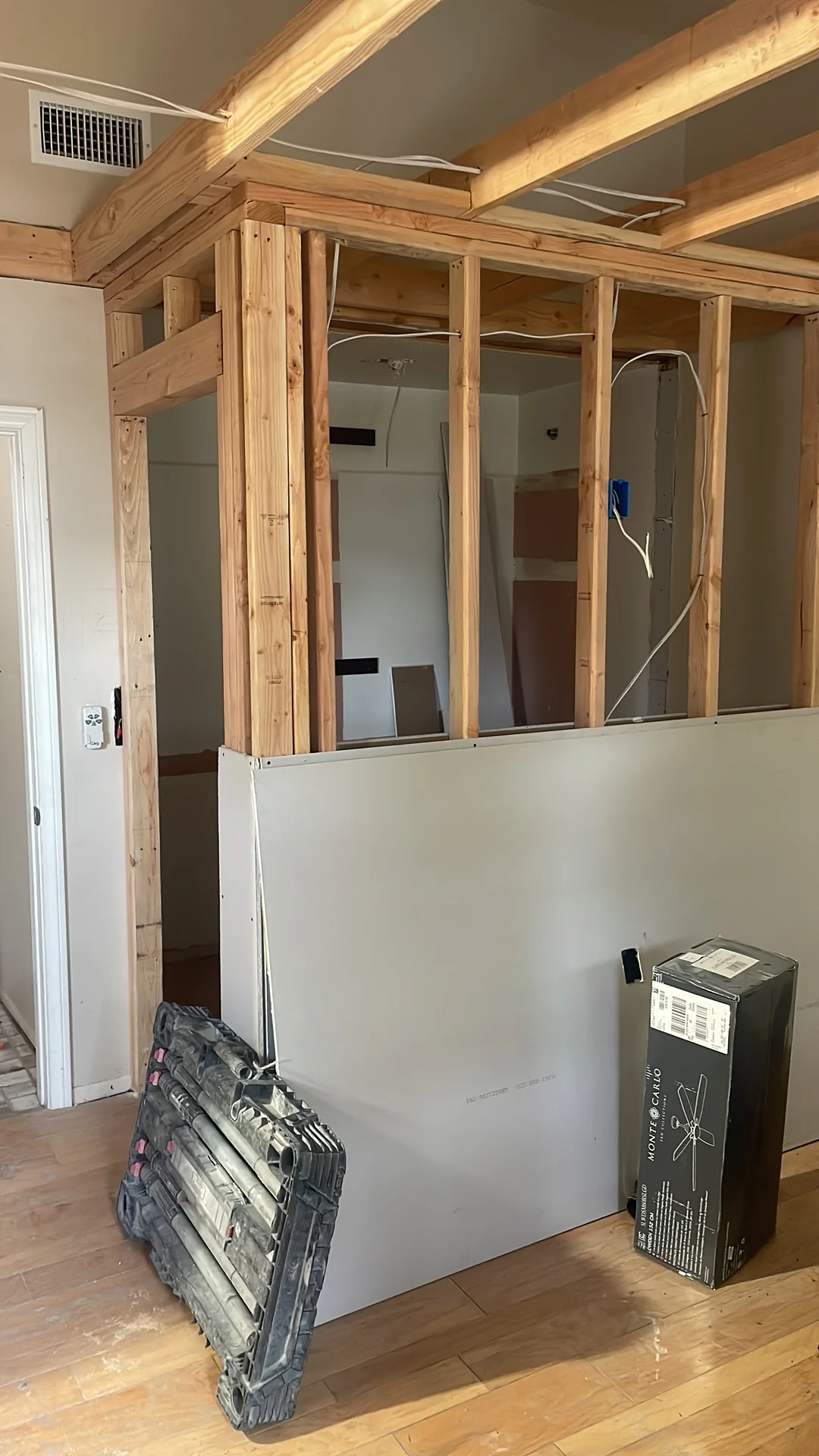
New wiring is run through attic framing, crawlspace joists, and targeted wall access points. The old wiring is disconnected and removed where accessible. The panel is upgraded, dedicated circuits are installed for every high-draw appliance, and AFCI/GFCI breakers are set at every required location. A whole-house surge protective device is installed at the new panel. Dust containment barriers and drop cloths protect finishes in every active work zone. Safe circuits are re-energized each evening so the household maintains power for essential needs.
Step 4: Inspection, Patching, and Final Walkthrough
The rough-in inspection is scheduled and completed before any walls are closed. After sign-off, drywall patches and paint touch-ups are finished. The final inspection confirms the completed system. A walkthrough with the homeowner reviews every outlet, switch, and breaker. You receive the signed-off permit card, a labeled circuit map, and the 2-year workmanship warranty documentation.
If your home also needs repiping to replace corroded supply lines, this is the most efficient time to coordinate that work. The same wall cavities are already open, and combining the scopes avoids paying for access and patching twice.
What Drives the Scope and Timeline of a Rewire
Every rewire is different because every home is different. The variables that shape your project include the square footage and number of stories, the wall construction (drywall versus plaster-and-lath, which requires more careful access work), the amount of attic and crawlspace access available for cable routing, the existing panel capacity and whether a service upgrade is needed, the number of dedicated circuits required for your appliance and equipment layout, and whether the home has knob-and-tube wiring that must be removed before insulation can be added.
A written estimate accounts for all of these factors. It is not a ballpark number over the phone. It is a detailed scope that reflects what the project manager found during the on-site assessment. If the scope changes during the project because of something discovered inside a wall, you are informed and approve the change before the work proceeds. The estimate you receive at the outset is what you should expect to pay unless a hidden condition requires a documented change order.
Permits and California Electrical Code Requirements
A whole home rewire is not a project you can legally complete without a permit in California. The permit ensures that a qualified inspector reviews the work at the rough-in stage (before walls are closed) and at final (after all devices and the panel are complete). This is not bureaucracy for its own sake. It is the mechanism that protects you from hidden workmanship failures that would otherwise be sealed behind drywall for decades.
Within the City of Los Angeles, LADBS issues electrical permits. Simple residential rewiring projects may qualify for express or online permitting through the PermitLA platform. More complex projects or those involving a service upgrade go through standard plan check. In unincorporated Los Angeles County and other jurisdictions, the county building and safety department handles permits and inspections.
California’s 2025 Electrical Code, which took effect January 1, 2026, is based on the 2023 National Electrical Code with California-specific amendments. The current code requires AFCI protection on nearly all 120-volt branch circuits serving habitable rooms, GFCI protection in wet and exterior locations, and a whole-house surge protective device at the service panel. A permitted rewire must meet all of these requirements. At closeout, you receive the signed-off permit card as proof that the work was inspected and approved. That documentation protects your insurability, your ability to sell the home, and your standing with the building department if any future work is proposed.
What the Property Looks Like When We Leave
Homeowners are often more anxious about the mess than the wiring itself. Here is what to expect. Active work zones are sealed with dust containment barriers. Drop cloths cover floors and furniture in rooms where ceiling or wall access is needed. Old wiring, insulation debris, and packaging are removed from the property at the end of each work day. After the rough-in inspection, all wall penetrations are patched with joint compound, sanded, and primed or paint-matched. Outlet covers and switch plates are installed clean and straight. The panel area is left organized with a labeled circuit directory. When the final walkthrough is complete, the home should look as though the only thing that changed is the new outlets and panel, because that is the only thing that should be visible.
HOA and Architectural Review Considerations
Electrical rewiring is typically interior work and does not require HOA approval in most communities. However, if the project involves a new or relocated meter base, a service mast, or exterior conduit runs, some HOAs require an architectural review submission before work begins. Wise Choice provides the documentation, specifications, and any required photos for that submission. If your HOA has a review timeline, the permit filing is coordinated so the project is not delayed waiting for approval after the permit is already in hand.
Whole Home Rewiring Across Southern California
Wise Choice Remodeling manages whole home rewires across the Southern California region, including Burbank, Glendale, Pasadena, Long Beach, Anaheim, and Riverside. Each city has its own building department, its own inspection scheduling process, and in some cases its own electrical code amendments. The permit process and inspection requirements are handled by Wise Choice regardless of jurisdiction, so homeowners are not left navigating an unfamiliar municipal system on their own.
Why Choose Wise Choice Remodeling
Over 15 Years of Combined Experience
The team behind Wise Choice Remodeling brings over 15 years of combined experience across electrical, structural, and finish trades in Southern California. That experience means rewires are planned around the realities of the region’s housing stock, not around a generic checklist that ignores plaster-and-lath construction, limited crawlspace clearance, or the specific permit pathways in each jurisdiction.
One Licensed Contractor, One Contract, One Warranty
Every phase of the rewire is managed under a single contract by a licensed and insured general contractor. There is no finger-pointing between an electrician, a drywall crew, and a painter working under separate agreements. One project manager owns the schedule, one contract governs the scope, and one 2-year workmanship warranty covers the finished work. If something needs attention after closeout, you call one number.
The Estimate Will Not Change Without Your Approval
The written estimate you receive after the on-site assessment is the price for the defined scope. If a hidden condition is discovered during the project, you are informed, the additional scope is documented, and you approve the change before any additional work proceeds. No surprises at the final invoice.
Financing Available
Wise Choice offers $0 down financing options for qualified homeowners. The terms and qualification requirements are reviewed during your estimate visit, and financing covers the full project scope.
Cleanup and Restoration Are Not Afterthoughts
Drywall patching, paint touch-ups, and disposal of all old materials are included in the project scope. The property is left clean at the end of every workday and restored to finished condition at closeout.
Call (818) 483-8055 to schedule your free on-site assessment, or request a free estimate online. Wise Choice Remodeling has over 15 years of combined experience managing whole-home rewires across Southern California, and every project is backed by a 2-year workmanship warranty under a single contract.