What Roofing Service Covers and Why It Matters
Roofing service is the inspection, repair, replacement, or new installation of the roof system that protects a home from water intrusion, UV degradation, and heat transfer. For Southern California homeowners, the roof is not just a weather barrier. It is the largest surface exposed to year-round solar radiation, and its condition directly affects energy consumption, structural integrity, and whether the home meets current California building code.
A licensed general contractor manages roofing projects differently than a specialty roofer working alone. The general contractor coordinates permits, inspections, structural repairs to the decking or framing if the tear-off reveals damage, and any related trades like gutter replacement or attic ventilation upgrades. That single point of accountability means one contract, one warranty, and one phone number if anything needs attention after the project closes.
Roofing Types for Southern California Homes
Not every roof material performs the same way under constant UV exposure, wide thermal swings, and occasional high-wind events. The right choice depends on the home’s roof pitch, structural capacity, HOA requirements, and how long the homeowner plans to stay.
Composition Shingle Roofing
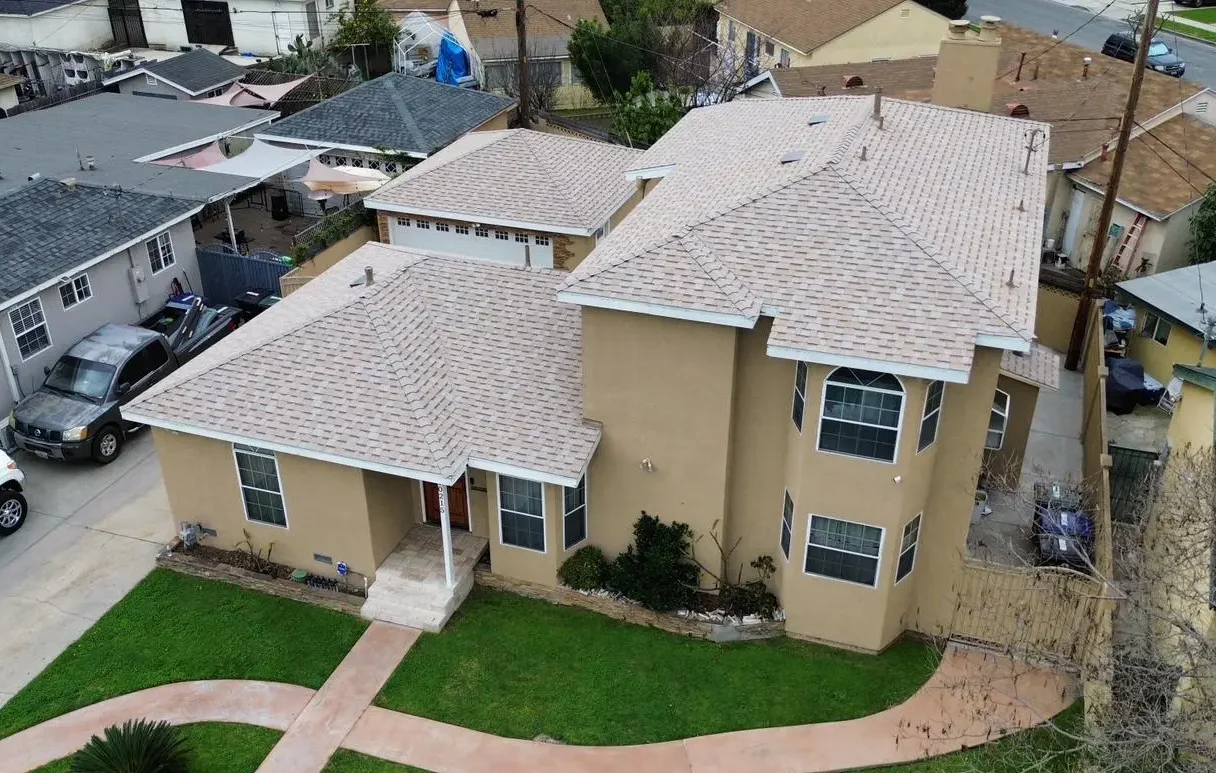
Asphalt composition shingles are the most common residential roofing material in the region. Architectural shingles (also called dimensional or laminated shingles) offer better wind resistance and a longer realistic service life than three-tab shingles. In Southern California’s climate, the realistic service life of architectural shingles is typically closer to 20 to 25 years rather than the 30-year manufacturer rating, because sustained UV and heat accelerate granule loss. Homes in the San Fernando Valley or inland valleys where summer afternoon temperatures regularly exceed 100 degrees see this effect more than coastal properties do.
Concrete and Clay Tile Roofing
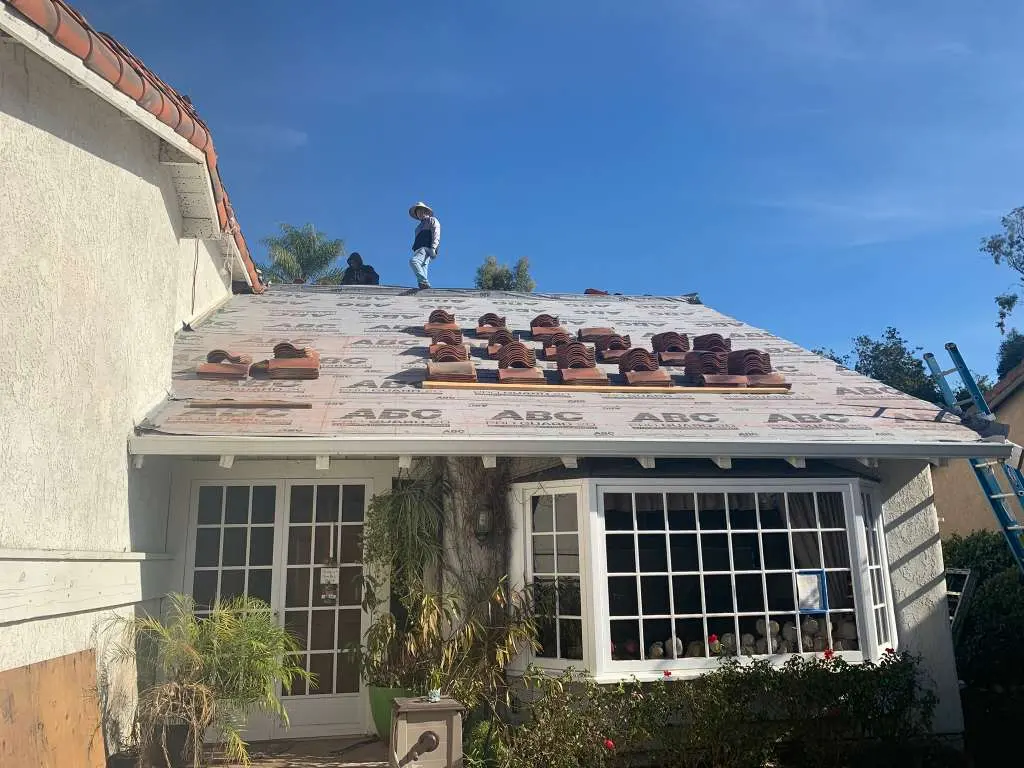
Tile roofs are a defining feature of Southern California architecture, especially on Spanish Colonial, Mediterranean, and Mission-style homes. A properly installed tile roof can last 50 years or longer. The tiles themselves are nearly indestructible under UV, but the underlayment beneath them typically needs replacement every 20 to 30 years. Tile is heavy, and not every home’s framing can support it without reinforcement. That structural evaluation is part of the estimate process.
Flat Roof Systems
Many mid-century and modern homes in the region have flat or low-slope roof sections. These typically use modified bitumen, TPO, or EPDM membrane systems. Flat roofs are especially vulnerable to ponding water after rain, and proper drainage slope is critical. Cool roof coatings are particularly effective on flat roofs, where the surface faces the sun directly with no pitch to reduce exposure.
Metal Roofing
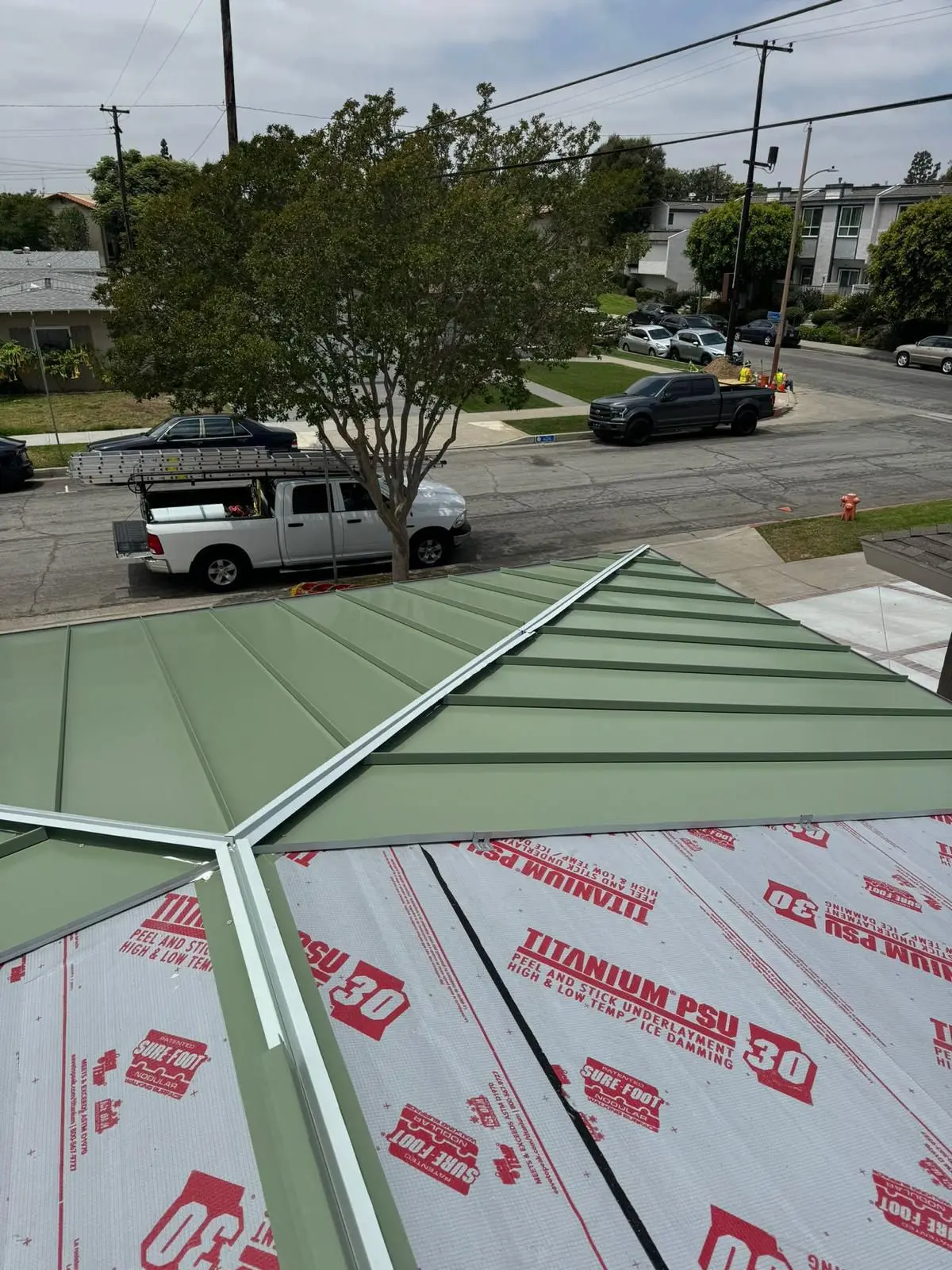
Standing seam and metal shingle systems offer 40 to 70 years of service life, strong wind resistance, and high reflectivity. Metal is lightweight, which makes it a good retrofit option for homes that cannot support tile. The higher material cost is offset by the longer replacement cycle and lower maintenance over the life of the roof.
Cool Roof Coatings and Reflective Materials
Research from the Lawrence Berkeley National Laboratory Heat Island Group found that a reflective white roof can stay roughly 55 degrees Fahrenheit cooler than a conventional dark roof on a typical summer afternoon. In a region where air conditioning accounts for a large share of household energy use, that surface temperature difference translates directly into lower cooling load. California’s Title 24 energy code already requires cool roofing on certain low-slope applications in Climate Zone 9, which covers much of the Los Angeles basin.
Signs a Roof Needs Attention
Some symptoms are obvious. Others show up in utility bills or in the attic long before they appear on the surface.
Visible Granule Loss on Shingles
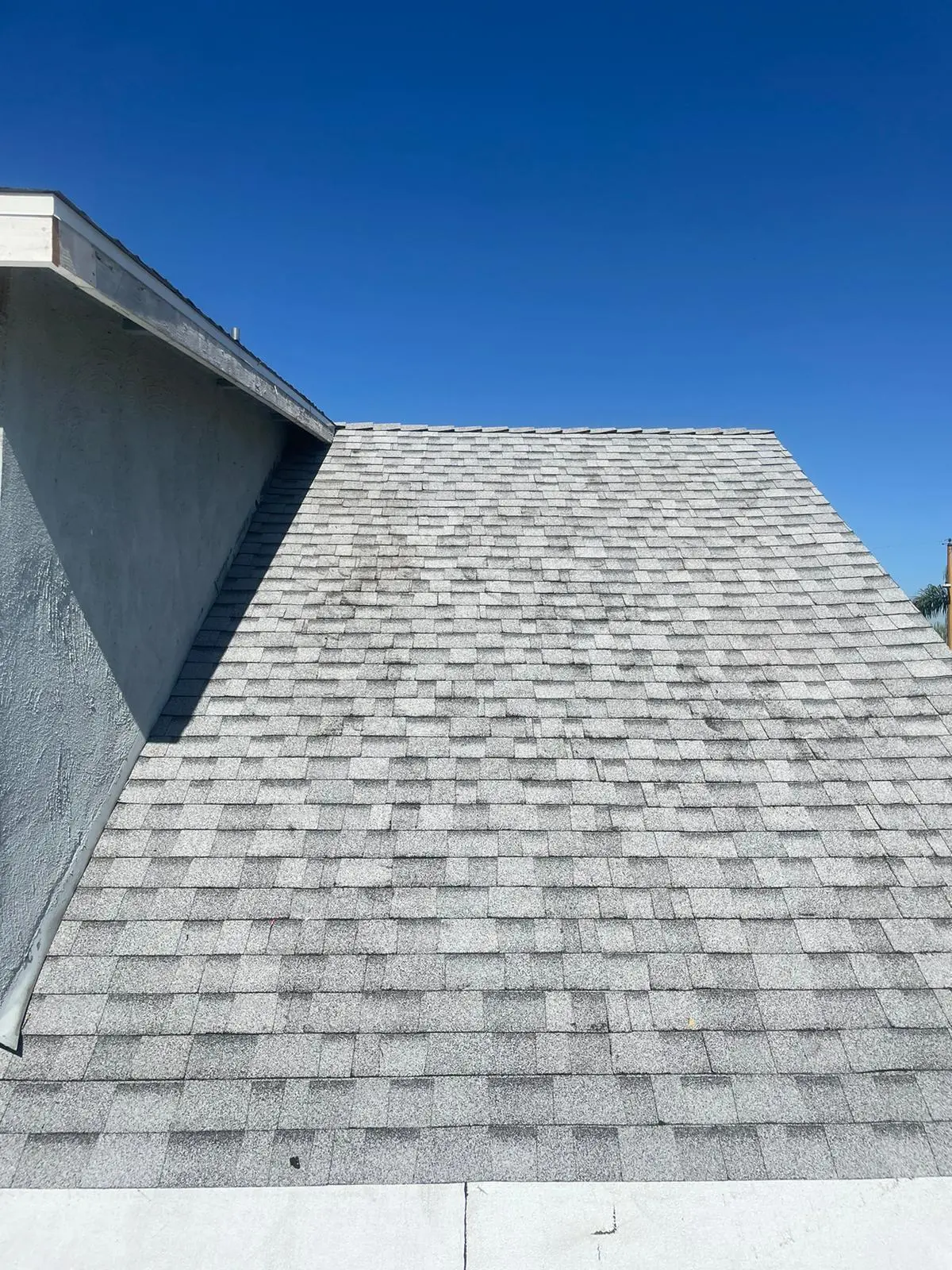
If the gutters are filling with granules or the shingles look bald and shiny from the ground, the UV-protective layer is gone. The underlying asphalt will deteriorate rapidly once exposed. This is common on south-facing slopes that take the full force of afternoon sun, especially on homes built in the 1990s and early 2000s whose original roofs are now reaching the end of their realistic lifespan in this climate.
Cracked, Slipped, or Missing Tiles
Concrete and clay tiles crack from foot traffic, thermal cycling, or settling. A few cracked tiles are repairable. Widespread cracking, especially combined with deteriorated underlayment visible from the attic, usually means the roof system needs a full replacement rather than spot repairs that will not address the membrane underneath.
Water Stains on Ceilings or Walls
By the time water stains appear inside the home, the leak has typically been active for weeks or months. Water follows the path of least resistance along rafters and sheathing before it drops to a visible surface, which means the entry point on the roof is rarely directly above the stain. A project manager traces the leak path during the inspection to identify the actual source.
Rising Cooling Bills Without Other Explanation
A roof that has lost its reflective properties or has compromised insulation contact transfers more heat into the attic, forcing the HVAC system to work harder. A homeowner who noticed a 1962 Encino ranch house pulling double the cooling load of comparable neighbors traced the problem to a flat roof section where the original built-up roofing had cracked and lost its reflective top coat. Replacing that section dropped the summer electric bill measurably before the next billing cycle closed.
Sagging or Soft Spots Visible from Inside the Attic
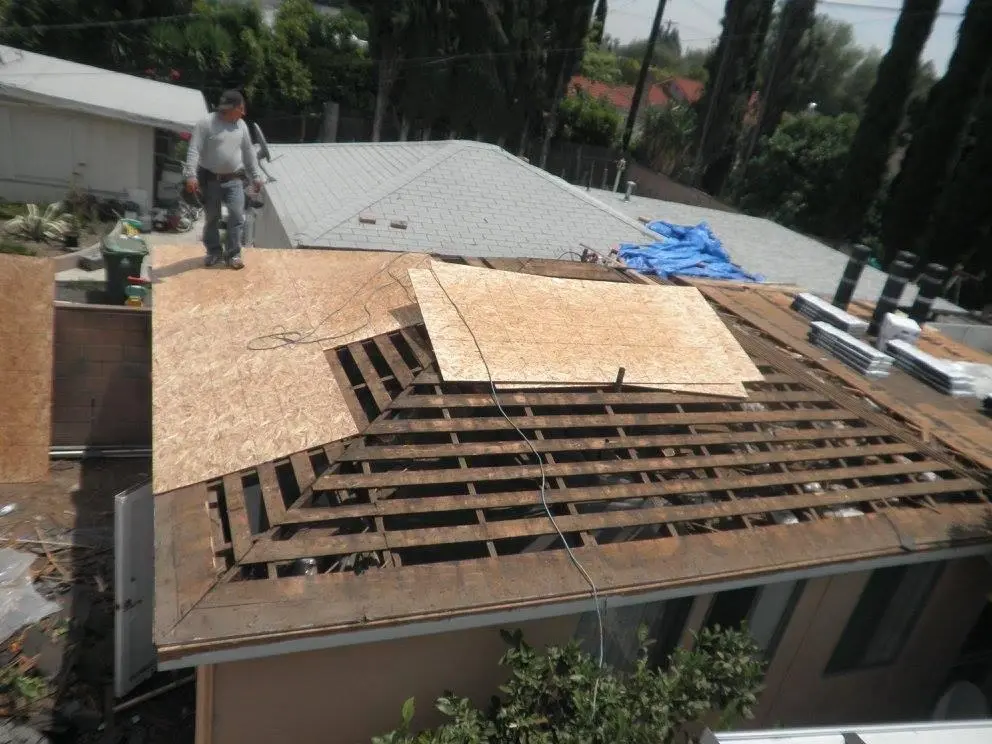
If the roof decking sags between rafters or feels soft when pressed, moisture damage has compromised the plywood or OSB sheathing. This is a structural issue that must be addressed during the roofing project. It will not get better on its own, and every rain event makes it worse.
Roof Repair vs. Full Replacement
Not every roof problem requires a full tear-off. The decision comes down to the age of the roof, the extent of the damage, and whether the underlying structure is sound. Targeted roof repair is the right call when the damage is isolated, the roof is less than 15 years old, and the rest of the system is performing well. Full roof replacement makes sense when the roof is near or past its expected service life, when multiple areas show deterioration, or when the decking needs structural repair that cannot be accessed without stripping the existing material.
| Factor | Repair | Replacement |
|---|---|---|
| Roof age under 15 years | Usually sufficient if damage is localized | Rarely needed unless structural damage exists |
| Roof age 15 to 25 years | May extend useful life by a few years | Often the better long-term investment |
| Widespread granule loss | Not effective as a permanent fix | Addresses the full surface at once |
| Isolated leak at one penetration | Targeted flashing repair is appropriate | Not warranted for a single-point failure |
| Decking damage visible from attic | Only if limited to a small area | Full tear-off allows complete decking evaluation |
| HOA or insurance requirement | May not satisfy compliance demands | Meets code and HOA standards in full |
Our Roofing Process
Step 1: On-Site Inspection and Written Estimate
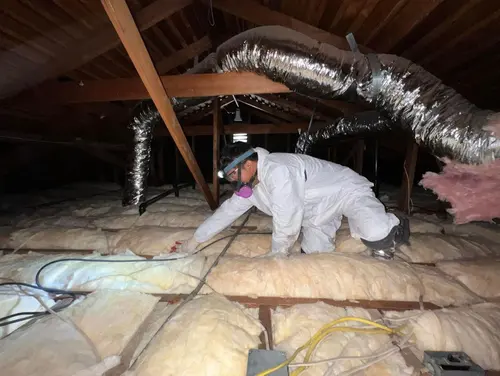
A project manager visits the property, walks the roof surface, inspects the attic from inside where accessible, photographs all areas of concern, and takes measurements. The visit takes roughly 45 to 60 minutes. Within a few days, you receive a written estimate itemizing materials, labor, permit costs, and projected timeline. The estimate figure is the figure on the final invoice. There is no cost and no obligation for the visit.
Step 2: Permit Filing and Scheduling
We file the roofing permit with LADBS for properties within the City of Los Angeles or with the applicable county building department for other jurisdictions. Once the permit is issued and materials are confirmed, we set a start date. If an HOA architectural review is required, we submit the documentation on the homeowner’s behalf and build the review timeline into the schedule.
Step 3: Tear-Off, Decking Evaluation, and Installation
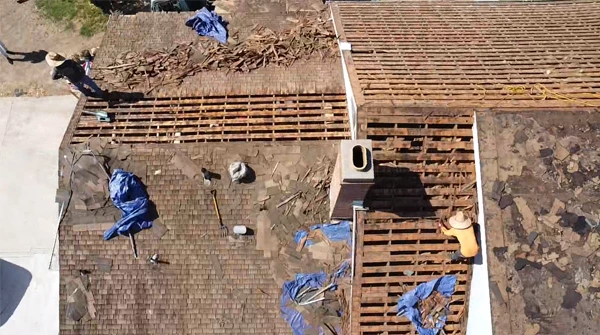
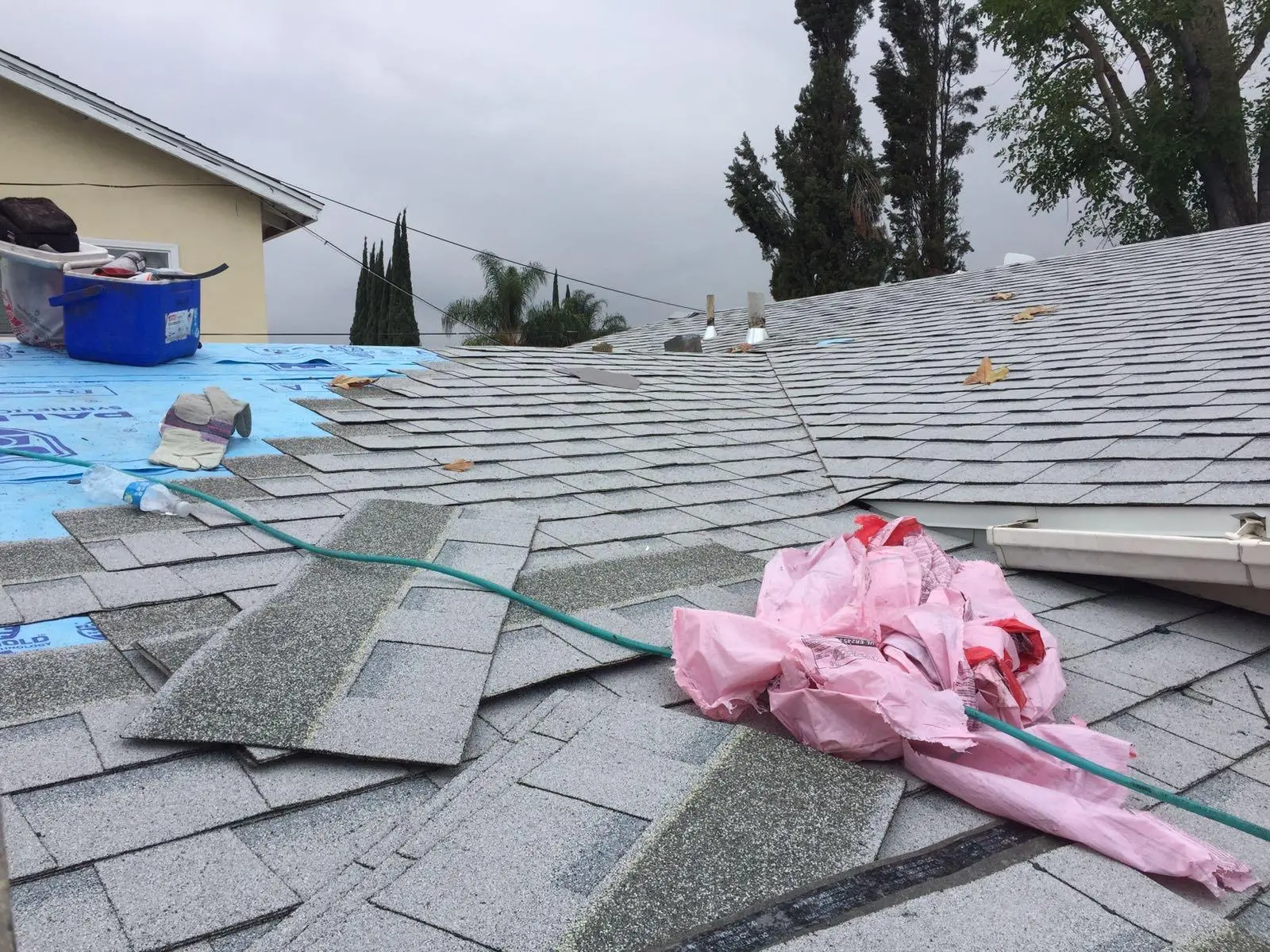
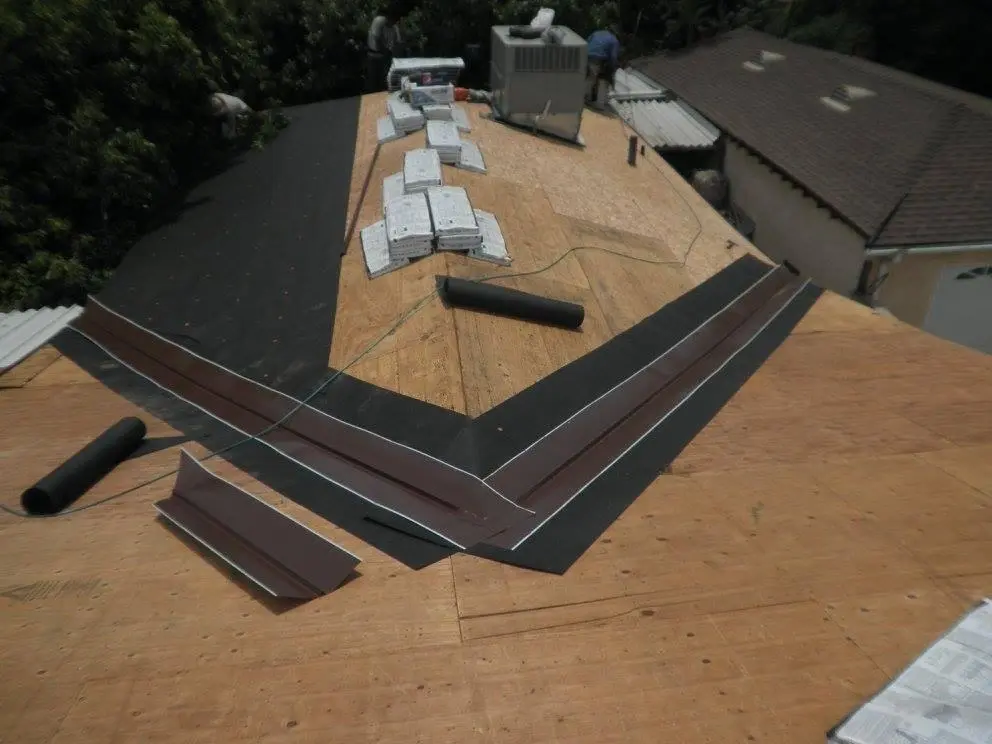
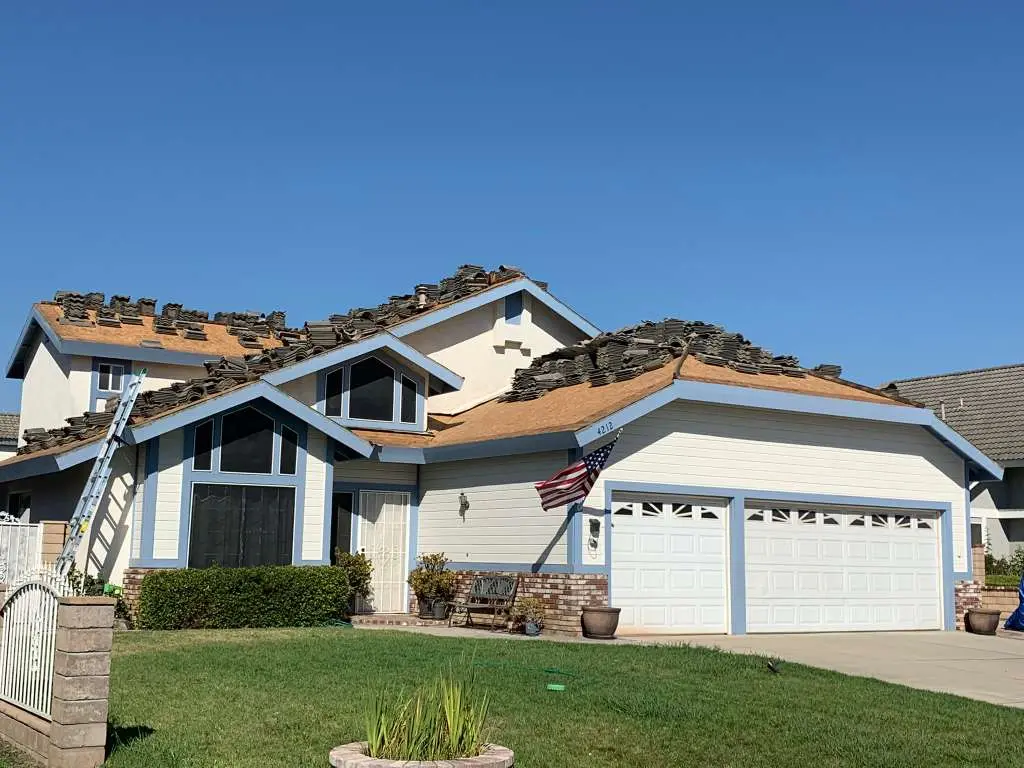
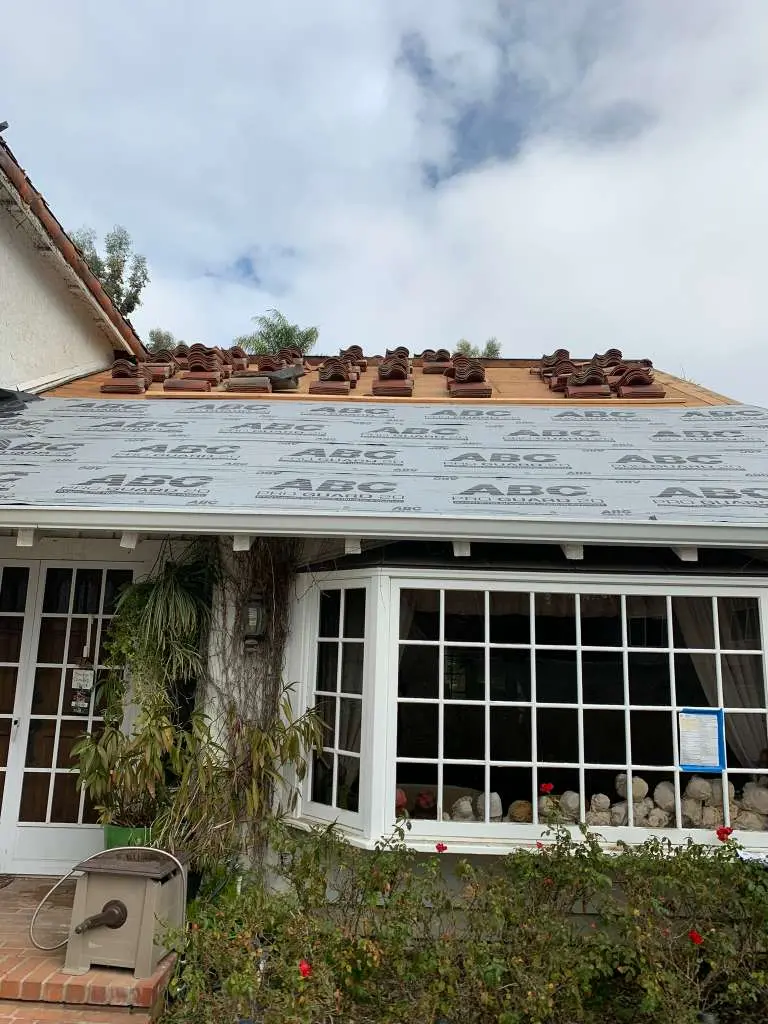
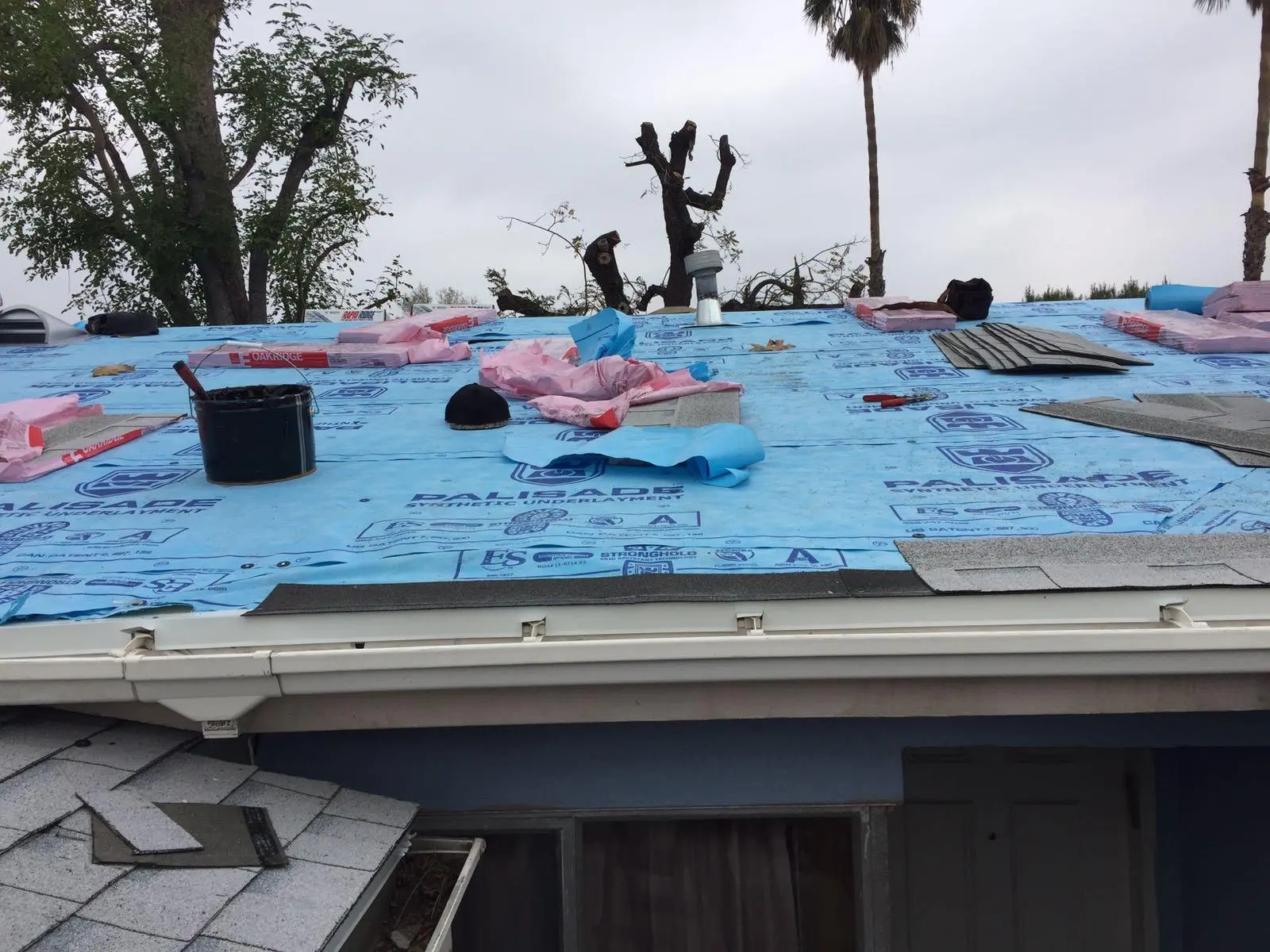
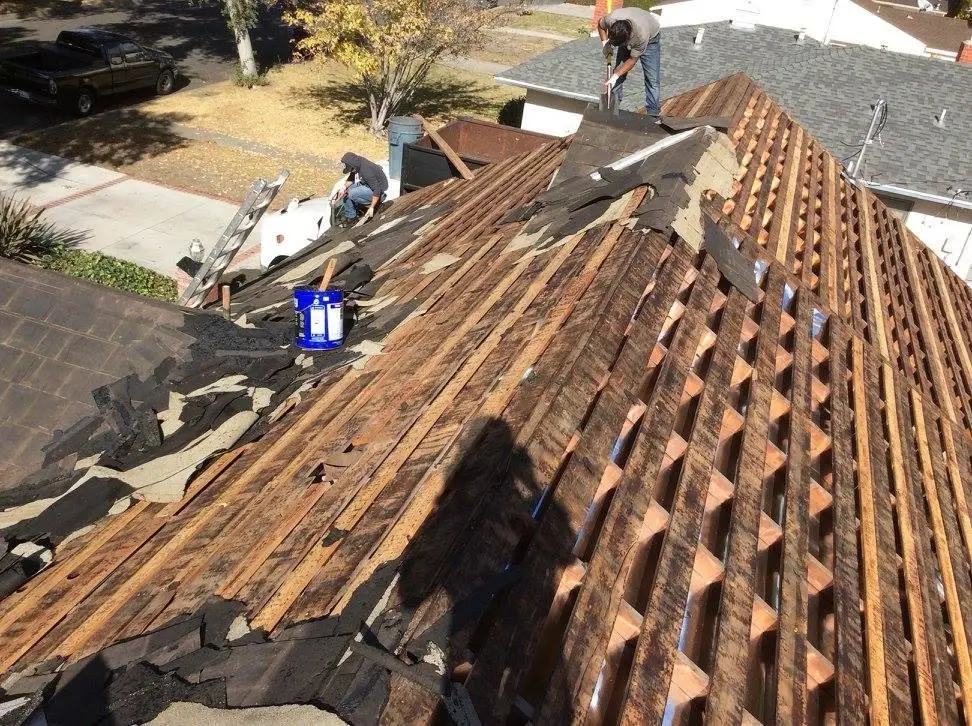
The existing roofing is stripped and removed. Once the decking is exposed, we evaluate every square foot for soft spots, water damage, and structural integrity. Damaged sections are replaced before new underlayment and roofing material are installed. Debris is loaded out daily. If the project must pause for any reason, temporary waterproofing is applied before the crew leaves.
Step 4: Inspection, Walkthrough, and Closeout
The building department inspection is scheduled and passed. We walk the completed project with you, point out the work that was done, review the warranty documentation, and hand over the signed permit card, the manufacturer warranty paperwork, and the Wise Choice 2-year workmanship warranty. Gutters are cleaned, the ground is swept, and the property is left ready for daily life.
What Drives Scope, Timeline, and Material Choices
Every roofing project is different. The scope depends on roof size, pitch, number of penetrations (vents, skylights, chimneys), the condition of the decking underneath, and the material selected. A steep hip roof with multiple valleys and dormers takes longer than a straightforward gable. Tile installations require more labor than composition shingles. Homes built before 1978 sometimes have old materials under the surface layer that require specific handling during tear-off.
The estimate breaks down exactly what the project involves, what it costs, and how long it will take. Call (818) 483-8055 or request an estimate online to schedule the visit.
What Roofing Costs in Los Angeles
Pricing depends on the variables above. Typical Los Angeles ranges:
| Roofing Service | Typical Range |
|---|---|
| Roof Repair | $1,500 to $9,500, depending on the repair |
| Roof Replacement | $14,000 to $52,000 for homes of 1,000 to 3,000 sq ft |
Final pricing depends on project size, site conditions, materials, permits, engineering requirements and scope of work. Every project is quoted free on-site.
Permits and California Requirements
Most roof replacements in California require a building permit. For properties within the City of Los Angeles, that permit is filed through LADBS. The application requires a description of the scope, the roofing material specifications, and compliance with current Title 24 energy standards. Low-slope roofs in Climate Zone 9 must meet specific cool-roof reflectance and emittance thresholds under Title 24. The building department inspects the installation to verify code compliance before the permit is signed off.
Wise Choice handles the entire permit process. We prepare the application, file it, schedule the inspection, attend it, and deliver the signed-off documentation to the homeowner at closeout. Permit records are public, and a properly permitted roofing project protects the homeowner’s insurance coverage and resale position. Unpermitted roof work can void both.
Roofing Across Southern California
Roof conditions vary meaningfully across the region. Homes in Burbank and Pasadena include a heavy concentration of pre-war and mid-century construction with original or second-generation roofing that has been baking under San Gabriel Valley heat for decades. Inland communities like Riverside and San Bernardino see even higher peak temperatures, which accelerate material degradation on every roof type. Coastal cities like Long Beach experience less extreme heat but more salt air exposure, which corrodes metal flashings and fasteners faster. Anaheim and the surrounding Orange County communities have a high density of HOA-governed neighborhoods where architectural review is required before any exterior work begins. Wise Choice works across all five service counties and understands the specific roofing conditions in each area.
Why Choose Wise Choice Remodeling
Over 15 Years of Combined Roofing Experience
The team has more than 15 years of combined experience managing roofing projects across Southern California, from straightforward shingle replacements to complex multi-slope tile installations on hillside homes. That experience shows up in material recommendations that account for the home’s specific exposure and in project timelines that hold because the scope was evaluated correctly from the start.
Licensed, Insured, and Accountable
Wise Choice is a licensed and insured general contractor. One contractor manages the project, pulls the permit, schedules the inspections, and stands behind the work with a written warranty. There is no ambiguity about who is responsible if a question comes up after the project closes.
The Estimate Is the Price
The written estimate spells out the scope, materials, timeline, and total cost. If the tear-off reveals decking damage that was not visible during the inspection, we document it, explain the repair, and get approval before proceeding. 320+ homeowners have reviewed Wise Choice at 4.8 stars, and the consistent feedback is that the project delivered what the estimate promised.
2-Year Workmanship Warranty
If an installation issue causes a problem within two years, we come back and fix it. The workmanship warranty is separate from the manufacturer’s material warranty and covers the quality of the labor itself. You receive the warranty in writing at project closeout.
$0 Down Financing
A roof replacement is a significant investment. Financing is available with $0 down options for qualified homeowners, and the terms are reviewed at the estimate appointment so you can evaluate the monthly payment alongside the total project scope.
Wise Choice Remodeling has over 15 years of combined experience managing roofing projects across Southern California. Call (818) 483-8055 or schedule your free estimate online to get a project manager to your property.