What Artificial Turf Installation Involves for Southern California Homes
Artificial turf installation is the process of preparing a site and installing a synthetic grass surface that provides the visual and functional qualities of a natural lawn without irrigation, mowing, fertilizing, or the browning and die-off that Southern California’s dry season imposes on natural grass that does not receive adequate water. In Southern California, where tiered water pricing, periodic mandatory restrictions, and the ongoing cost of keeping grass alive through six to eight months of minimal rainfall make natural lawn increasingly difficult to justify economically, artificial turf has become a standard residential landscape choice for front yards, backyards, and pet areas across every county the region encompasses. The quality of an artificial turf installation is determined almost entirely by what happens before the turf is unrolled: adequate vegetation and organic material removal to prevent decomposition-related odors and settling, excavation and base preparation with a compacted aggregate layer that provides a firm, level, and permeable foundation, drainage grading that establishes a slope away from the structure and toward a designed discharge path, and weed barrier installation that prevents vegetation from pushing through the turf from below. Turf installed over poorly prepared subgrade will develop low spots, drain slowly, produce odors from organic matter breakdown below, and feel soft or uneven underfoot within a season or two. Turf installed on a properly prepared base performs correctly for its full product lifespan.
Artificial Turf Installation Scopes We Perform
Backyard Artificial Turf Installation
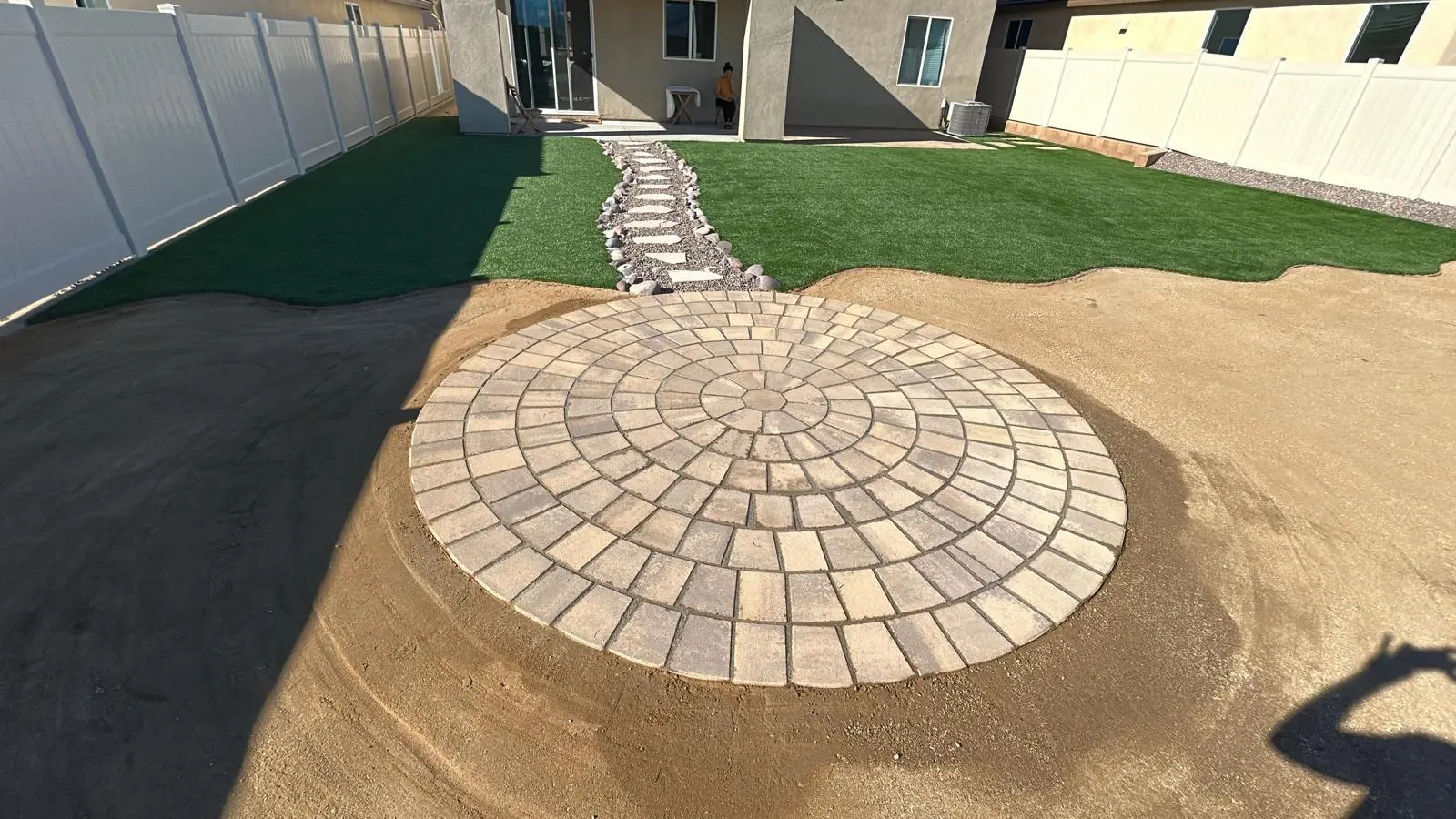
Backyard turf installations are the most common scope in Southern California, replacing natural lawn in areas used for outdoor recreation, pet activity, children’s play, and general outdoor living. Backyards often have more complex geometry than front yards, with multiple edges adjacent to planting beds, hardscape, fencing, and pool surrounds. We cut and seam turf to fit complex shapes without visible seam lines, secure all edges appropriately for the adjacent material type, and establish drainage paths that direct surface runoff away from the structure and toward the lowest point of the yard where it can discharge safely. For backyards with pets, we discuss infill options that minimize odor retention and confirm that the drainage system is adequate to handle the additional cleaning water that pet areas require.
Front Yard Artificial Turf Installation
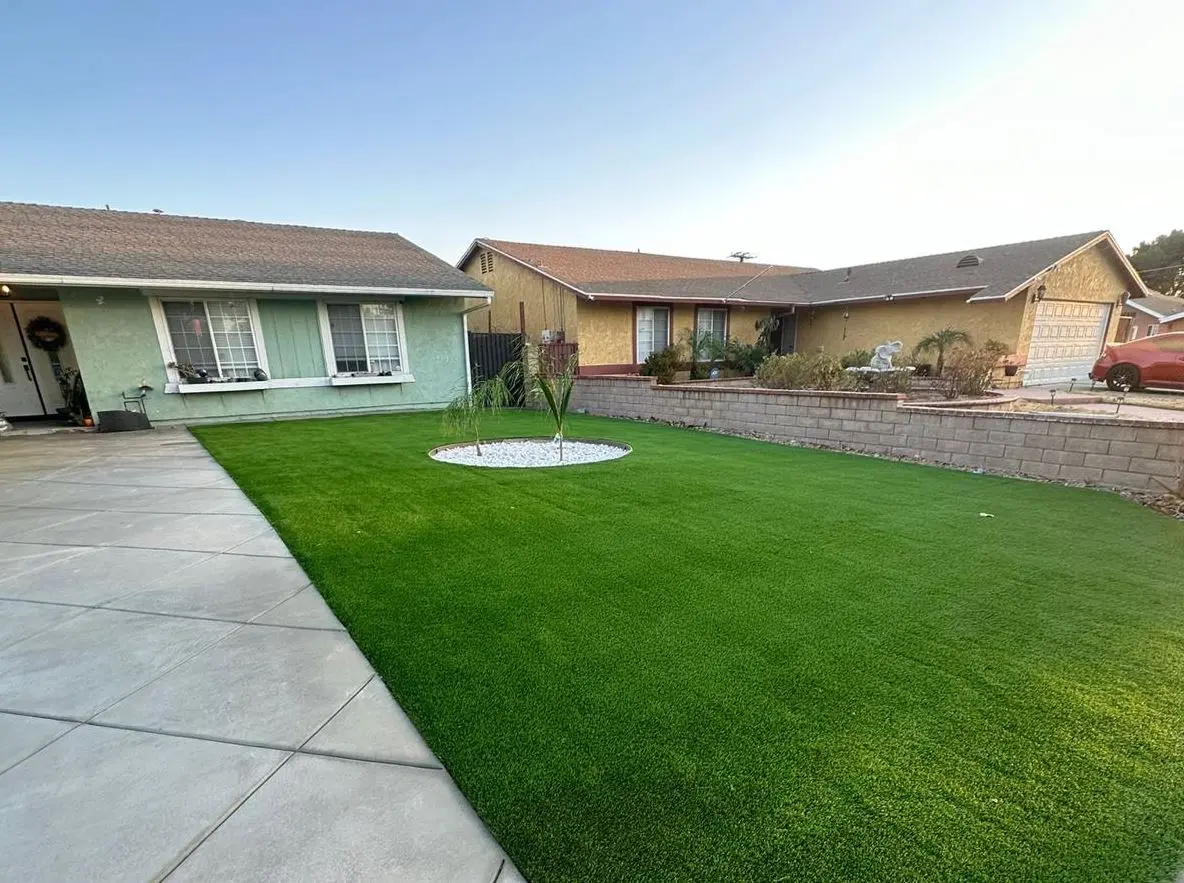
Front yard artificial turf replaces the traditional lawn that Southern California water restrictions have made increasingly difficult to maintain without penalty. Front yard turf installations typically have simpler geometry than backyards and require careful attention to edge treatment at the street, sidewalk, and driveway interfaces to produce a clean finished appearance. California law limits HOA restrictions on front yard artificial turf in most cases, but HOAs may regulate product appearance, pile height, and color. We confirm any applicable HOA standards and specify products that meet those requirements at the estimate visit.
Pet Area Turf Installation
Pet areas present specific requirements for turf product selection and base preparation. Turf used in pet areas requires perforated backing with a high drain rate to manage urine, a base system that includes adequate aggregate depth for drainage, and, in some applications, an antimicrobial layer to reduce odor, and an infill material that is easy to sanitize and does not retain heat at levels that are uncomfortable for animals. We discuss pet-specific turf products and infill options at the estimate visit and design the base and drainage system to the expected use intensity. A pet turf installation that drains and cleans easily is determined more by the base and infill than by the turf surface itself.
Putting Green and Sports Surface Turf
Residential putting greens and sports surfaces use performance turf products designed for their specific applications rather than standard landscape turf. Putting green turf uses a shorter pile and a firmer, denser construction that mimics the playing characteristics of natural bentgrass greens. Sports surface turf is designed for the traction and durability of play use rather than the appearance standards of landscape turf. Both require base preparation specific to the performance characteristics being created, with putting greens typically using a sand-based subsurface and sports areas using a combination of aggregate base and performance infill. We assess the specific performance requirements of the surface at the estimate visit and specify the turf and base system appropriate for the intended use.
Artificial Turf Products and What Differentiates Them
| Specification | Entry Level | Mid-Grade | Premium |
|---|---|---|---|
| Pile height | 3/4 to 1 inch | 1.5 to 1.75 inches | 1.75 to 2.25 inches |
| Face weight (oz/sq yd) | 40 to 50 | 50 to 65 | 65 to 90+ |
| Blade shape | Flat monofilament | C-shape or S-shape monofilament | Multi-shape blend, thatch layer |
| Blade color variation | Single color | Two-tone green blend | Multi-tone with tan thatch layer |
| UV stabilization | Standard | Enhanced | Premium UV inhibitors |
| Backing drain rate | Adequate for typical use | Good, perforated or flow-through | High-flow backing for pets and heavy use |
| Expected lifespan (SoCal conditions) | 8 to 12 years | 12 to 16 years | 15 to 20+ years |
According to the Metropolitan Water District of Southern California, lawn conversion programs that replace natural grass with water-efficient landscaping, including artificial turf, are a key component of the region’s long-term water supply strategy. For properties where the artificial turf area is adjacent to or bordered by planned hardscape, our patio construction and walkway and driveway services can be coordinated in the same project to complete the full outdoor space transformation efficiently.
What Artificial Turf Installation Costs in Southern California
Cost is driven by installation area, turf product selection, site preparation scope, and any specialized requirements for pet areas or performance surfaces. Financing is available for qualified homeowners, including $0 down options.
Call (818) 483-8055 to schedule your free artificial turf estimate.
Our Artificial Turf Installation Process
Step 1: Free Site Visit and Product Consultation
A licensed Wise Choice estimator visits your property, measures the installation area, assesses the existing drainage and base conditions, confirms any HOA requirements, and presents turf product options with samples. You receive a written itemized estimate before the end of the next business day covering the complete installation scope with no obligation to proceed.
Step 2: HOA Approval Confirmation
For properties in HOA-governed communities, we confirm the applicable appearance and product standards and identify any required approval process.
Step 3: Vegetation and Organic Material Removal
Existing grass, weeds, and organic material are removed to the excavation depth required for the base system. Sod is cut and removed in sections and hauled off-site. Any remaining roots, thatch, or decomposable organic material is removed from the subgrade to prevent settlement and odor below the finished turf. The importance of thorough organic removal is highest in pet areas and in areas where the base depth is minimal.
Step 4: Excavation, Base Installation, and Drainage Grading
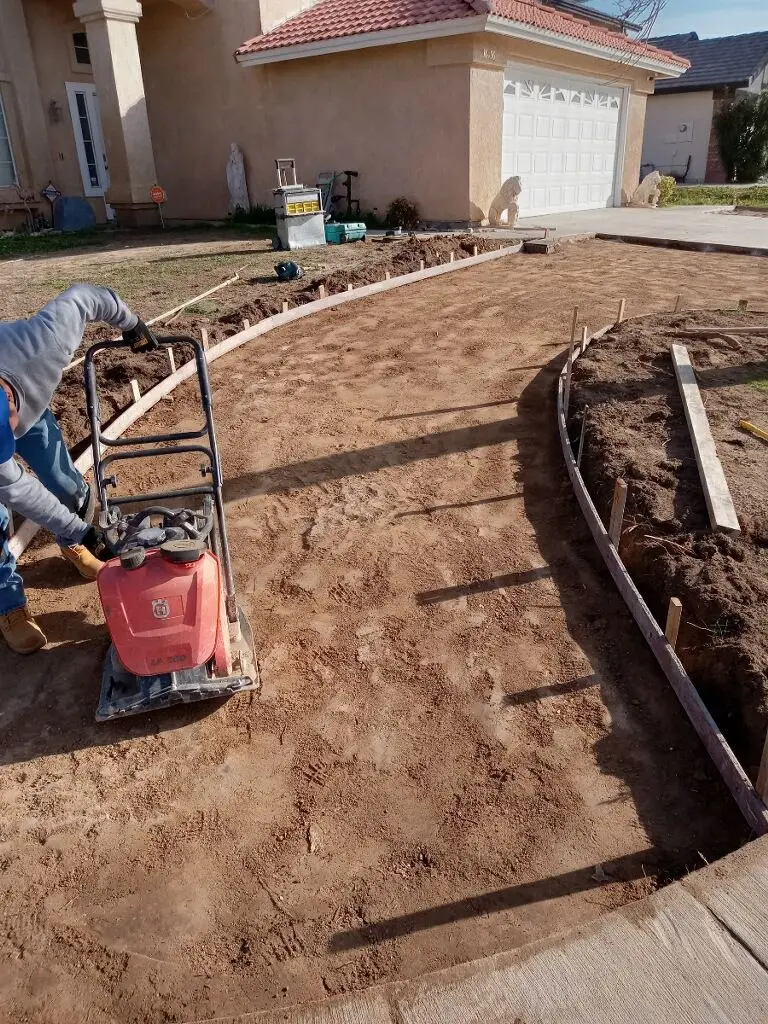
The area is excavated to the combined depth of the aggregate base and the turf installation. The subgrade is graded with the drainage slope required to direct surface water away from structures and toward the designated discharge path. A minimum 1 percent slope away from the home is maintained as standard. Decomposed granite or crushed aggregate base is installed at the required depth, compacted in lifts with plate compaction equipment, and finely graded with a straightedge to produce a flat, even surface at the correct elevation. A geotextile weed barrier is installed over the compacted base before turf is laid.
Step 5: Turf Installation, Seaming, and Edging
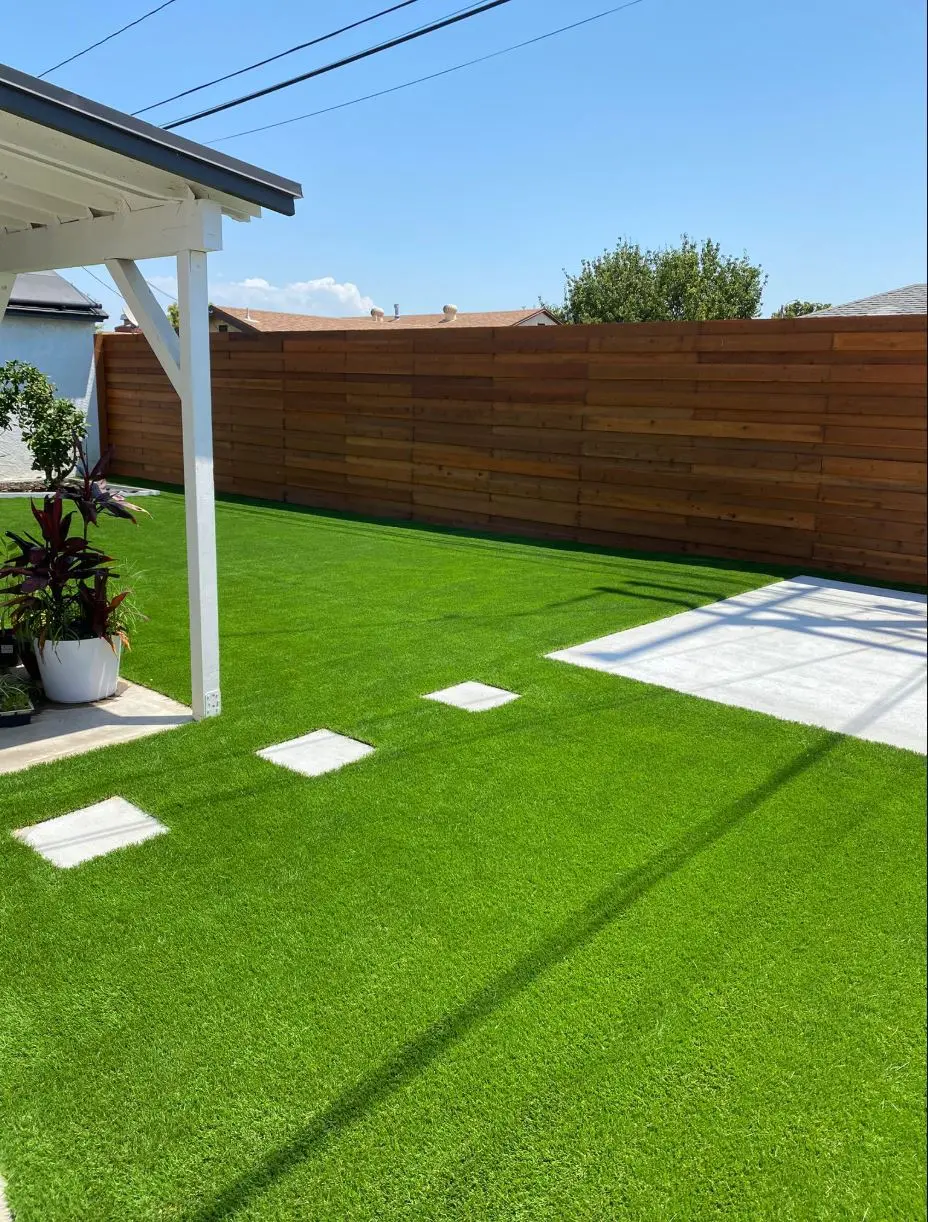
Turf rolls are positioned with blade direction consistent across the installation area. The turf is cut to fit the area geometry, with seams planned at the least visible locations. Seams are joined with seam tape and outdoor-rated adhesive and weighted until the adhesive cures. Edges are trimmed and secured with nails or staples at the required fastening schedule, into bender board edging at soft landscape boundaries or directly into adjacent hardscape at paved interfaces. All cut edges are inspected for exposed backing fiber and trimmed cleanly before infill is installed.
Step 6: Infill Installation and Final Brushing
Infill is spread across the turf surface at the manufacturer’s specified rate per square foot, distributed evenly with a drop spreader, and brushed into the pile with a power broom to ensure even distribution and blade support. The pile is checked for consistent upright blade orientation, and additional brushing is performed where blades are lying flat. The surface is inspected for any seam or edge irregularities before the crew leaves.
Step 7: Cleanup and Closeout
All removed vegetation, packaging, and excess material are hauled off-site. The surrounding hardscape and landscape areas disturbed by the installation are cleaned and restored. At project closeout, you receive the 2-year workmanship warranty in writing, the manufacturer’s product warranty documentation.
If you are ready to get a written estimate for an artificial turf installation request a free estimate online or call (818) 483-8055 to schedule your site visit.
Permits, HOA, and California Requirements for Artificial Turf
Artificial turf installation on private residential property is permit-exempt in most Southern California jurisdictions. Some cities have aesthetic or material standards for front yard turf that are administered through code enforcement rather than permits, typically specifying that turf must not be visible from the street on side yards, must meet minimum pile height standards, or must use natural-looking products. We confirm any applicable city standards at the estimate visit.
California Civil Code Section 4735, enacted in 2022, limits HOA enforcement of outright artificial turf bans in most cases, establishing that HOAs cannot prohibit drought-tolerant landscaping, including artificial turf, in California. HOAs retain the ability to govern the appearance, product standards, and installation standards for artificial turf, and we identify and comply with those standards on every HOA project.
Why Southern California Homeowners Choose Wise Choice for Artificial Turf
15+ Years of Combined Experience Installing Artificial Turf
We have installed artificial turf across the full range of Southern California’s residential landscape conditions, from flat front yards with straightforward geometry to complex backyard installations with curved planting bed edges, multiple material interfaces, and sloped drainage challenges. The base preparation and drainage decisions that determine long-term performance are made before any turf is unrolled, and our crew makes those decisions correctly rather than laying turf over minimally prepared subgrade to reduce installation time.
Licensed and Insured General Contractor
Every artificial turf installation we perform is completed under our general contractor license by crew members fully covered by our insurance. You carry no liability exposure for work our team performs on your property.
Drainage Design Confirmed Before Installation
We confirm the drainage grade and discharge path before any excavation begins. Turf installed without adequate drainage slope retains surface water, softens the base over time, and creates odor problems in pet areas. Establishing correct drainage at the base preparation stage is non-negotiable on every installation.
2-Year Workmanship Warranty
Our 2-year workmanship warranty covers all vegetation removal, base preparation, turf installation, seaming, edging, and infill work our crew performs. If any workmanship-related failure develops within two years under normal conditions, we return and correct it at no charge. The warranty is in writing and delivered at project closeout alongside the manufacturer’s product warranty.
Financing Available
Financing is available for qualified homeowners, including $0 down options. Financing makes a complete turf conversion accessible without requiring the full upfront investment at once. Ask about current programs when you schedule your estimate.
Wise Choice Remodeling brings 15+ years of combined experience to installing artificial turf across Southern California. If you are ready to eliminate natural grass irrigation, reduce your water bill, and have a year-round green yard without the maintenance, call (818) 483-8055 to schedule a free site visit and get a written estimate covering the complete installation scope.