What Crawl Space Repair Involves for Southern California Homes
Crawl space repair is the structural and moisture remediation work performed in the space between the ground and the underside of the first floor in homes built on raised foundations, addressing damage to floor joists, girders, subfloor sheathing, sill plates, and the moisture control systems that protect that framing from the ground environment below it. In Southern California, the conditions that cause crawl space damage are common and widely unaddressed: the majority of the region’s pre-1980 housing stock has crawl spaces without vapor barriers, without insulation, without adequate drainage at the foundation perimeter, and without any history of regular inspection or maintenance. In those conditions, ground moisture evaporates continuously into the crawl space, saturates the wood framing over time, and creates the sustained humidity that supports fungal wood decay and wood-destroying pest activity year after year. The damage accumulates invisibly below the finished floor until it is extensive enough to produce a symptom in the living space above, and by that point, the framing deterioration is typically more significant than the soft spot or floor sag that prompted the homeowner to look further.
Crawl Space Repair Types We Perform
Floor Joist Repair and Replacement
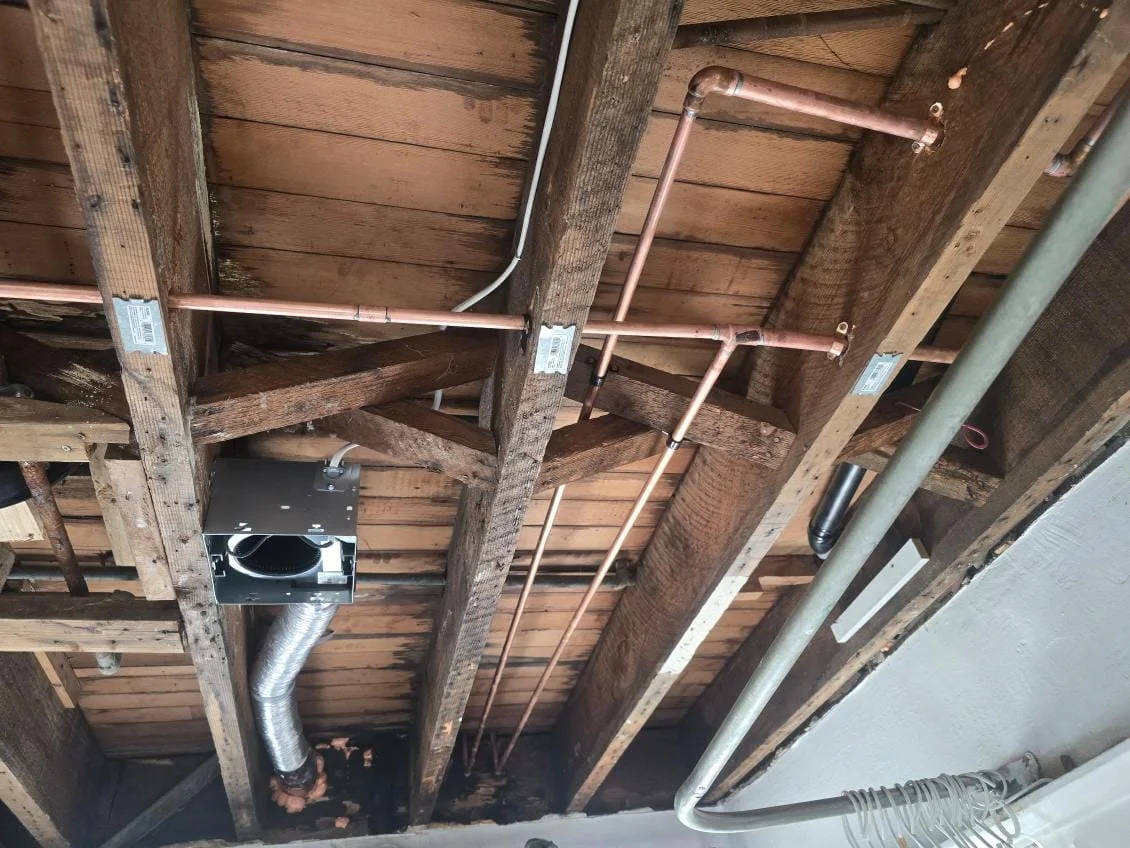
Floor joists are the primary structural members of the floor assembly, spanning from girder to sill plate or girder to girder across the width of the crawl space. When sustained moisture exposure causes wood decay in the joist material, the joist loses cross-sectional strength, deflects under normal floor loads, and eventually produces the soft, springy, or sagging floor conditions that homeowners notice from above. Repair options include sistering a full-length new joist alongside the damaged member where the damaged joist retains enough integrity to serve as a form and nailing surface, or removing and replacing the full joist where the deterioration is too advanced for sistering to restore structural capacity. New framing is installed with pressure-treated lumber or engineered lumber, depending on the span and load requirements at each location.
Girder Repair and Replacement
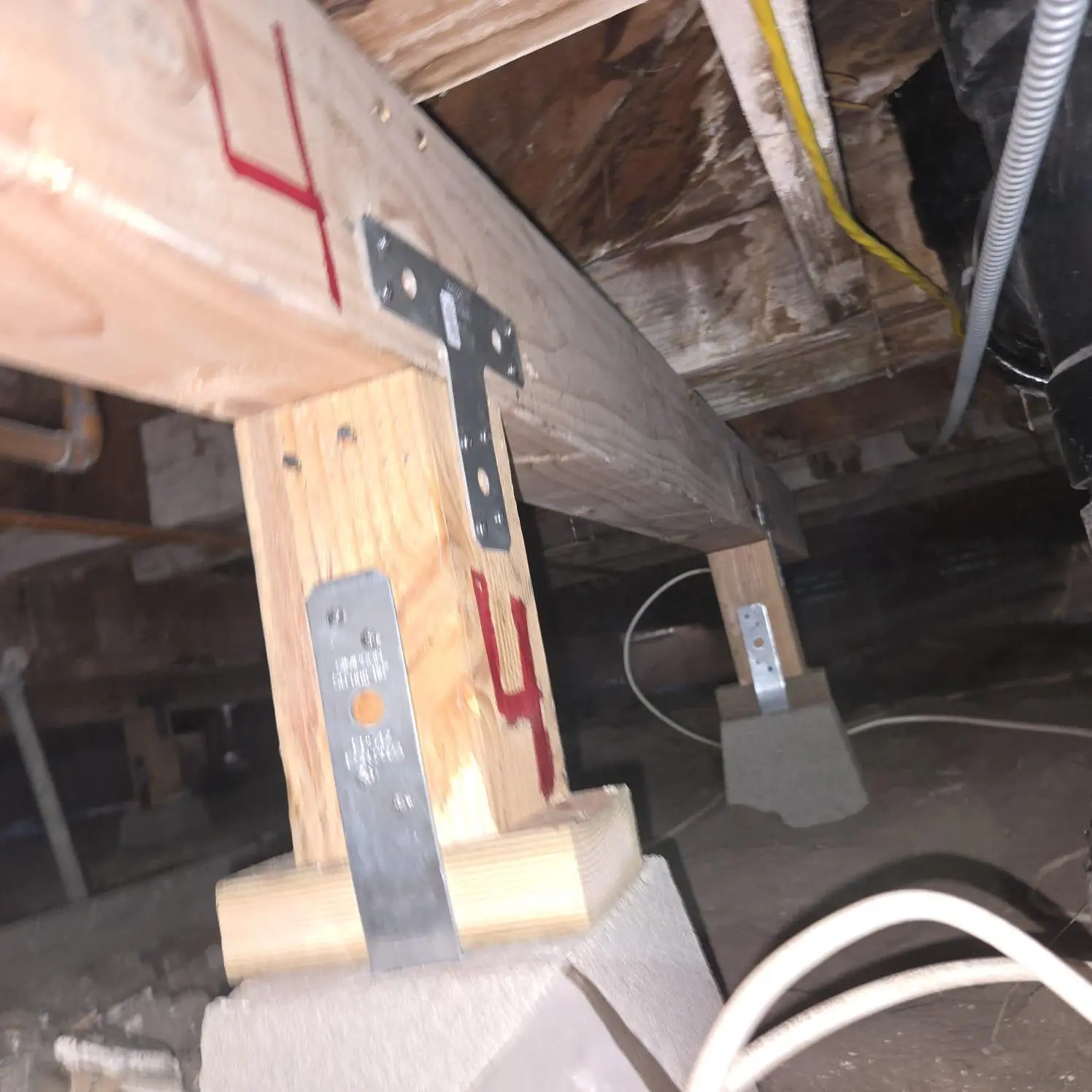
Girders are the larger primary beams that support the floor joists above them, spanning between the foundation walls and any interior piers or posts. Girder deterioration is more consequential than individual joist damage because a compromised girder affects the structural capacity of all the joists it supports. Girder ends that bear on or near the foundation concrete or soil are particularly vulnerable to moisture damage because that contact point concentrates the moisture exposure at the most structurally critical location. We replace deteriorated girder sections with appropriately sized engineered lumber or built-up dimensional lumber to the span and load requirements of the specific framing configuration.
Subfloor Replacement
The subfloor is the sheathing panel that spans the floor joists and forms the structural deck below the finished flooring. When moisture from below deteriorates the subfloor, it loses its ability to distribute loads across the joists, delaminates in the case of plywood, and creates the soft, punky surface conditions that make floors feel spongy or that allow finish flooring to move or crack. Subfloor replacement involves removing the deteriorated panels from the crawl space side where access allows, installing new structural panels at the required thickness for the joist spacing, and fastening them to the code-required schedule. For projects where the finished flooring above is being replaced anyway, subfloor access from above simplifies the installation. We coordinate the access approach with the overall project scope at the estimate stage.
Sill Plate Repair and Replacement
The sill plate is the pressure-treated lumber member that rests on top of the foundation wall and provides the bearing surface and nailing attachment for the floor joists or cripple wall framing above it. Sill plates that were not pressure-treated at original construction, or that have experienced sustained moisture exposure from foundation wall infiltration or ground moisture, can deteriorate to the point where they no longer provide adequate support or nailing surface for the framing they carry. We replace deteriorated sill plate sections with new pressure-treated lumber of the appropriate size, fastened to the foundation with epoxy anchor bolts and to the framing above with the required nailing schedule. Sill plate replacement is frequently coordinated with seismic retrofitting, where the existing sill plate condition does not support the anchor bolt and sheathing installation.
Post and Pier Repair
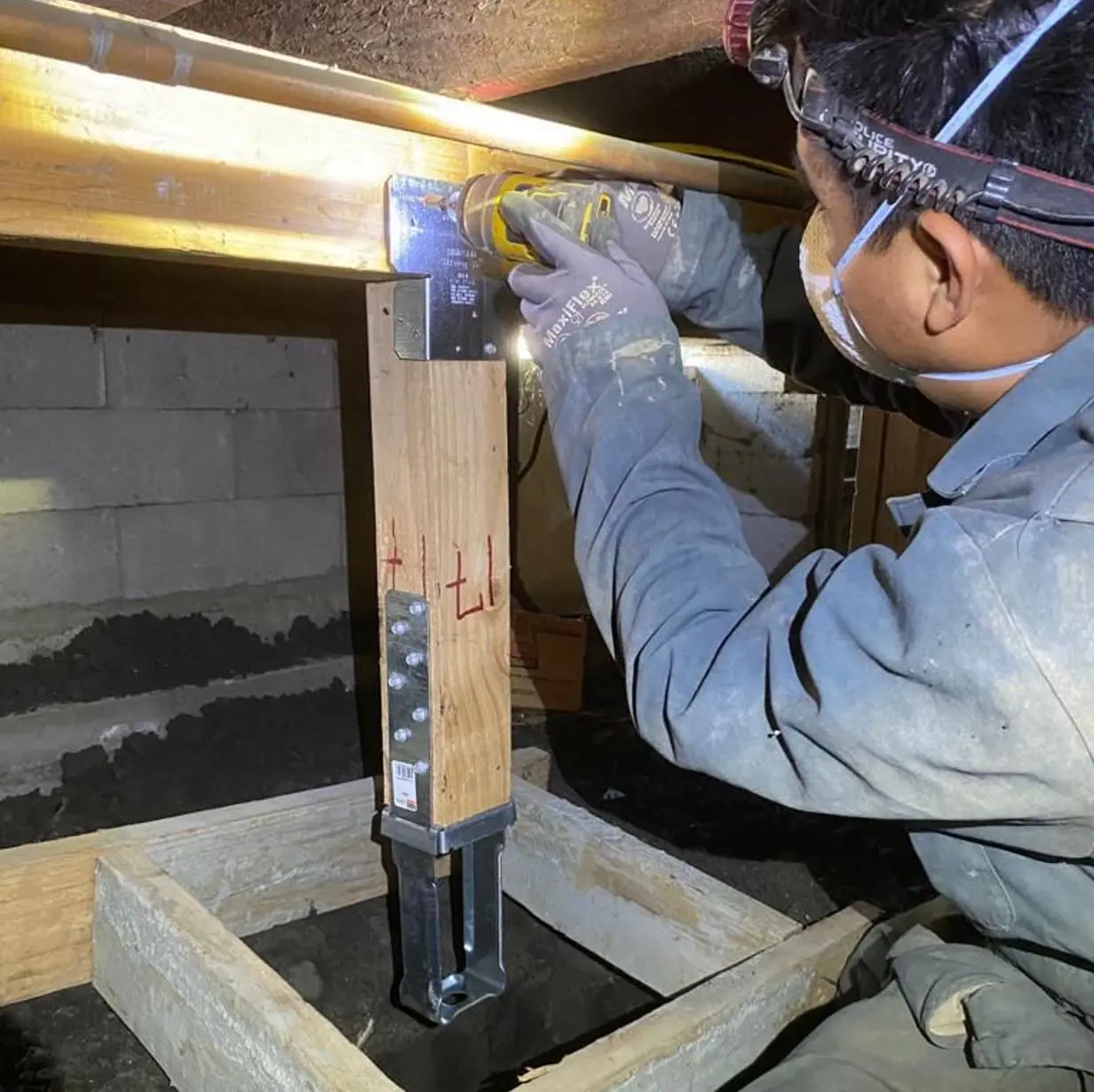
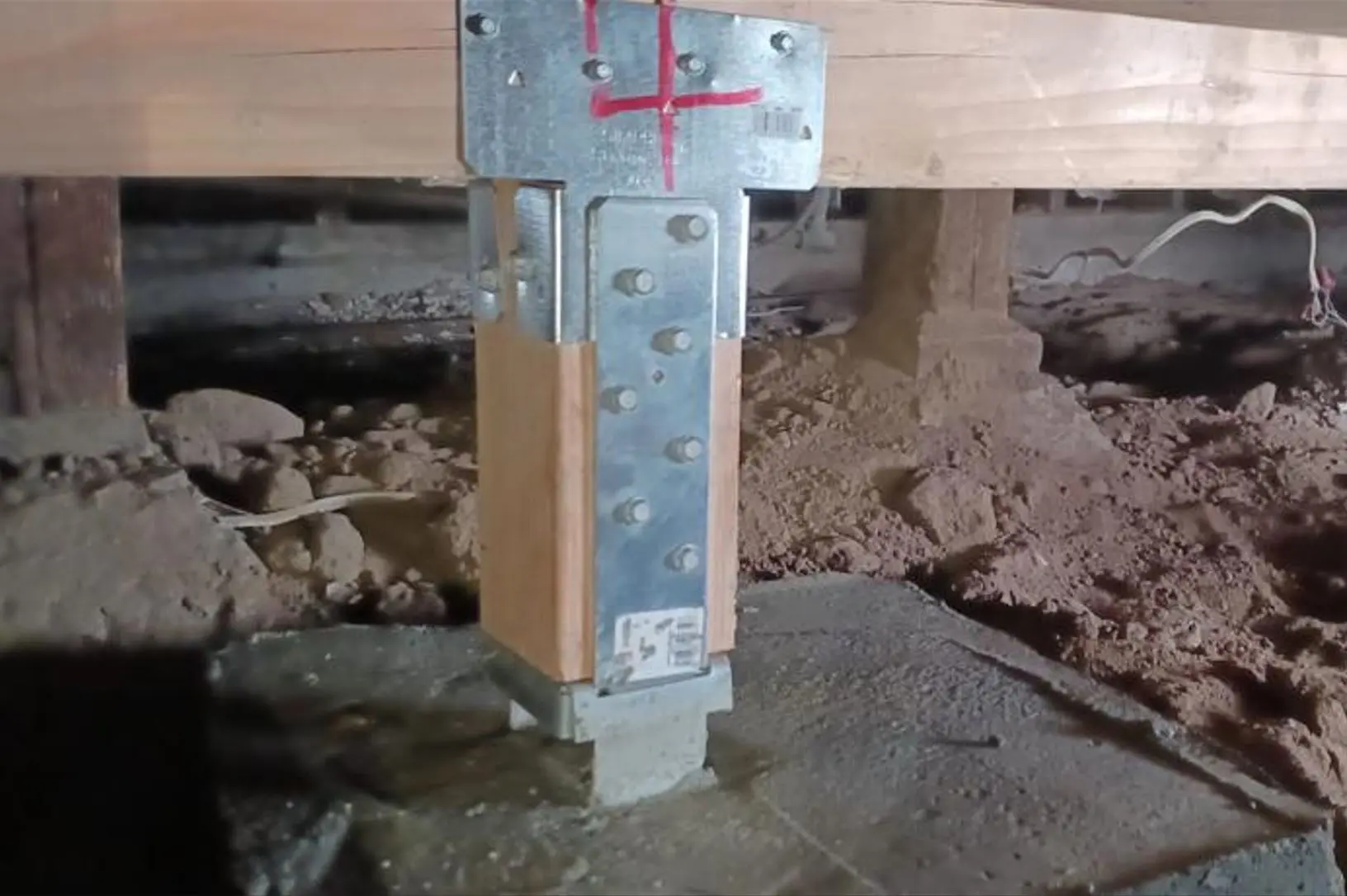
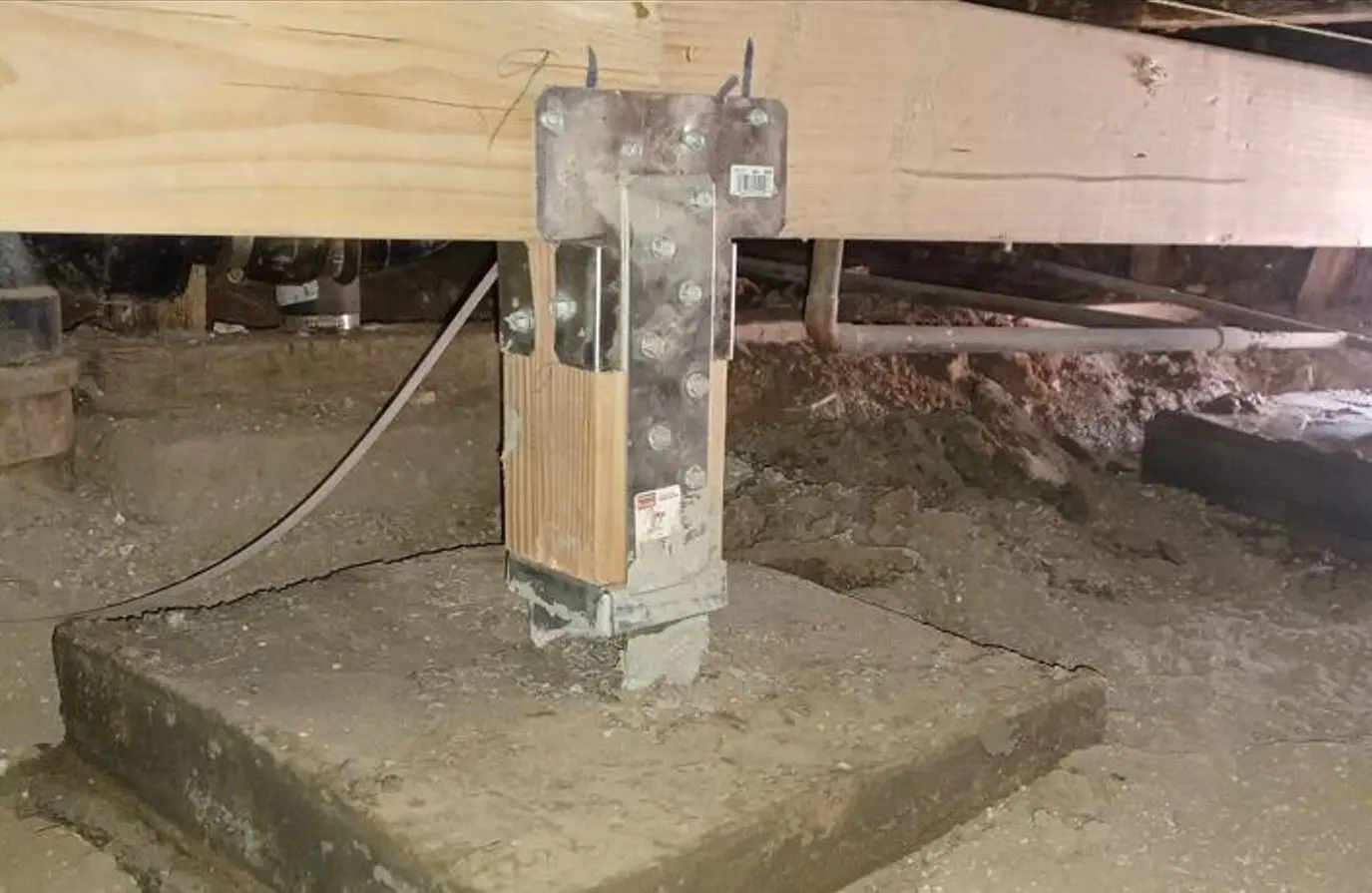
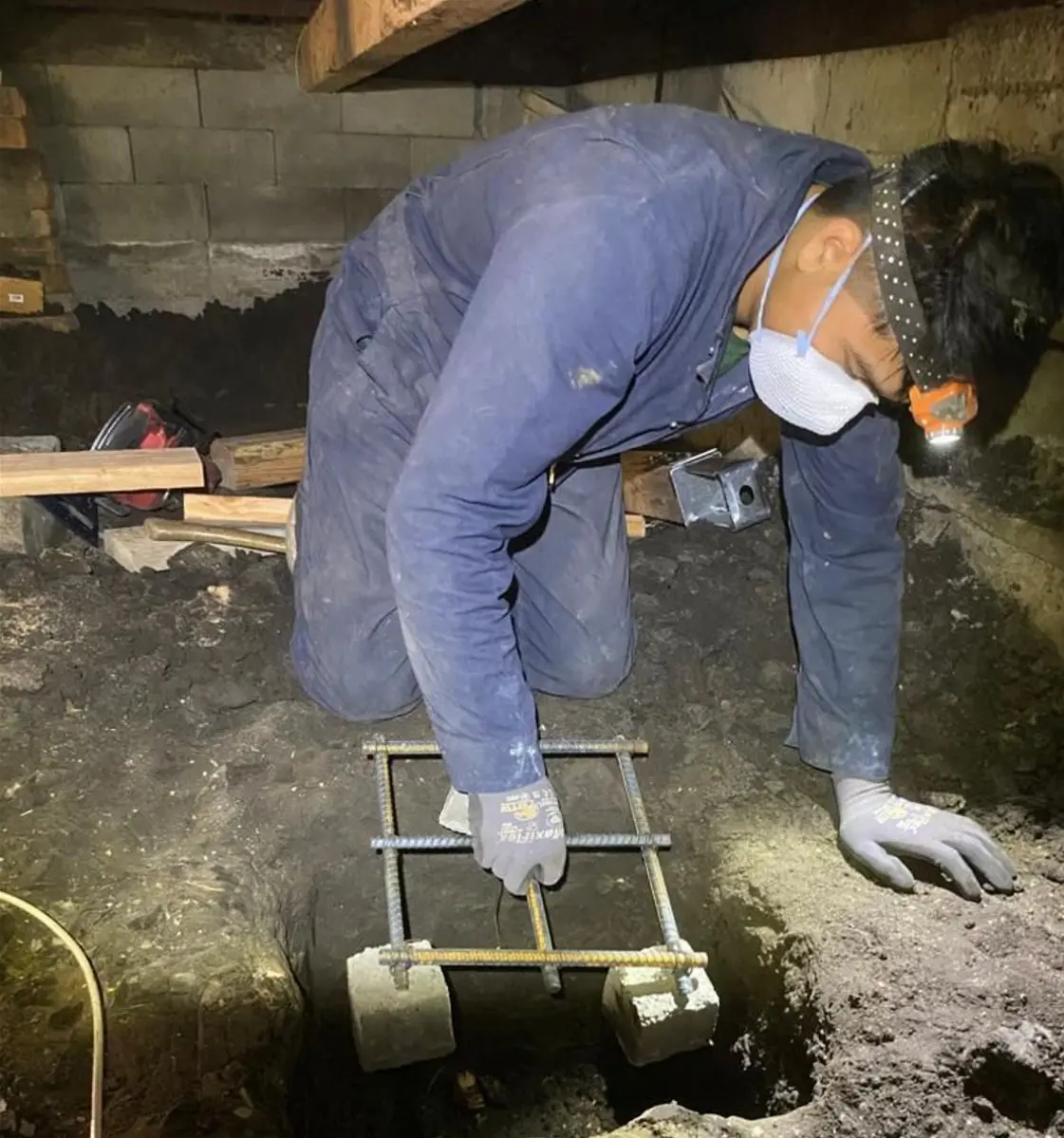
Interior posts and piers support the girders at mid-span, transferring floor loads down to concrete footings in the crawl space. Wood posts that have deteriorated from moisture, or concrete piers that have settled or cracked, reduce the support they provide to the girder above and allow midspan deflection. We replace deteriorated wood posts with new pressure-treated posts or adjustable steel columns, and assess concrete piers for settling or cracking as part of the crawl space inspection. Where pier settlement has caused noticeable floor deflection, we assess whether shimming, replacement, or underpinning is the appropriate correction at each location.
Vapor Barrier Installation and Moisture Remediation
Framing repair in a crawl space that still has the moisture conditions that caused the damage is a temporary fix. Installing a compliant ground vapor barrier and addressing any drainage deficiencies at the foundation perimeter is the standard second component of every crawl space repair project we perform. The vapor barrier goes in after framing repair and before any crawl space insulation, in the sequence that produces a complete, protected assembly. We do not close out a framing repair project without confirming that vapor control is in place.
How Crawl Space Damage Progresses in Southern California
| Stage | Condition in Crawl Space | Symptoms Visible from Above | Repair Complexity |
|---|---|---|---|
| Early | Elevated moisture, surface mold on framing, no structural loss | None visible | Moisture remediation, vapor barrier, lowest cost |
| Moderate | Surface decay on joist faces and ends, some strength reduction | Minor floor squeak, slight springiness in isolated areas | Sistering of affected joists, vapor barrier, moderate cost |
| Advanced | Significant cross-section loss in joists, subfloor deterioration beginning | Noticeable softness or bounce, floor slope, and door alignment issues | Joist replacement, partial subfloor repair, vapor barrier, higher cost |
| Severe | Multiple joists and subfloor extensively deteriorated, with girder involvement | Visible floor sag, soft spots through finish flooring, and floor failure risk | Extensive framing and subfloor replacement, drainage correction, vapor barrier, significant scope |
According to the U.S. Environmental Protection Agency, moisture in building materials is the primary prerequisite for mold growth and wood decay, and controlling moisture is more effective and less costly than remediating damage after it has occurred. For Southern California homeowners who have not had a crawl space inspection in the past several years, the damage found at inspection frequently falls in the moderate to advanced range because the early stages produce no visible surface symptoms. A physical inspection is the only way to determine which stage the crawl space is actually at. For homeowners whose crawl space damage has been accompanied by or caused by moisture infiltration through the foundation walls, our foundation waterproofing services address the wall-level moisture source that crawl space framing repair alone cannot resolve.
Our Crawl Space Repair Process
Step 1: Free Physical Crawl Space Inspection
A licensed Wise Choice estimator physically enters and inspects your crawl space, probing floor joists, girders, subfloor, and sill plates for moisture content and structural integrity, assessing the vapor barrier condition and moisture sources, and documenting damage at each affected location with photographs. The inspection takes 45 to 90 minutes depending on crawl space size and access conditions. You receive a written repair scope identifying each damaged element, the specific repair proposed for each, and an itemized cost estimate before the end of the next business day. No obligation to proceed.
Step 2: Moisture Source Assessment and Permit Application
We confirm the moisture sources contributing to the crawl space conditions observed during the inspection, whether drainage at the foundation perimeter, foundation wall infiltration, an absent vapor barrier, or some combination, and confirm that those conditions are being addressed in the project scope. We submit the building permit application for the structural framing repair and confirm permit processing timelines so the installation schedule is realistic from the start.
Step 3: Access and Preparation
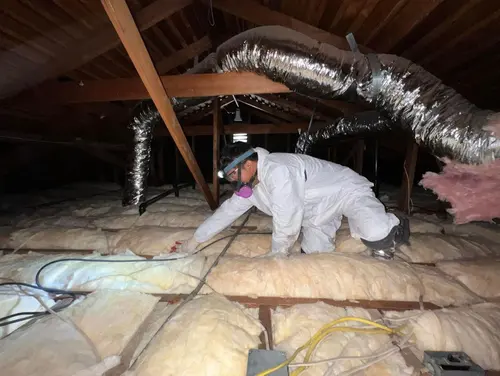
The crawl space is accessed through the existing hatch. The work area within the crawl space is prepared, including removing any existing debris, deteriorated insulation, or failed vapor barrier material that must be cleared before framing repair begins. All removed material is passed out through the access hatch and hauled off-site. No debris is left in the crawl space.
Step 4: Structural Framing Repair
Damaged framing members are repaired or replaced in the sequence required by the structural scope. New framing is installed with lumber of the appropriate species, grade, and size for the span and load at each location. Connections to existing framing, girders, and sill plates are made with the fastener type and schedule required by the permit drawings. The framing inspection is coordinated with the building department before any subfloor is installed over repaired joists.
Step 5: Subfloor Installation Where Required
New structural panels are installed over repaired framing at the required thickness, with an appropriate fastening schedule and staggered panel layout. For projects where the finished flooring above is being replaced simultaneously, we coordinate the subfloor installation with the flooring scope to avoid redundant work.
Step 6: Vapor Barrier and Moisture Controls
After structural framing is inspected and approved, a compliant ground vapor barrier is installed across the full crawl space floor with lapped seams and edges turned up against the foundation walls. Any drainage corrections included in the project scope are confirmed complete before the vapor barrier is installed. Crawl space insulation is installed last, after all structural and moisture control work is in place.
Step 7: Permit Inspection and Closeout
We coordinate the framing inspection and final inspection with the applicable building department. At project closeout, you receive the permit and final inspection sign-off, the 2-year workmanship warranty in writing, photographs of the completed work in the crawl space, and documentation of the repair scope and materials used, formatted to support disclosure requirements at resale.
If your floors feel soft, springy, or noticeably changed compared to years past, or if your crawl space has never been inspected, request a free crawl space assessment online or call (818) 483-8055 to schedule a physical inspection.
Permits and California Requirements for Crawl Space Repair
Structural repair to floor framing in a residential crawl space requires a building permit in most California jurisdictions. The permit triggers a framing inspection that must occur before any new subfloor sheathing is installed over the repaired joists, and a final inspection after all work is complete. We submit the permit application with a scope of work and framing plan as required by the applicable jurisdiction, coordinate both inspections, and deliver the complete permit documentation at project closeout.
California’s residential building code governs the lumber species, grade, size, and span tables applicable to floor framing repair in each climate zone, and connections between new and existing framing must meet the fastening schedules specified in the code for the applicable load conditions. Our framing repair work is performed to those code standards as a baseline, not as an option, because permit inspection confirms compliance, and the structural integrity of the repair depends on it.
California disclosure law requires that sellers disclose known material defects, which include known crawl space framing damage and prior repairs. The repair documentation we provide at project closeout is specifically formatted to support that disclosure if and when it is needed, including the permit and inspection record, the repair scope and materials, and the warranty documentation.
Why Southern California Homeowners Choose Wise Choice for Crawl Space Repair
15+ Years of Combined Experience Repairing Crawl Spaces
We have repaired crawl spaces in Southern California homes spanning every era and condition the region’s housing stock presents. The range of what a first inspection finds in an uninspected crawl space is wide, and our estimators document what is actually there without overstating the scope or proposing framing replacement where sistering is adequate and genuinely sufficient.
Licensed and Insured General Contractor
Every crawl space repair we perform is completed under our general contractor license by crew members fully covered by our insurance. You carry no liability exposure for the structural work our team performs beneath your home.
Physical Inspection Before Every Scope Proposal
We do not estimate crawl space repair without physically entering and inspecting the space. A visual from the access hatch opening is not an inspection. The damage that causes the most cost is typically in the areas least visible from the access point, and an estimate based on anything less than a full physical inspection is not a reliable number.
Moisture Source Addressed Alongside Framing Repair
We assess and address the moisture conditions contributing to the damage as part of every crawl space repair project. Framing repair without moisture source correction produces a temporary result that will repeat the same damage over the same timeframe. We do not allow that outcome when we can prevent it as part of the same project.
2-Year Workmanship Warranty
Our 2-year workmanship warranty covers all framing repair, subfloor replacement, vapor barrier installation, and associated work our crew performs. If any workmanship-related failure develops within two years under normal conditions, we return and correct it at no charge. The warranty is in writing and delivered at project closeout alongside the permit documentation and repair record.
Financing Available
Financing is available for qualified homeowners, including $0 down options. Crawl space repair is frequently a project homeowners discover is larger than anticipated once the inspection is completed, and financing makes it possible to address the full scope rather than patching the most visible damage and leaving the rest to compound further. Ask about current programs when you schedule your inspection.
Wise Choice Remodeling brings 15+ years of combined experience to repairing crawl spaces in Southern California homes. If your home has a crawl space that has never been inspected, or if you are noticing floor conditions that suggest something has changed below, the right starting point is a free physical inspection that tells you exactly what is down there. Call (818) 483-8055 to schedule yours.