What Foundation Settlement Correction Involves for Southern California Homes
Foundation settlement correction is the stabilization and partial or full restoration of a foundation that has moved downward relative to its original position due to loss of soil bearing capacity, soil shrinkage, compaction failure, or soil erosion beneath the footing. Differential settlement, where one section of the foundation moves more than an adjacent section, produces the most visible and consequential structural consequences: diagonal cracks at the corners of windows and doors, stair-step cracking in masonry foundations, sloping floors that are measurably out of level, and doors and windows that stick, rattle, or no longer close properly. In Southern California, where expansive clay soils undergo significant volume change between the wet and dry seasons, where hillside lots are frequently underlain by fill placed decades ago, and where the housing stock includes thousands of homes built on soils that were not adequately characterized or compacted at the time of construction, differential foundation settlement is a common and recurring condition. The critical distinction that determines both urgency and scope is whether the settlement is active and continuing or historical and stable, and that determination requires a physical assessment rather than a visual review of the cracks alone.
Foundation Settlement Correction Methods We Use
Steel Push Pier Underpinning
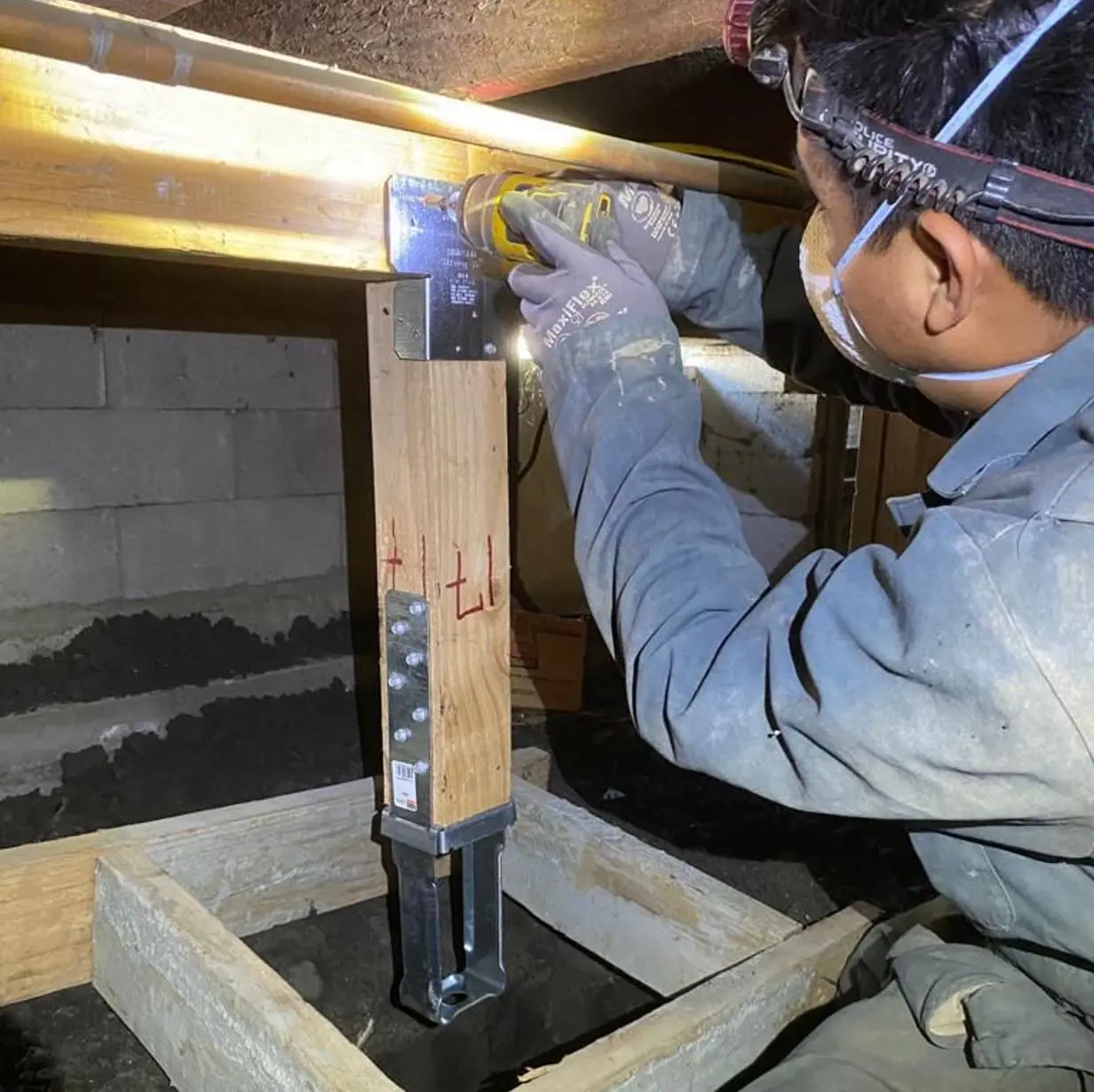
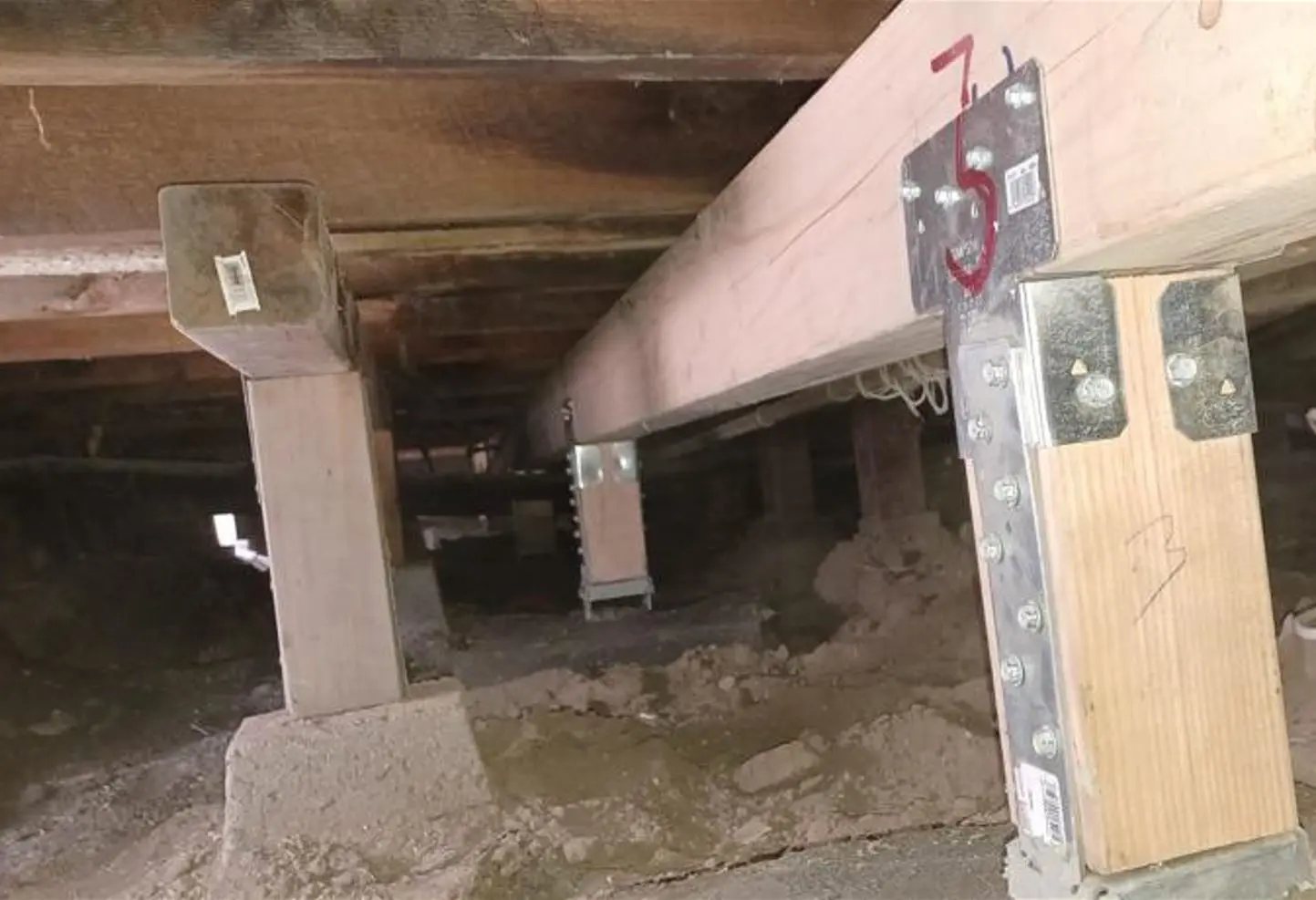
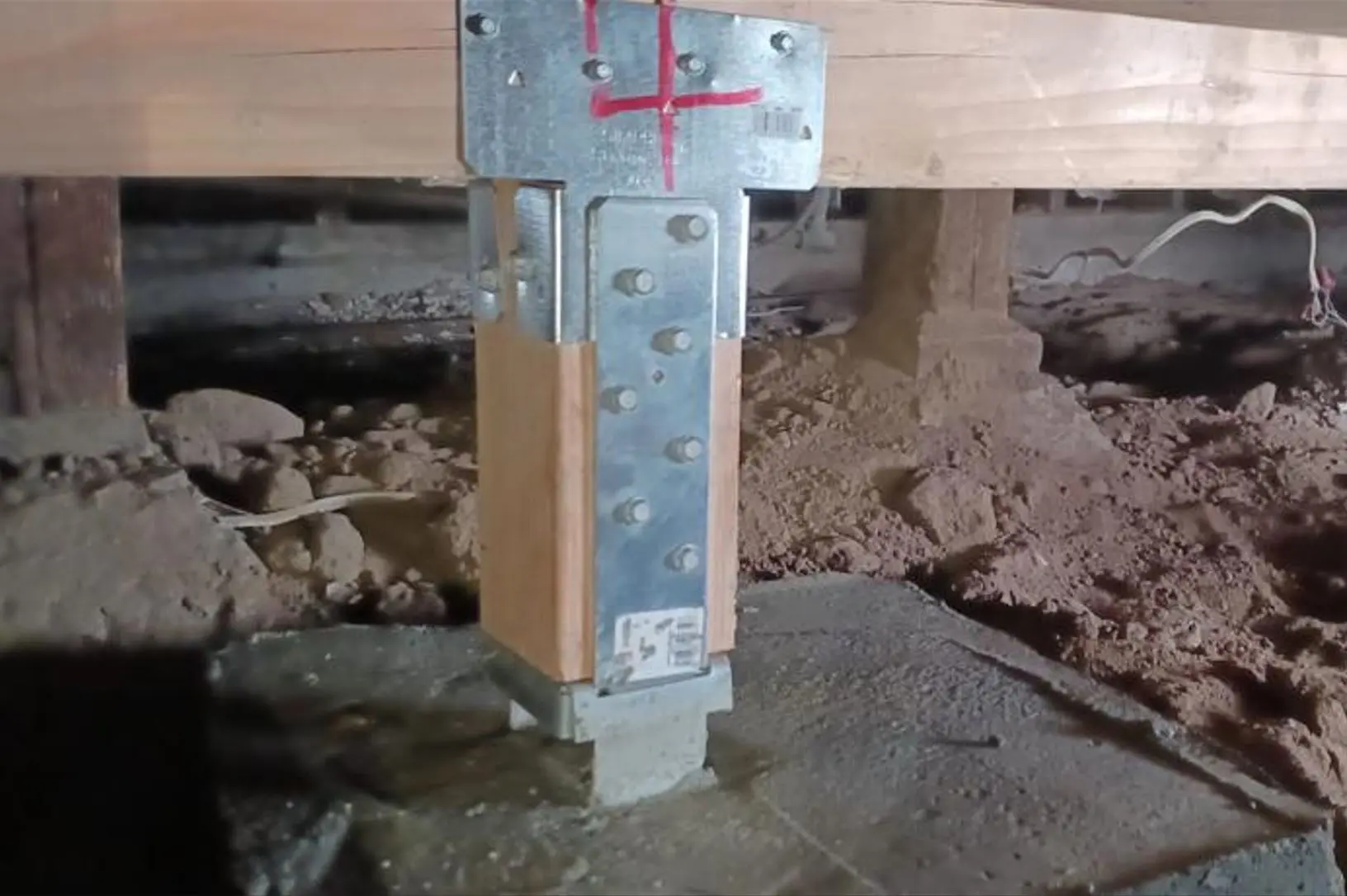
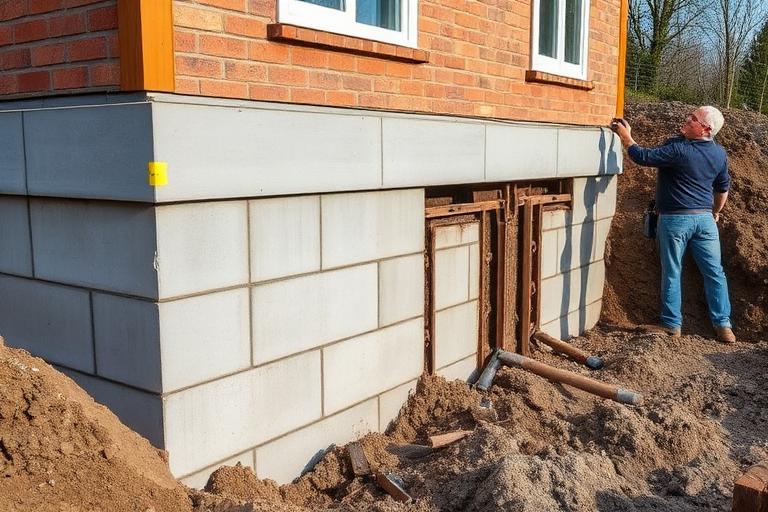
Steel push pier underpinning is the installation of steel pipe sections hydraulically driven into the ground beneath the settled footing, advancing through weak or unstable soil until the pier tip reaches a competent bearing stratum at depth. A bracket assembly connects the footing to the pier, and once the piers are in place, hydraulic jacks are applied simultaneously to all piers in the affected section, transferring the foundation load from the unstable near-surface soil to the pier system bearing at depth. Limited lift of the settled section is often achievable during the load transfer process. Push piers are appropriate for settled sections of concrete footings where access to the footing can be achieved by excavating a small pit adjacent to the foundation and where the soil conditions allow pier advancement to a competent bearing layer. Each pier installation requires a pit approximately 3 feet by 3 feet and 3 to 4 feet deep adjacent to the footing.
Helical Pier Underpinning
Helical piers are steel shafts with helical plates that are screwed into the ground using hydraulic torque equipment, advancing to depth under rotational force rather than being hydraulically driven. They are used in the same underpinning application as push piers but are appropriate for soil conditions where push pier advancement is not feasible, for new construction where the footing load is not yet applied, and for locations where the access constraints of a push pier installation cannot be met. Torque monitoring during installation provides a continuous indication of the soil resistance and allows the installer to confirm when adequate bearing capacity has been achieved at the pier tip depth. Helical piers can also be used in tension applications such as tiebacks for laterally loaded walls.
Concrete Slab Lifting
For settled concrete slabs that have separated from the soil beneath them, polyurethane foam injection or traditional mudjacking fills the void beneath the slab and lifts it back toward level. Polyurethane foam is injected through small-diameter holes drilled in the slab surface, expands to fill the void, and cures within minutes to a rigid cellular material that supports the slab. Traditional mudjacking uses a cementitious slurry pumped under higher pressure through larger holes. Both methods are appropriate for garage slabs, porch and patio slabs, driveway sections, and walkways where the slab itself is sound but the underlying soil has settled or eroded. They are not appropriate for structural foundation footings or foundation walls where the settlement reflects deep soil bearing failure rather than a near-surface void.
Mudsill and Grade Beam Stabilization
For foundations where settlement has been limited to the upper soil layer rather than reflecting deep bearing failure, stabilizing the soil immediately adjacent to and beneath the footing through grouting or soil stabilization compounds can arrest continued movement without the full depth underpinning scope that push pier installation requires. This approach is assessed on a case-by-case basis depending on the settlement depth, the soil profile, and the engineering assessment of the bearing condition.
Drainage Correction as Settlement Companion Scope
For settlement driven by expansive clay soil moisture cycling, drainage correction that stabilizes the moisture content of the soil near the foundation is a necessary companion to the structural underpinning. Piers installed in clay soil that continues to experience wet-dry cycling will arrest settlement at the piered locations, but adjacent sections of the foundation not yet piered will continue to move if the underlying soil condition is not also addressed. We assess the soil and drainage conditions as part of every settlement inspection and include drainage correction in the proposed scope where it is contributing to the settlement condition.
Signs That Foundation Settlement May Be Active in Your Home
| Observation | Possible Significance | Action Indicated |
|---|---|---|
| Diagonal cracks at the window and door corners | Differential settlement producing shear stress at openings | Assessment, crack pattern and width determine urgency |
| Stair-step cracks in masonry or block foundation | Differential settlement at the foundation wall | Assessment, displacement across the crack face indicates activity |
| Floors are out of level, with a measurable slope across the room | Differential settlement in the floor framing support structure | Assessment, confirm foundation origin vs framing settlement |
| Doors and windows are sticking or no longer closing flush | Frame distortion from differential foundation movement | Assessment, confirm onset timing and progression |
| Cracks with fresh concrete dust at edges | Recent movement, crack is actively opening | Prompt assessment, active cracks indicate ongoing settlement |
| Separation at interior wall-ceiling joints | Structural distortion from settlement affecting the framing above the foundation | Assessment alongside foundation inspection |
According to the U.S. Geological Survey, land subsidence from soil compaction and consolidation is a significant issue in parts of Southern California, and the combination of clay soil expansion and contraction cycles with the region’s aging housing stock creates conditions where foundation settlement is a common and recurring condition rather than an isolated event. For homeowners whose settlement-related cracks are being addressed with crack repair before stabilizing the underlying movement, our foundation crack repair services cover the crack sealing work that follows stabilization as the correct repair sequence.
Our Foundation Settlement Correction Process
Step 1: Free On-Site Structural Assessment
A licensed Wise Choice estimator visits your property, inspects the foundation from accessible interior and exterior locations, maps crack locations and measures crack widths, assesses floor level conditions, reviews the site drainage and soil conditions, and evaluates the settlement pattern to identify which sections of the foundation are affected and the probable cause of the movement. The visit typically takes 60 to 90 minutes. You receive a written assessment identifying the settlement condition, the recommended correction method, and pier count with the reasoning behind the recommendation, and an itemized cost estimate before the end of the next business day. No obligation to proceed.
Step 2: Engineering Engagement and Permit Application
Foundation underpinning in California requires a structural engineer’s assessment and stamped plans as part of the building permit application in most jurisdictions. We coordinate with a licensed structural engineer familiar with Southern California soil conditions, provide the field data from the assessment visit to support the engineering analysis, and submit the permit application with the engineer’s plans. We manage the permit process end-to-end and factor the permit processing timeline into the project schedule.
Step 3: Excavation at Pier Locations
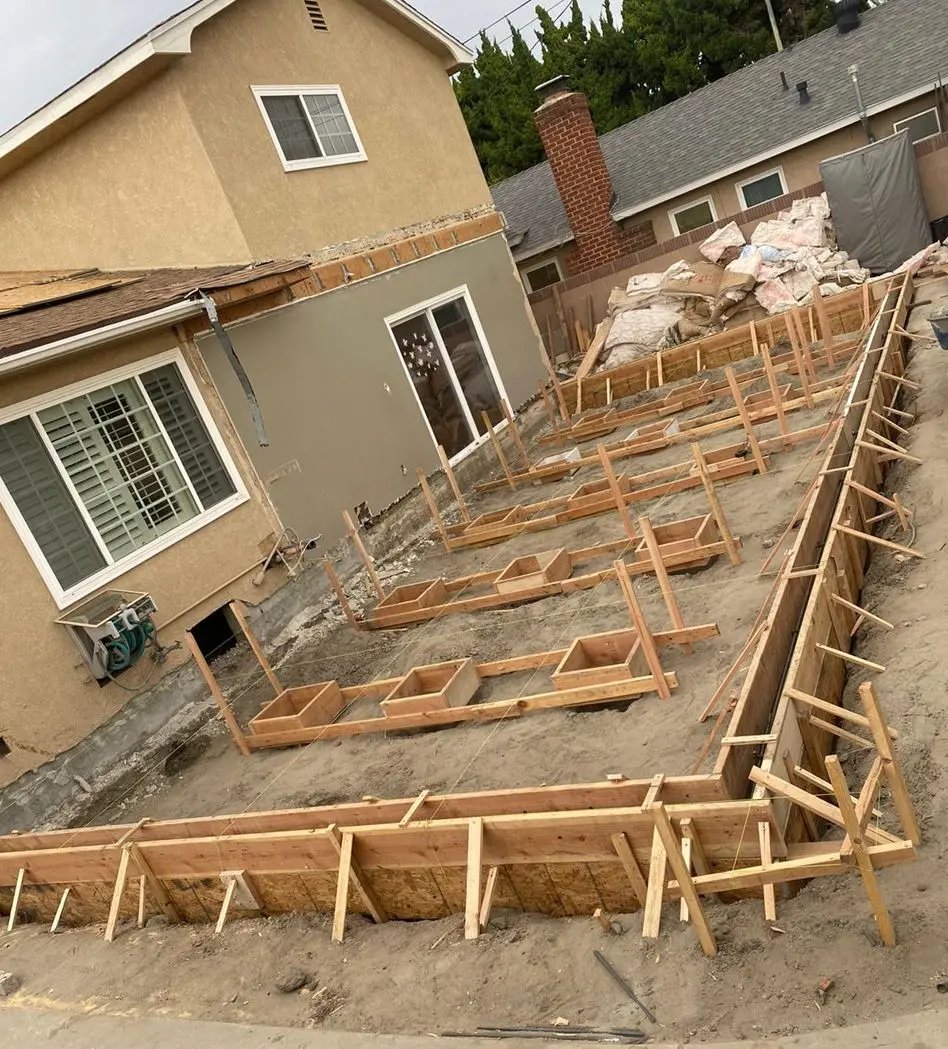
Small excavation pits are opened at each pier location adjacent to the settled footing, exposing the footing face and bottom for bracket installation. Pit size is typically 3 by 3 feet at the surface, narrowing to the footing width at depth. Excavated soil is staged for backfill, and any excess is hauled off-site. Hardscape disturbed by the excavation is managed as part of the project scope.
Step 4: Pier Installation and Load Transfer
For push piers, steel pipe sections are hydraulically driven beneath the footing at each pit location, advancing through the soil until the installation resistance confirms adequate bearing capacity at depth. The bracket assembly is installed, connecting the pier to the footing. After all piers are installed and brackets are in place, hydraulic jacks are applied simultaneously to all piers in the affected section to transfer the foundation load from the near-surface soil to the pier system. Limited lift of the settled section is applied where achievable and safe, with the lift amount monitored against the structural response of the building above. For helical piers, the installation process uses torque monitoring in place of hydraulic driving resistance.
Step 5: Monitoring, Backfill, and Surface Restoration
After load transfer, the foundation response is confirmed, any pier locking hardware is tightened, and the framing inspection is coordinated with the building department, where required by the permit. Pits are backfilled in compacted lifts, and hardscape or landscaping disturbed by the excavation is restored. All excavated material, equipment, and debris are removed from the property.
Step 6: Crack Repair and Companion Scope
Foundation cracks that developed as a result of the settlement are repaired after the foundation has been stabilized. Repairing cracks before stabilization is pointless because the active movement will reopen them. We sequence crack repair after settlement correction as a final project step and price it as a combined scope where both are being performed in the same project.
Step 7: Permit Inspection and Closeout
We coordinate all required structural and final inspections with the applicable building department. At project closeout, you receive the permit and final inspection sign-off, the structural engineer’s report and stamped plans, the 2-year workmanship warranty in writing, photographs documenting the pier installation and any lift achieved, and the complete repair record formatted to support California real estate disclosure and any applicable insurance documentation.
If you have noticed the cracks, slopes, or door and window conditions that suggest your foundation may have moved, request a free assessment online or call (818) 483-8055 to schedule an on-site inspection before the condition progresses further.
Permits and California Requirements for Foundation Settlement Correction
Foundation underpinning and settlement correction are structural modifications to the foundation system and require a building permit in all California jurisdictions. The permit application for underpinning work requires plans stamped by a licensed structural engineer in most jurisdictions, as the work modifies the load path of the foundation in a way that requires engineering analysis to confirm adequacy for the site conditions and loads involved. The permit triggers inspections at the excavation, pier installation, and final stages of the work.
Southern California’s high seismic design categories impose specific requirements on structural modifications, including foundation underpinning, and the engineering scope must address seismic load conditions as well as the vertical settlement correction. We coordinate with structural engineers experienced in Southern California’s seismic design requirements who incorporate those conditions into the pier design and connection details.
California’s disclosure requirements for real estate transactions require that sellers disclose known material defects, including foundation settlement, prior settlement correction work, and the engineering and permit documentation associated with those repairs. We provide the complete engineering report, permit record, and repair documentation at project closeout in the format required to support that disclosure.
Why Southern California Homeowners Choose Wise Choice for Foundation Settlement Correction
15+ Years of Combined Experience Correcting Foundation Settlement
We have assessed and corrected foundation settlement on Southern California homes across every soil type, foundation configuration, and settlement pattern the region presents. The combination of expansive clay soils, hillside fill conditions, and aging housing stock creates settlement conditions specific to this market, and our estimators assess each situation specifically rather than applying a standard pier count to every project without regard to the settlement pattern and probable cause.
Licensed and Insured General Contractor
Every settlement correction project we perform is completed under our general contractor license by crew members fully covered by our insurance. You carry no liability exposure for the structural work our team performs on your foundation.
Engineering Coordination Managed End-to-End
Foundation settlement correction requires engineering in California, and the homeowner should not have to independently find, hire, and coordinate an engineer to get a foundation underpinning project permitted. We manage the engineering engagement, provide the field data, review the permit plans, and coordinate the inspections as part of the project scope. You do not manage that process.
Settlement Stabilization Before Crack Repair
We do not repair settlement-related cracks before the settlement is stabilized. A crack repair performed on an actively settling foundation is temporary at best and misleading at worst. The correct sequence is stabilization first, then crack repair, and we enforce that sequence on every settlement correction project we perform.
2-Year Workmanship Warranty
Our 2-year workmanship warranty covers all pier installation, bracket work, excavation, backfill, and associated labor our crew performs. If any workmanship-related failure or continued movement attributable to our installation develops within two years, we return and correct it at no charge. The warranty is in writing and delivered at project closeout alongside the engineering documentation and permit record.
Financing Available
Financing is available for qualified homeowners, including $0 down options. Foundation settlement correction is one of the larger foundation repair investments, and deferral of active settlement allows the condition to progress and the scope to grow. Ask about current financing programs when you schedule your assessment.
Wise Choice Remodeling brings 15+ years of combined experience to correcting foundation settlement on Southern California homes. If your home is showing cracks, floor slopes, or door and window conditions that suggest differential settlement, the starting point is a free on-site assessment that tells you what is happening, whether it is active, and what the correction would involve. Call (818) 483-8055 to schedule yours.