What Drainage Correction Does for Southern California Homes
Drainage correction is the modification of site grading, surface drainage pathways, and subsurface drainage infrastructure to redirect water away from the home’s foundation rather than allowing it to concentrate there. In Southern California, where the rainfall pattern delivers most of the year’s precipitation in a compressed wet season between November and April, the drainage conditions around a home’s foundation determine whether seasonal rain is managed safely away from the structure or allowed to saturate the adjacent soil, build hydrostatic pressure against the foundation walls, infiltrate through cracks and porous concrete, and create the moisture conditions in the crawl space and foundation assembly that compound into structural and framing damage over time. Drainage problems are the upstream cause of a significant share of the foundation cracking, waterproofing failures, and crawl space deterioration that Southern California homeowners address reactively after the damage has already occurred. Correcting the drainage condition that drives those problems is both less expensive and more durable than repeatedly repairing the downstream damage it causes.
Drainage Correction Methods We Use
Site Regrading
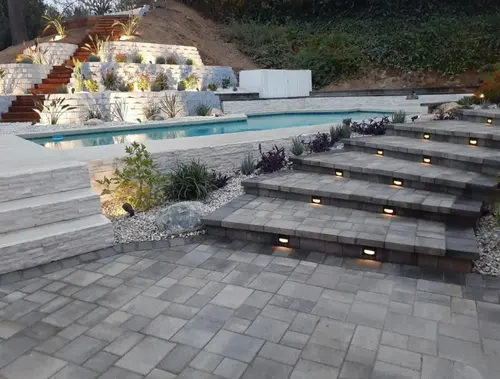
Proper site grading around a residential foundation requires a minimum 5 percent slope away from the structure for the first six feet adjacent to the foundation, according to the California Residential Code. Many Southern California homes have settled, had landscaping changes, or were originally graded inadequately, resulting in flat or negatively sloped areas adjacent to the foundation that collect water rather than shedding it. Regrading involves importing fill material, shaping the grade to the required slope, compacting appropriately, and establishing ground cover or hardscape that maintains the corrected grade over time. For properties where the site conditions allow surface regrading to solve the problem, it is the least expensive and least invasive approach, and we propose it where it is genuinely adequate rather than defaulting to more involved drainage systems.
French Drain Installation
A French drain is a perforated pipe encased in gravel and filter fabric, installed in a trench at the foundation perimeter or at a strategic interception point in the yard. As water saturates the soil and moves toward the foundation through the soil profile, the gravel layer intercepts it, and the perforated pipe collects and carries it to a discharge point away from the structure. French drains are the appropriate solution for Southern California homes with clay-heavy soils where surface regrading alone cannot intercept the subsurface water movement toward the foundation that clay soil’s limited permeability creates. We size the pipe diameter and gravel depth to the anticipated water volume based on the drainage area and site conditions at each property.
Surface Drain and Catch Basin Installation
Surface drains and catch basins collect pooling water at specific low points in the yard, patio, or driveway and carry it through an underground pipe to a discharge location. They are appropriate for sites with defined collection points where runoff concentrates during rainfall, such as low corners of patios, the low end of sloped driveways, and depressions adjacent to the foundation that cannot be corrected through regrading alone. We size catch basin grates and connecting pipe to the anticipated runoff volume from the contributing drainage area.
Downspout and Roof Drainage Management
Gutters and downspouts collect roof runoff and concentrate it at a small number of discharge points. Without downspout extensions or drainage connections, that concentrated volume deposits directly at the foundation, creating localized saturated soil conditions even where the surrounding grade is adequate. We extend downspouts away from the foundation, install pop-up emitter outlets that discharge at the surface at a safe distance, or connect downspouts to underground drainage lines where the site conditions call for it. For homes without gutters, we assess whether gutter installation should precede or accompany the drainage correction scope.
Channel Drain Installation
Channel drains collect sheet flow across paved surfaces such as driveways, patios, and walkways and carry it to a connected drain line rather than allowing it to run off the edge of the hardscape toward the foundation or yard. They are particularly relevant for Southern California homes with large rear or side patio areas that slope toward the house, or for driveways that carry significant runoff toward the garage apron and foundation.
Sump Pump Installation
For properties where no gravity discharge is available at a sufficient distance from the foundation, a sump pump collects water that enters a below-grade collection pit and discharges it through a pressurized line to a point where a gravity outlet is feasible. Sump pumps are most commonly used in conjunction with interior foundation drainage board systems, but can also serve exterior collection systems where site topography limits gravity drainage options.
Common Drainage Problems in Southern California and Their Solutions
| Drainage Condition | Typical Cause | Recommended Correction |
|---|---|---|
| Water is pooling at the foundation after rainfall | Negative or flat grade adjacent to the foundation | Regrading with fill to establish a positive slope away from the foundation |
| Water migrates through the soil toward the foundation | Clay soil is limiting infiltration, subsurface flow path toward the house | Perimeter French drain intercepting subsurface flow before it reaches the foundation |
| Wet corner at the foundation, roof valley above | Concentrated downspout discharge at one location | Downspout extension or underground connection to discharge away from the foundation |
| Water is pooling on the patio, sloping toward the house | Hardscape drains toward the structure rather than away | Channel drain or catch basin at the low point, connected to the drain line |
| Recurring crawl space moisture after rain | Multiple contributing drainage failures, grade, downspouts, subsurface flow | Combined drainage correction addressing each contributing source |
| No gravity outlet available for drainage | Topographic constraint or tight urban lot | Sump pump system with pressurized discharge line |
According to the Federal Emergency Management Agency, improper site drainage is a leading contributing factor in residential foundation damage during flood and rain events. Southern California’s episodic but intense rainfall pattern makes proper drainage management particularly important for properties in low-lying areas, those adjacent to slopes, and those with clay-heavy soils that cannot absorb water quickly enough during heavy events. For homeowners whose drainage problems have already caused foundation moisture or cracking, drainage correction addresses the source, while our foundation waterproofing services address the wall-level protection that reduces moisture infiltration from the water that does reach the foundation.
Our Drainage Correction Process
Step 1: Free Site Walk and Drainage Assessment
A licensed Wise Choice estimator walks your full property, identifies grade conditions adjacent to the foundation, locates water accumulation points and drainage pathways, confirms gutter and downspout discharge locations, and assesses the soil type and its drainage characteristics in the areas of concern. For properties with existing drainage infrastructure, we confirm the condition and adequacy of existing pipe, drain inlets, and discharge points. The visit typically takes 45 to 75 minutes. You receive a written assessment identifying each drainage deficiency and the specific correction proposed for each, with an itemized cost estimate, before the end of the next business day. No obligation to proceed.
Step 2: Permit and HOA Determination
We confirm the permit and HOA requirements for the proposed scope. For projects requiring a grading permit or HOA approval, we submit the required documentation and factor the review timeline into the project schedule. We do not schedule excavation or installation until all required approvals are confirmed.
Step 3: Excavation and Drain Installation
Trenches are excavated at the locations identified in the scope. For French drain installation, filter fabric is laid in the trench, drainage aggregate is placed at the specified depth, a perforated pipe is installed at grade, additional aggregate is placed over the pipe, and the filter fabric is wrapped over the top before backfill. For catch basin and surface drain installation, basin boxes are set at the correct elevation relative to the surrounding grade, the connecting pipe is laid at the required slope to the discharge point, and basins are adjusted to the final grade after backfill. All pipe connections are confirmed solid, and all basins are confirmed at the correct elevation before any surface restoration begins.
Step 4: Discharge Installation
The discharge end of the drainage system is terminated at the location identified during the assessment, whether a pop-up emitter at a safe distance from the structure, a connection to the street gutter through a city-approved outlet, or a sump pump discharge line. We confirm the discharge point is functional and that the system flows correctly under simulated load before surface restoration begins.
Step 5: Surface Restoration and Cleanup
Disturbed soil is compacted and graded to the corrected slope. Turf, groundcover, or gravel is restored over disturbed areas. Hardscape disturbed by excavation is repaired or replaced to match the surrounding surface as closely as the project conditions allow. All excavated material, packaging, and equipment are removed from the property. You receive your closeout package, including the 2-year workmanship warranty in writing and documentation of the drainage system installed, including pipe locations, drain placements, and discharge points.
If you are ready to address a drainage problem that is affecting your foundation, crawl space, or yard, request a free assessment online or call (818) 483-8055 to schedule a site walk.
Permits and California Requirements for Drainage Correction
Grading and drainage work in California is subject to permit requirements that vary by project scope and jurisdiction. The California Building Code requires a grading permit for most grading projects that move more than 50 cubic yards of material or that involve cut or fill slopes. Smaller regrading projects and drainage pipe installation within a private property typically fall below the permit threshold in most jurisdictions, but we confirm the applicable requirement for each project during the estimate visit.
Drainage work that discharges to the public right-of-way, a city storm drain, or a neighboring property requires an encroachment permit or approval from the applicable municipality. California’s stormwater regulations also restrict certain types of drainage that could carry pollutants into storm drain systems, and we ensure that any discharge connection complies with applicable local stormwater management ordinances.
For HOA-governed properties, grading and drainage modifications to the exterior of the home and yard typically require HOA approval before work begins. We provide the documentation needed for HOA submission and advise on the typical review timelines for the HOA-governed communities we work in across Southern California.
Why Southern California Homeowners Choose Wise Choice for Drainage Correction
15+ Years of Combined Experience Correcting Drainage Problems
We have assessed and corrected drainage conditions across Southern California’s varied property types, soil conditions, and site geometries. The combination of clay soils, concentrated wet-season rainfall, dense lot coverage, and aging drainage infrastructure creates drainage problems that vary significantly between properties, and our estimators assess each site specifically rather than proposing a standard French drain solution for every drainage complaint, regardless of whether that is what the site actually needs.
Licensed and Insured General Contractor
Every drainage correction project we perform is completed under our general contractor license by crew members fully covered by our insurance. You carry no liability exposure for work our team performs on your property.
Root Cause Assessment Before Scope Recommendation
We walk the site and identify every contributing drainage deficiency before proposing a scope. A home with a French drain from a prior repair that is still experiencing foundation moisture may have a gutter deficiency or a grading problem in a different area that the existing drain does not address. We find all of the contributing sources before recommending a solution rather than re-proposing the same corrective measure that did not fully solve the problem before.
Scope Matched to Conditions
We propose regrading where regrading is adequate, downspout correction where that is the source, and French drains where subsurface water movement requires them. We do not propose the most extensive drainage solution for every property where a simpler and less expensive correction would produce the same result. The estimate reflects the scope that the site conditions warrant.
2-Year Workmanship Warranty
Our 2-year workmanship warranty covers all grading, excavation, pipe installation, drain placement, and surface restoration our crew performs. If any workmanship-related drainage failure develops within two years under normal weather conditions, we return and correct it at no charge. The warranty is in writing and delivered at project closeout alongside the drainage system documentation.
Financing Available
Financing is available for qualified homeowners including $0 down options. Ask about current programs when you schedule your estimate.
Wise Choice Remodeling brings 15+ years of combined experience to correcting drainage problems on Southern California properties. If your foundation is being exposed to water that has nowhere to go, the starting point is a free site walk and a written estimate that identifies every contributing drainage deficiency and the specific correction for each one. Call (818) 483-8055 to schedule yours.