What Retaining Wall Construction Involves for Southern California Properties
A retaining wall is a structure that resists the lateral pressure of retained soil, rock, or fill material on one side, creating a grade change that allows usable level areas on sloped properties, controls erosion on hillside lots, and manages the drainage pathways that water follows across terrain. In Southern California, where hillside properties, canyon-adjacent lots, and grading-heavy residential developments are common across every county in the region, retaining walls are among the most consequential structural elements on a residential property. They must resist not only the static lateral pressure of the retained soil, which is determined by soil type, height, and any surcharge loads above the wall, but also the hydrostatic pressure that builds behind the wall when Southern California’s clay soils saturate during the wet season, and the dynamic lateral loads that seismic events impose on the retained soil mass and transfer to the wall. A retaining wall built without adequate drainage will fail from hydrostatic pressure long before it reaches its structural capacity from soil load. A wall built without seismic consideration will be undersized for the actual loads it faces in Southern California’s high seismic design categories. Getting the drainage and the structural design right from the foundation up is the difference between a retaining wall that holds for decades and one that begins to move within a few wet seasons.
Retaining Wall Types We Build
Concrete Masonry Unit Block Walls
CMU block retaining walls are the standard structural retaining wall for residential and light commercial applications in Southern California. They are built on a poured concrete footing sized for the wall height and soil conditions, constructed with hollow concrete masonry units that are reinforced with vertical rebar at the spacing required by the wall’s design, and grouted solid to bond the reinforcement to the masonry. CMU walls can be built to any height required by the project and are the appropriate wall type for walls over 4 feet in height, where Southern California’s seismic load requirements and soil conditions call for a reinforced structural system. The wall face can be finished with stucco, stone veneer, or other surface treatments to match the surrounding architecture.
Segmental Retaining Wall Block Systems
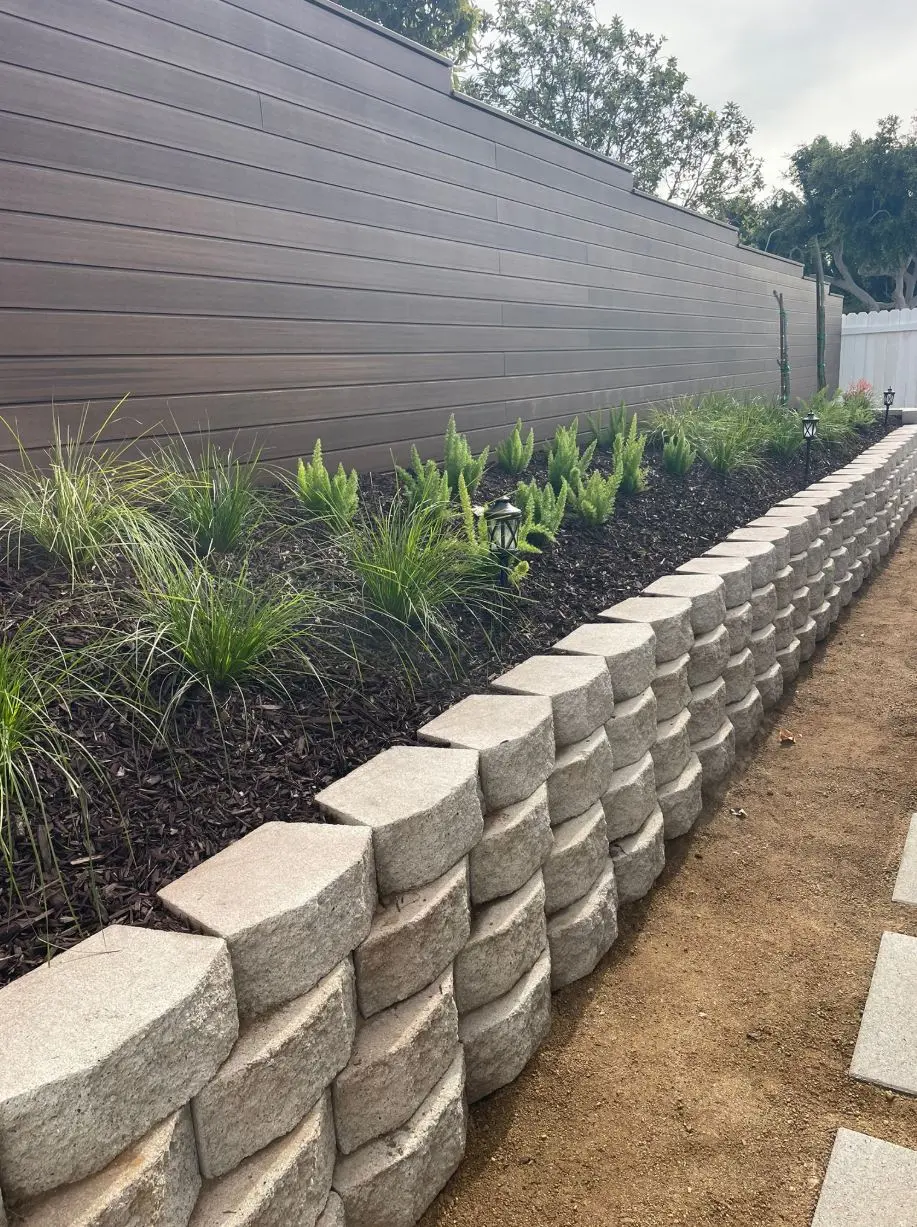
Segmental retaining wall systems use manufactured concrete blocks with interlocking profiles and a slightly battered face that produces a gravity wall capable of resisting moderate lateral loads without reinforcement for lower wall heights. For walls over 3 to 4 feet in height, geogrid reinforcement layers embedded in the retained soil behind the wall extend the system’s capacity by engaging a larger mass of soil in the wall’s stability. Segmental block systems are available in a range of profiles, textures, and colors, and they are well-suited for residential landscape retaining walls in the 2 to 5 foot height range, where their appearance, installation speed, and cost represent practical advantages over CMU construction.
Poured Concrete Walls
Poured concrete retaining walls are used where the structural requirements exceed what CMU or segmental block construction can economically provide, or where the wall also functions as a foundation element or is integrated with an adjacent building structure. They require formed excavation, rebar placement, concrete pour, and form removal, which makes them more labor-intensive than block construction for standard residential heights, but they produce a monolithic wall with high structural integrity appropriate for significant retained heights or complex loading conditions. We assess whether a poured concrete wall is the appropriate structural response to the specific site conditions during the estimate visit.
Natural and Manufactured Stone Walls
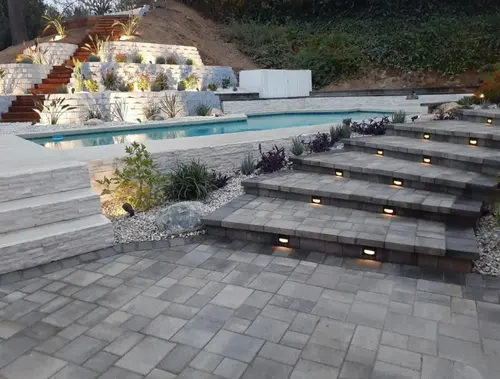
Natural stone and manufactured stone veneer walls are appropriate for lower decorative retaining walls in the 2 to 3 foot height range, where the primary function is landscape aesthetic alongside modest grade management. Dry-stacked natural stone walls without mortar are appropriate for very low walls and informal landscape applications. Mortared stone walls or stone veneer over a CMU structural core provide the appearance of natural stone with the structural backing appropriate for taller or more heavily loaded walls. We assess the wall height, soil load, and surcharge conditions to determine whether a stone wall is appropriate for the specific application or whether a structural system with stone veneer is the correct approach.
Retaining Wall Drainage Systems
Every retaining wall we build includes a drainage system behind the wall as standard scope. The drainage assembly consists of a drainage aggregate layer immediately behind the wall face, a perforated drain pipe at the base of the drainage layer, and either weep holes through the wall face or a drain outlet at the end of the drainage pipe. For walls in areas with high groundwater or on sites with significant upslope drainage contributing to the wall, we assess whether additional drainage measures are needed and include them in the scope. Retaining wall drainage is not optional, and we do not quote a retaining wall without it.
Retaining Wall Height and Southern California Requirements
| Wall Height | Typical Construction | Permit Required (Most SoCal Jurisdictions) | Engineering Required |
|---|---|---|---|
| Under 3 feet | Segmental block, CMU, or stone gravity wall | Generally exempt, confirm with jurisdiction | Not typically required |
| 3 to 4 feet | Segmental block with geogrid, CMU with reinforcement | Often required, varies by jurisdiction | May be required, confirm with jurisdiction |
| 4 to 6 feet | Reinforced CMU block on concrete footing | Required in virtually all jurisdictions | Required in most Southern California jurisdictions |
| Over 6 feet | Reinforced CMU or poured concrete, engineer-designed | Required | Required |
| Any height in the hillside overlay zone | Per engineering analysis | Required | Required |
According to the California Seismic Safety Commission, retaining walls in Southern California’s high seismic design zones must be designed to resist dynamic earthquake loads in addition to static soil pressure, and the seismic component of the design is particularly significant for taller walls with significant retained soil mass. Many retaining walls that failed in past Southern California earthquakes were built to resist static soil loads only, without the seismic component now required by the California Building Code. For homeowners whose properties include existing retaining walls of unknown design or construction vintage, a structural assessment before a major seismic event is a lower-cost investment than emergency repair after one. For properties where the grade changes that need to be managed also affect drainage pathways toward the home’s foundation, our drainage correction services address the water management context in which retaining walls are built.
What Retaining Wall Construction Costs in Southern California
Cost is driven by wall height, length, material type, drainage scope, site access conditions, and whether engineering and permits are required. These are installed cost ranges, including all excavation, footing where required, material, reinforcement, drainage, and standard cleanup. Permit fees and engineering fees vary and are not included in the material and labor ranges above. Financing is available for qualified homeowners, including $0 down options.
Call (818) 483-8055 to schedule your free retaining wall assessment and estimate.
Our Retaining Wall Construction Process
Step 1: Free Site Assessment
A licensed Wise Choice estimator visits your property, walks the proposed wall location, measures the existing and proposed grades, assesses soil conditions and drainage context, identifies any surcharge loads above the wall from structures or slopes, and confirms the wall height and approximate length. The estimator discusses material options with you and confirms the permit and engineering requirements for the specific wall at your address. You receive a written itemized estimate before the end of the next business day with no obligation to proceed.
Step 2: Engineering and Permit Application
For walls requiring engineering, we coordinate with a licensed structural engineer who provides wall design and stamped drawings for the permit application. We submit the permit application with all required documentation and manage the plan check process with the building department. We factor permit and plan check timelines into the project schedule from the start.
Step 3: Excavation and Footing
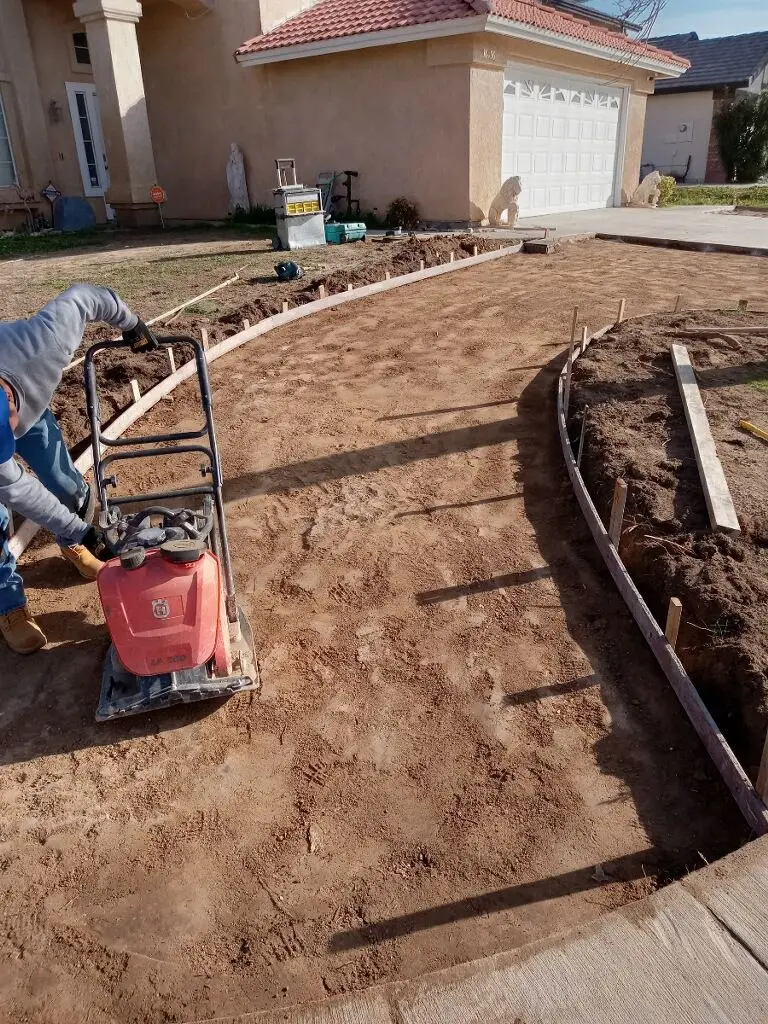
The wall alignment is staked, and excavation begins at the proposed wall base. For CMU walls, a continuous concrete footing is formed and poured at the depth and width required by the wall design, with vertical rebar set at the required spacing to engage with the wall reinforcement above. For segmental block systems, the base course trench is excavated, compacted, and leveled to the required base elevation. Drainage aggregate is staged for placement behind the wall as construction proceeds.
Step 4: Wall Construction and Drainage Installation
Wall construction proceeds from the footing up, with reinforcement, block placement, and grouting or block setting performed in lifts. Drainage aggregate is placed immediately behind the wall face as each course is completed, maintaining the drainage zone between the wall and the retained soil. The perforated drain pipe is set at the base of the drainage aggregate and connected to the outlet point before the zone is buried. Weep holes or drain outlets are incorporated at the required spacing.
Step 5: Backfill, Grading, and Cleanup
The retained side is backfilled in compacted lifts after the wall is complete and the drainage system is confirmed in place. The finished grade is established on the retained side of the proposed elevation. The cut side and any disturbed areas on the downhill face of the wall are graded and restored. All construction debris and excess material are removed from the property. At project closeout, you receive the 2-year workmanship warranty in writing, the permit and final inspection documentation where applicable, and the engineering report where engineering was required.
If you are ready to get a written estimate for a new retaining wall or want to understand what a replacement or repair would involve for an existing wall, request a free estimate online or call (818) 483-8055 to schedule your site assessment.
Permits and California Requirements for Retaining Walls
Most Southern California jurisdictions require a building permit for retaining walls that exceed 3 to 4 feet in height, measured from the bottom of the footing. In hillside overlay zones, the permit threshold may be lower, and some jurisdictions require permits for any retaining wall regardless of height when the wall is within a specified setback from a property line, easement, or building structure. The permit application for walls over 4 feet in height requires engineered drawings stamped by a licensed structural engineer in most Southern California jurisdictions.
California Building Code requires that retaining walls in the region’s high seismic design categories be designed for the dynamic lateral loads imposed by seismic events in addition to the static soil pressure. The seismic load requirement is a significant component of the structural design for taller walls and is the primary reason that walls built to pre-code standards in older Southern California developments are vulnerable to failure during moderate-to-large seismic events.
California’s grading ordinances and stormwater management requirements also apply to retaining wall projects that involve significant cut or fill, and we identify any applicable grading permit or stormwater management requirements for the specific project at the estimate visit.
Why Southern California Homeowners Choose Wise Choice for Retaining Walls
15+ Years of Combined Experience Building Retaining Walls
We have built retaining walls on Southern California properties spanning hillside canyon lots, graded tract development sites, and flat lots with localized grade management needs across every county in our service area. The drainage and seismic design requirements that distinguish Southern California retaining wall construction from simpler applications are built into our standard scope, not treated as options that add cost.
Licensed and Insured General Contractor
Every retaining wall project we perform is completed under our general contractor license by crew members fully covered by our insurance. You carry no liability exposure for the structural work our team performs on your property.
Drainage Included as Standard Scope
We include drainage aggregate, perforated drain pipe, and outlet provisions behind every retaining wall we build as standard scope. A retaining wall without drainage is a wall with a known failure mechanism that is not addressed. We do not build walls that way.
Engineering Coordination Managed
For walls requiring engineering, we coordinate with licensed structural engineers, manage the permit application, and handle the plan check process. You do not need to find your own engineer or manage the permit process independently. We handle it as part of the project scope.
2-Year Workmanship Warranty
Our 2-year workmanship warranty covers all footing, drainage, reinforcement, and wall construction work our crew performs. If any workmanship-related failure develops within two years under normal conditions, we return and correct it at no charge. The warranty is in writing and delivered at project closeout alongside any permit and engineering documentation.
Financing Available
Financing is available for qualified homeowners, including $0 down options. Ask about current programs when you schedule your estimate.
Wise Choice Remodeling brings 15+ years of combined experience to building retaining walls across Southern California. If your property needs a new wall, a replacement, or an assessment of an existing wall’s condition, call (818) 483-8055 to schedule a free site assessment and get a written estimate based on what the site actually requires.