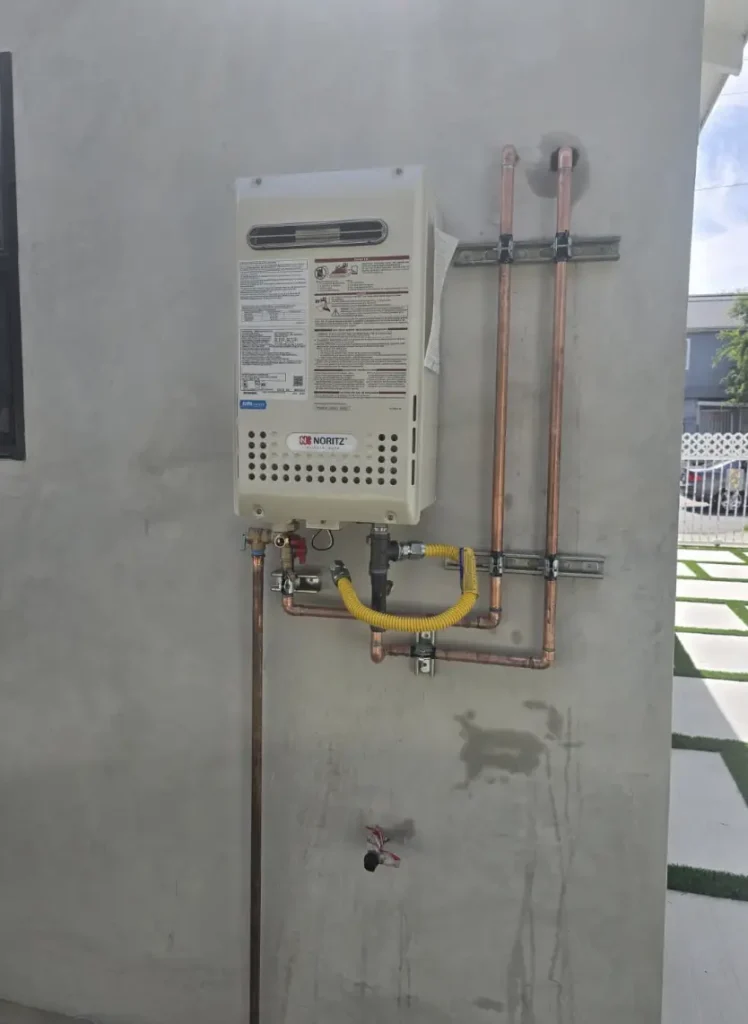
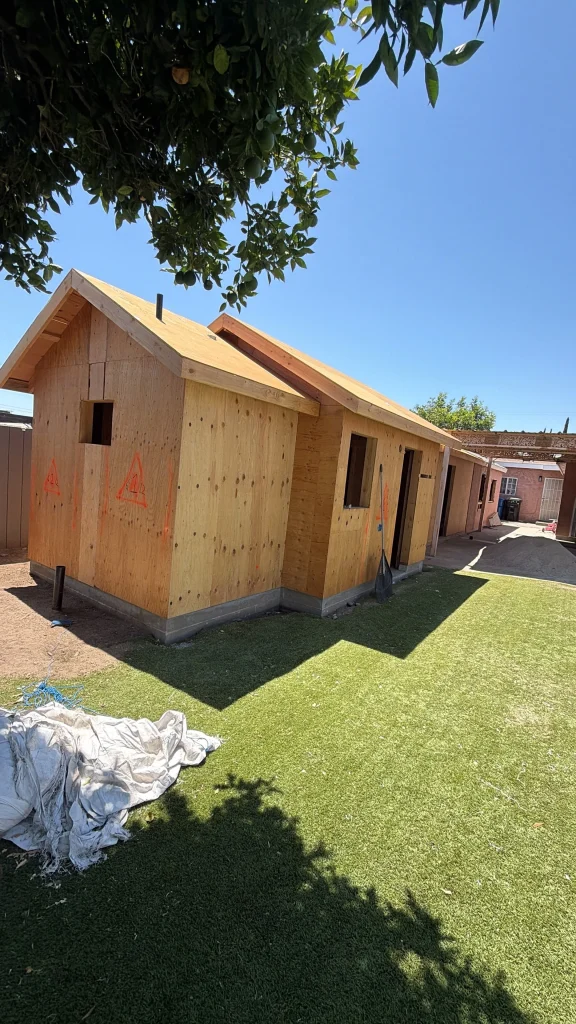
Yes, as a homeowner you can do work on your own property in California and pull the permit yourself, but a complete HVAC installation has parts you cannot legally do without a certification. Anyone who opens a system’s refrigerant lines must hold an EPA Section 608 certification, the installation needs a mechanical permit, and depending on the work the system is checked by a certified rater before the permit can close.
Here is how the job breaks down by who can do each part, what the City of Los Angeles permits, and what the inspection and verification involve.
Who can do each part of the job
| Part of the job | Who can do it | Rule |
|---|---|---|
| Pulling the permit | The owner, or a licensed contractor | LADBS requires a mechanical permit for any installation or modification of a heating or cooling system, and issues permits to owners as well as contractors. An owner can build or improve on their own property, doing the work personally or with employees paid wages, when none of it is intended or offered for sale (Business and Professions Code 7044) |
| Opening the refrigerant circuit, such as charging the system or recovering refrigerant | The owner, if personally EPA Section 608 certified, or a licensed contractor using certified technicians | Anyone who could reasonably be expected to break the integrity of the refrigerant circuit while servicing, repairing or disposing of equipment must pass an approved certification exam, apart from closely supervised apprentices; Type II certification covers medium-, high- and very high-pressure equipment, such as R-410A and R-22 (40 CFR 82.152 and 82.161) |
| Field verification and testing | A certified rater | Depending on the work, testing can be mandatory, and a properly permitted job triggers it. The homeowner can hire a rater independent of the installer |
| Wiring a new circuit or panel work | The owner or a licensed contractor, under an electrical permit | A separate electrical permit from LADBS |
So the honest answer for most homeowners is that they can do some of the work, but not the refrigerant work, and the permit and verification steps happen either way.
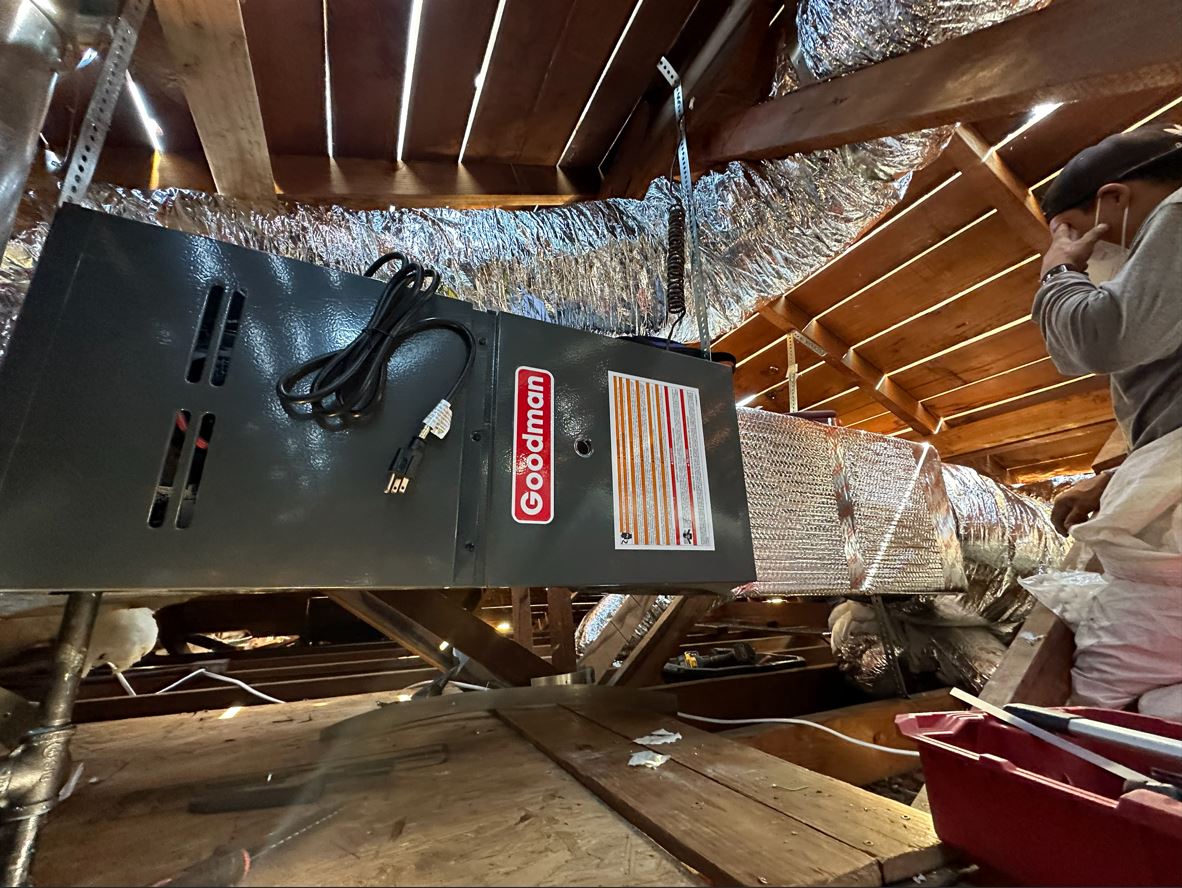
What LADBS issues as an express permit
In the City of Los Angeles, most home HVAC work is on the express permit list, which means no plan check. From the current LADBS list:
| Work | Express permit |
|---|---|
| Heating and air conditioning installations under 500,000 Btu/h aggregate input | Yes |
| Gas furnaces, including forced-air units, and gas wall or unit heaters under 500,000 Btu/h | Yes |
| Replacing an air conditioning unit with one of the same size and type | Yes |
| Adding air conditioning equipment rated 5 tons or less | Yes |
| Altering or adding ductwork, in a building with no smoke control system | Yes |
| Relocating an air conditioning unit within the same building | Yes |
Residential systems of 500,000 Btu/h and over, which LADBS puts at approximately 41 tons, go through HVAC plan check. Electrical work for the system is a separate permit; see the electrical panel permit in Los Angeles if the system needs a service upgrade.
Field verification closes the permit
California’s energy code requires some HVAC work to be field-verified by a certified rater. That field verification was long done under the HERS program, and moved to the Energy Commission’s Energy Code Compliance (ECC) program on January 1, 2026. The Commission says that, depending on the work being done, the testing may be mandatory, that properly permitted work will trigger any testing needed, and that a homeowner has the right to hire a rater who is independent of the contractor. Even where a test is exempt, for example where ducts are suspected to contain asbestos, the documentation is still required to close the permit.
If you hire it out instead
The Contractors State License Board advises checking that any contractor’s license is active and in good standing, which you can look up on the CSLB website. It also points out what a permit buys: an independent inspection of the work, where skipping the permit leaves no third-party check and can bring fines and penalties. And it warns that a homeowner can be financially liable for injuries to workers on the property if the contractor does not carry workers’ compensation insurance.
How we handle it
On an HVAC installation, we file the mechanical permit and the energy compliance forms, handle the refrigerant work and the EPA-compliant recovery of the old refrigerant, and coordinate the rater’s testing before closeout. For homes in the city, HVAC installation in Los Angeles covers the LADBS process in more detail.