What Gas Tankless Water Heater Installation Involves
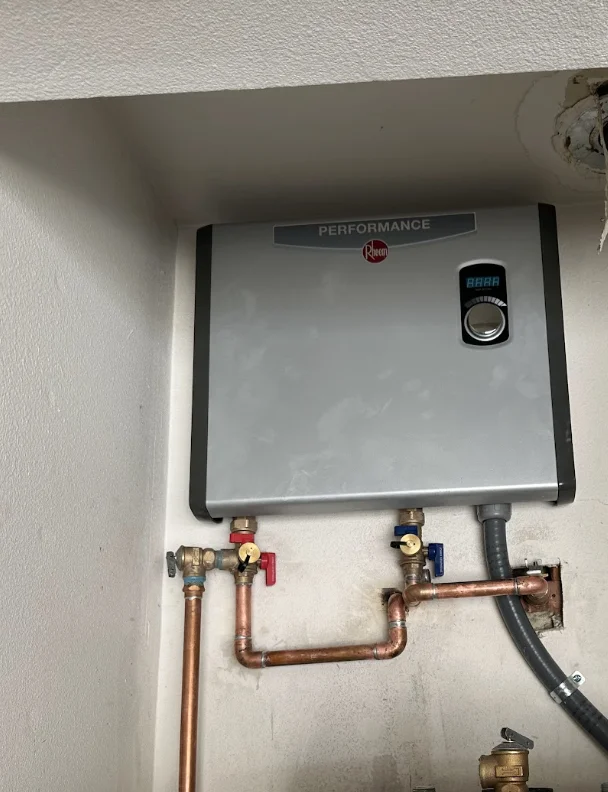
A gas tankless water heater is an on-demand hot water system that fires a high-BTU gas burner to heat water as it flows through a heat exchanger, delivering continuous hot water to every fixture in the home without a storage tank, without standby heat loss, and without a finite supply that runs out mid-shower. The performance advantage over a conventional gas storage tank is significant: a properly sized and installed gas tankless unit will never run out of hot water under any normal residential demand pattern, delivers water at a consistent temperature regardless of how long the fixture runs, and consumes no gas between uses because there is no tank to maintain. The installation requirements are more involved than a direct tank replacement, and this is where most problems with gas tankless water heaters originate. The unit requires substantially more gas supply than the storage tank it replaces, requiring a gas line that may need to be upgraded; it produces combustion exhaust that must be vented to the exterior through a properly sized and configured flue system; and it requires a 120-volt electrical connection for ignition and controls. Getting all three of those elements right is what determines whether the installation delivers on the unit’s rated performance or produces the tepid water temperature and fluctuating flow that characterize an undersupplied or improperly vented gas tankless installation.
Gas Tankless Water Heater Scopes We Handle
Direct Replacement of Gas Storage Tank
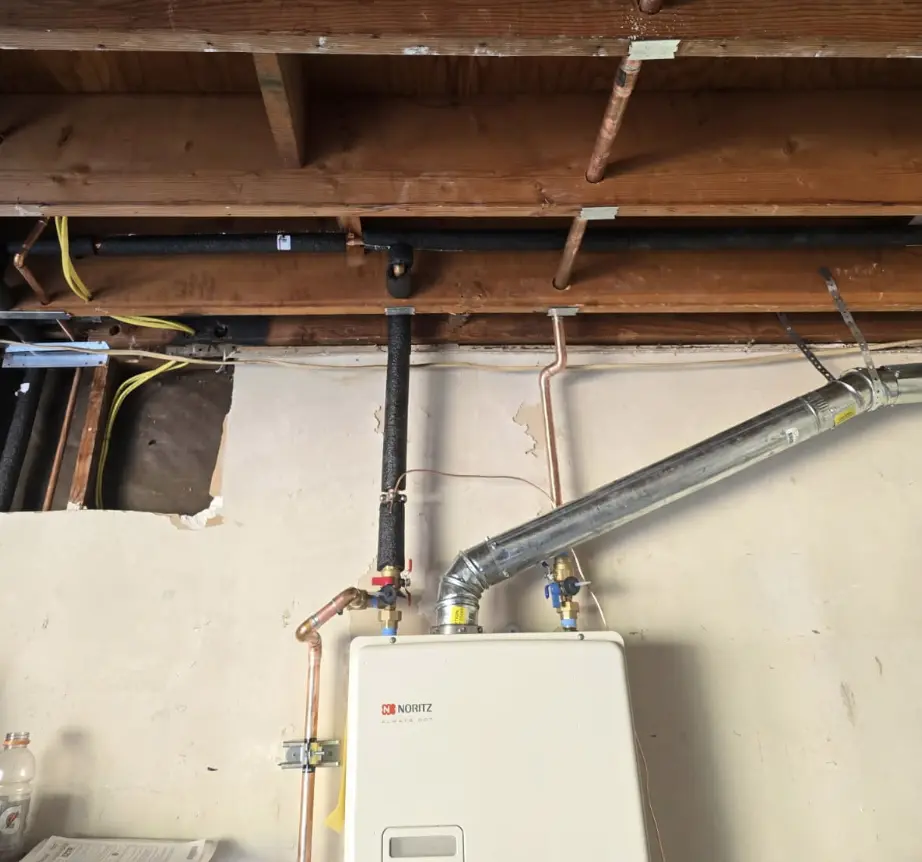
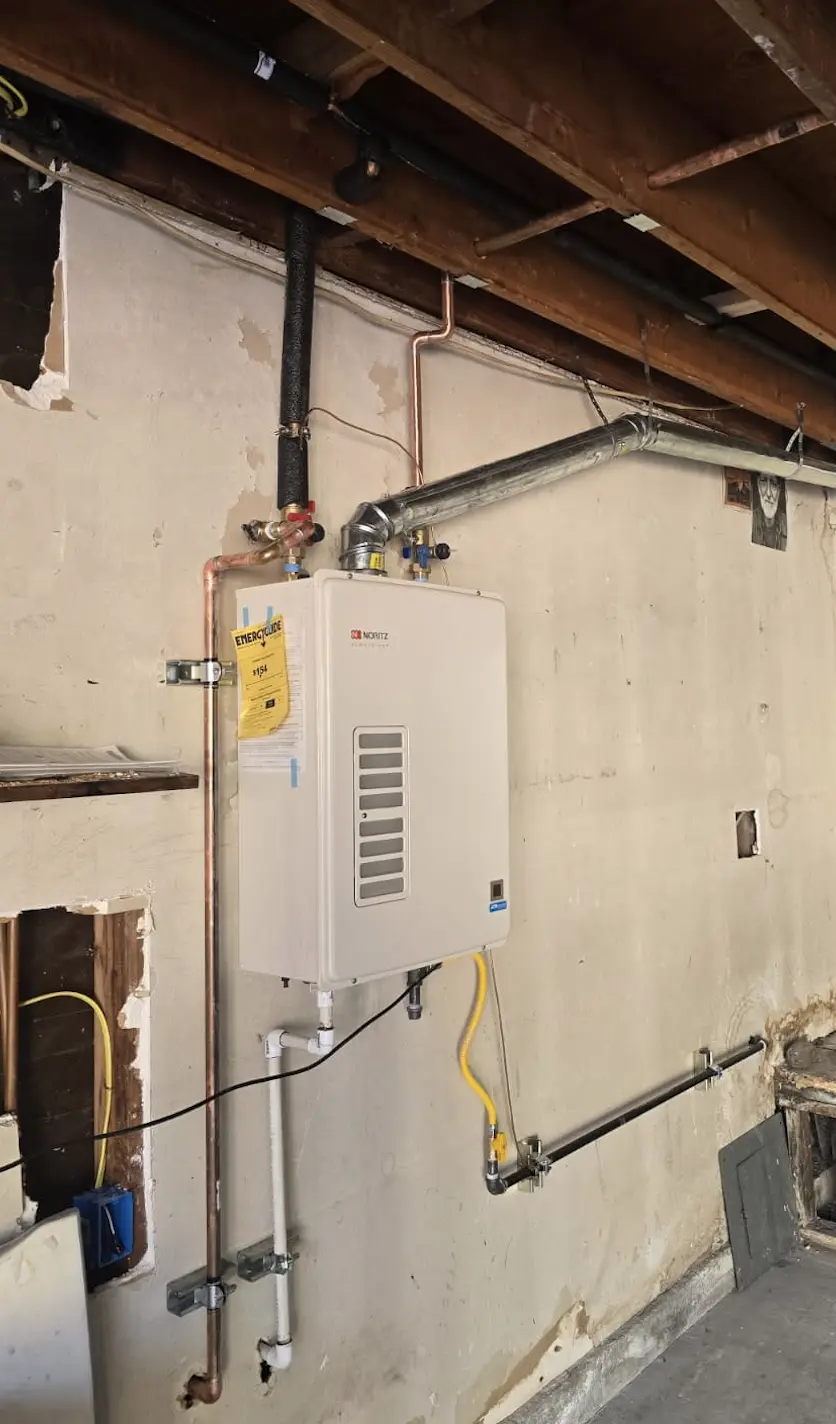
The most common gas tankless installation scope in Southern California is replacing an aging conventional gas storage tank with a new gas tankless unit in the same general location. The existing vent flue for the storage tank is almost always inadequate for the tankless unit’s different combustion gas characteristics, because tankless units produce a larger volume of lower-temperature exhaust that requires a different flue configuration than the natural draft vent on a conventional tank. We replace the vent as standard scope on every gas tankless installation rather than connecting to the existing tank flue, which would compromise the unit’s combustion performance and create a safety risk. The gas line to the existing tank location is assessed for capacity and upgraded where required before the new unit is installed.
Gas Tankless with Gas Line Upgrade
A gas tankless water heater fires at 150,000 to 200,000 BTU per hour at full demand, compared to 30,000 to 50,000 BTU per hour for a conventional storage tank. The gas supply line from the meter to the unit must be sized to deliver that volume at adequate pressure when the unit is at full demand simultaneously with other gas appliances in the home. Many Southern California homes have half-inch or three-quarter-inch gas supply lines to the water heater location that were sized for the storage tank and cannot deliver sufficient gas volume to the tankless unit at full firing. We measure gas supply pressure and assess line sizing during the estimate visit, and include a gas line upgrade in the scope where the existing line is inadequate. Installing a gas tankless unit on an undersized gas supply line and expecting it to perform to its rating is one of the most common installation failures in this product category.
Outdoor Gas Tankless Installation
Outdoor-rated gas tankless water heaters are designed for installation on an exterior wall without any interior installation space required and without the need for a separate vent run through the structure. They are a practical option for Southern California’s mild climate, where freeze protection is rarely required and where the installation location can be on an exterior wall with adequate gas and cold water supply access. Outdoor units are common for pool-adjacent installations, detached ADUs with exterior wall space, and homes where the interior utility area is inconveniently located relative to the load center. We assess whether outdoor installation is appropriate for the specific installation conditions at the estimate visit.
Gas Tankless for Multiple Units or High-Demand Applications
For larger homes or properties with high simultaneous hot water demand, two gas tankless units can be installed in parallel to double the available flow rate. Parallel installation is an alternative to purchasing a single oversized unit and can produce redundancy, where if one unit requires service, the other continues to serve the home at reduced capacity. We assess whether single-unit or parallel installation is the more appropriate and cost-effective approach for the specific demand profile at the estimated visit.
Gas Line and Venting Requirements for Gas Tankless Water Heaters
| Component | Storage Tank Requirement | Gas Tankless Requirement | Typical Upgrade Needed |
|---|---|---|---|
| Gas supply BTU demand | 30,000 to 50,000 BTU/hr | 150,000 to 200,000 BTU/hr | Gas line often requires upsizing |
| Gas supply pipe size (typical) | 1/2 inch is adequate for most | 3/4 inch minimum, 1 inch for most whole-home units | Pipe upsizing from meter to unit location |
| Vent type | Single-pipe natural draft B-vent | Concentric direct vent or power vent, separate intake and exhaust | New vent installation, existing tank vent not reusable |
| Vent material | Type B double-wall metal vent | Category III or IV stainless or PVC, depending on the unit | New vent material required |
| Electrical connection | None for most tank units | 120V outlet for ignition and controls | Outlet installation at the unit location, if absent |
According to the U.S. Department of Energy, gas tankless water heaters can be 24 to 34 percent more energy efficient than conventional storage tank heaters for homes using 41 gallons or less of hot water per day, and up to 14 percent more efficient for homes using 86 gallons or more per day. The energy savings from eliminating standby heat loss are realized from the first day of operation and compound over the unit’s 20-year service life. For homeowners evaluating a gas tankless installation as part of a broader system upgrade, our tank-to-tankless conversion service covers the full scope of converting from a storage tank system, including removal and disposal of the old unit and all gas, venting, and electrical modifications in a single coordinated project.
What Gas Tankless Water Heater Installation Costs in Southern California
Cost is driven by unit capacity, gas line conditions, venting configuration, installation location, and whether a gas line upgrade is required. These ranges reflect what Southern California homeowners typically pay:
These are installed cost ranges including the unit, all gas work, new venting, water connections, electrical outlet where required, and permit fees. Financing is available for qualified homeowners, including $0 down options.
Call (818) 483-8055 to schedule your free gas tankless water heater assessment and estimate.
Our Gas Tankless Water Heater Installation Process
Step 1: Free On-Site Assessment
A licensed Wise Choice estimator visits your home, assesses the existing gas supply line size and pressure at the water heater location, evaluates the venting options at the installation site, measures the hot water demand for the home’s fixture count and simultaneous use pattern, and reviews the electrical outlet availability for the unit’s controls. The visit takes 45 to 75 minutes. You receive a written itemized estimate covering the unit, all gas work, venting, electrical, and permits before the end of the next business day, with no obligation to proceed.
Step 2: Permit Applications
We submit the plumbing permit for the water heater installation and the gas line permit for the gas supply work. We manage both permits through to final inspection and factor permit processing timelines into the project schedule.
Step 3: Gas Line Assessment and Upgrade
Where the existing gas supply line is undersized for the tankless unit’s demand, the gas line upgrade is performed before the unit is installed. Gas line upgrades run from the meter or the last adequate-sized section through to the unit location, using the pipe size required to deliver the unit’s full BTU demand at adequate pressure. The upgraded gas line is pressure-tested before any gas appliances are connected to the new section.
Step 4: Unit Installation and Venting
The unit is mounted at the installation location. New vent piping is installed from the unit to the exterior penetration, using the Category III stainless or PVC material specified by the unit manufacturer for the flue gas temperature and acidity of the specific unit. For direct vent installations, the concentric intake and exhaust termination is installed at the exterior wall penetration. Gas connections are made and leak-tested with an electronic gas detector before any burner ignition is attempted. Water connections are made, and the electrical outlet is confirmed to be present and functional.
Step 5: Startup, Testing, and Commissioning
The unit is started up and tested under live flow conditions. Output temperature is verified at the unit’s set point and at representative fixtures throughout the home. Flow rate is confirmed adequate for the simultaneous demand scenario assessed during the estimate visit. Gas pressure at the unit inlet is measured under firing conditions to confirm the gas supply is delivering adequate pressure at the unit’s full BTU demand. Any adjustments to the temperature set point or flow limiter settings are made before the crew leaves.
Step 6: Inspections and Closeout
We coordinate the required plumbing and gas inspections with the applicable building department. At project closeout, you receive the permit and final inspection sign-off, the 2-year workmanship warranty in writing, manufacturer warranty documentation.
If you are ready to move forward with a gas tankless water heater or want to understand what the full installation would cost, including any gas line and venting work, request a free estimate online or call (818) 483-8055 to schedule your on-site assessment.
Permits and California Requirements for Gas Tankless Water Heaters
Gas tankless water heater installation requires a plumbing permit for the water heater installation and a gas line permit for the gas supply work in all California jurisdictions. The permits trigger a gas pressure test inspection and a final inspection of the completed installation. In most Southern California jurisdictions, the water heater permit also requires confirmation that the unit meets California’s minimum Energy Factor or Uniform Energy Factor standards for residential gas water heaters.
California Building Code requires that gas water heaters be seismically strapped to the wall at two points to prevent toppling during an earthquake, which applies to tankless units mounted on wall brackets as well as storage tanks. We include seismic strapping as standard scope on every installation. Some Southern California jurisdictions also require an earthquake shut-off valve on the gas supply to the water heater, which we confirm and include where required.
The California Air Resources Board has adopted regulations restricting the sale of new gas residential water heaters after 2030 as part of the state’s building decarbonization strategy. Homeowners replacing a gas storage tank with a gas tankless unit today are installing a system that will remain in service well past that date under current regulations, as the restriction applies to new sales rather than existing installed units. We discuss the regulatory context honestly at the estimate visit for homeowners who want to factor it into their decision.
Why Southern California Homeowners Choose Wise Choice for Gas Tankless Installation
15+ Years of Combined Experience Installing Gas Tankless Water Heaters
We have installed gas tankless water heaters across Southern California’s full range of home sizes, gas line conditions, and venting situations. The gas line undersizing and venting failures that cause most gas tankless performance problems are not corner cases. They are common conditions in Southern California’s housing stock, and identifying and addressing them at the estimate stage rather than discovering them during installation is the difference between a successful project and a callback.
Licensed and Insured General Contractor
Every gas tankless installation we perform is completed under our general contractor license by crew members fully covered by our insurance. You carry no liability exposure for gas or plumbing work our team performs in your home.
Gas Line and Venting Assessed Before Every Quote
We assess gas line capacity and venting conditions at every gas tankless estimate visit and include all required gas line and venting work in the estimate. A price that does not include the gas line upgrade or the new vent is not a full price for a gas tankless installation, and you should not find out the gas line needs to be upsized after the project has started.
New Venting on Every Installation
We do not connect gas tankless units to existing storage tank vent flues. The flue characteristics of the two unit types are different enough that reusing the existing vent creates a safety and performance risk that is not worth the installation shortcut. New venting is included as standard scope on every gas tankless installation we perform.
2-Year Workmanship Warranty
Our 2-year workmanship warranty covers all installation labor, including unit mounting, gas connections, venting, water connections, and electrical work. If any workmanship-related failure develops within two years under normal use, we return and correct it at no charge. The warranty is in writing and delivered at project closeout alongside the manufacturer’s product warranty.
Financing Available
Financing is available for qualified homeowners, including $0 down options. Ask about current programs when you schedule your estimate.
Wise Choice Remodeling brings 15+ years of combined experience to installing gas tankless water heaters across Southern California. If you are ready to replace an aging tank unit or upgrade to on-demand hot water, call (818) 483-8055 to schedule a free on-site assessment that confirms your gas line and venting conditions and gives you a complete written estimate before you commit to anything.