What a Tank to Tankless Conversion Involves
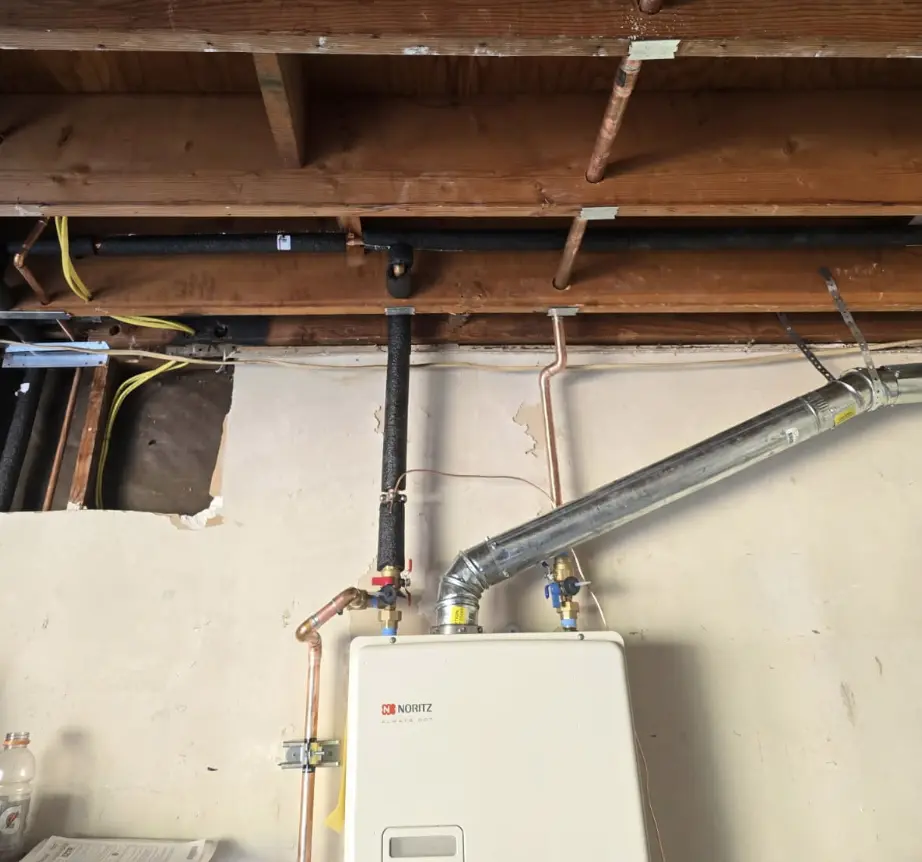
A tank-to-tankless water heater conversion is the complete replacement of a home’s conventional storage tank water heater with a tankless on-demand system, including all of the supporting infrastructure modifications the new unit requires that differ from the storage tank it replaces. The conversion is a more involved project than a straight tank-for-tank replacement because the two types of water heaters have fundamentally different gas, venting, and in some cases, electrical requirements that must all be assessed and addressed for the tankless unit to perform correctly. A gas storage tank typically draws 30,000 to 50,000 BTU per hour and vents through a simple B-vent natural draft flue. A gas tankless unit fires at 150,000 to 200,000 BTU per hour and requires a Category III or IV venting system designed for its higher exhaust velocity and lower exhaust temperature. The gas line sized for the storage tank is almost always too small for the tankless unit’s three-to-five-times-higher demand. None of those differences is an obstacle to a successful conversion, but every one of them needs to be identified and addressed at the estimate stage rather than discovered during installation, which is what separates a well-scoped conversion from one that produces performance problems or safety concerns on day one.
Conversion Types We Perform
Gas Tank to Gas Tankless Conversion
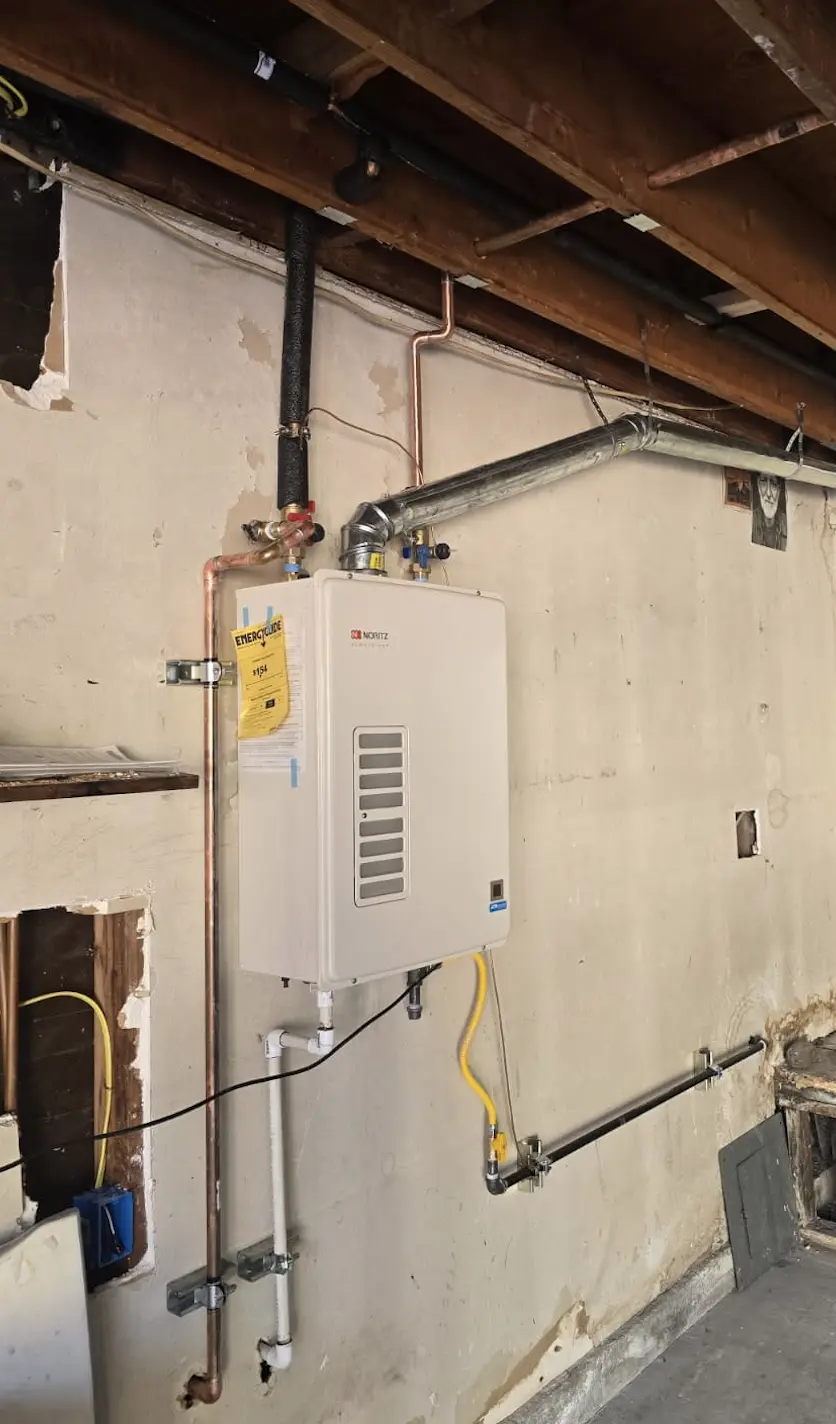
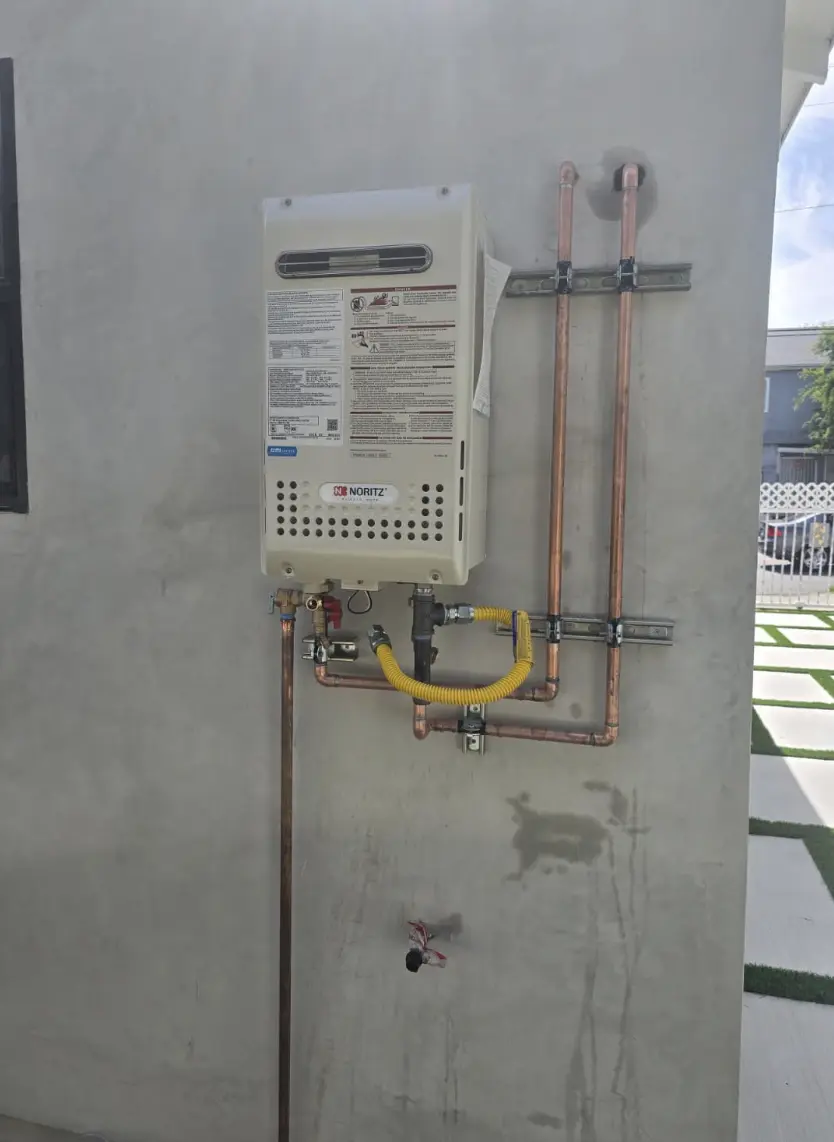
The most common conversion scenario in Southern California is replacing an aging gas storage tank with a new gas tankless unit. The conversion includes draining and removing the existing tank, capping the B-vent flue and removing it from the installation location, assessing and upgrading the gas supply line to the required size for the tankless unit’s BTU demand, installing new direct vent or power vent flue piping from the unit to the exterior, connecting the new unit to the water supply and gas line, and installing the 120-volt outlet the tankless unit’s ignition and controls require. The result is a compact wall-mounted unit in place of the large tank, with unlimited on-demand hot water and lower standby energy loss than the system it replaced. Gas-to-gas is the conversion that requires the most attention to infrastructure because both the gas line and the venting must be changed, not just the unit.
Gas Tank to Electric Tankless Conversion
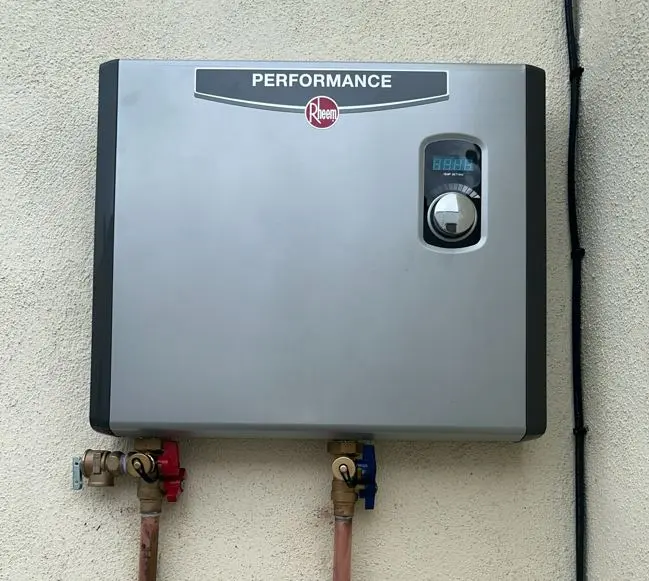
A gas tank to electric tankless conversion replaces a gas storage tank with an electric on-demand unit, eliminating the gas appliance from the home’s water heating system. The conversion includes removing the old gas tank, capping the gas line at the appliance connection, installing the electric tankless unit, and providing the dedicated 240-volt electrical circuits the electric unit requires. For homes with adequate electrical panel capacity and circuits available, the electrical scope is straightforward. For homes where the panel must be upgraded to support the electric tankless unit’s substantial electrical demand, the panel upgrade is included in the project scope and priced accordingly. This conversion type is increasingly relevant in Southern California as homeowners consider aligning their homes with California’s electrification direction ahead of the 2030 gas appliance sales restrictions.
Electric Tank to Gas Tankless Conversion
Homes that currently have an electric resistance storage tank can convert to a gas tankless system if a natural gas supply line is available or can be extended to the installation location. This conversion reduces long-term operating cost because gas water heating is less expensive per BTU than electric resistance heating at current Southern California utility rates. The conversion includes removing the old electric tank, disconnecting the electrical supply at the tank location, running a new gas supply line to the installation point, installing the gas tankless unit with new venting, and confirming the installation with the required permits and inspections. We assess the feasibility and cost of extending a gas line to the water heater location during the estimate visit.
Gas Tank to Heat Pump Water Heater Conversion
A heat pump water heater is not a tankless system, but it is the most efficient conversion option and is worth evaluating alongside gas tankless. For Southern California homeowners replacing a gas storage tank who are considering all options before deciding, we present heat pump water heaters alongside gas and electric tankless options at the estimate visit. Heat pump water heaters require adequate surrounding air volume, produce a cooling and dehumidifying effect in the installation space, and cost more upfront than a standard electric tankless unit.
What Changes in a Gas to Gas Tankless Conversion
| Component | Storage Tank | Gas Tankless | What We Do |
|---|---|---|---|
| Unit itself | 40 to 50 gallon tank, floor-mounted | Compact wall-mounted unit | Remove old tank, install new wall-mounted unit |
| Gas supply demand | 30,000 to 50,000 BTU/hr | 150,000 to 200,000 BTU/hr | Assess line, upgrade if undersized |
| Vent type | B-vent natural draft, single pipe | Direct vent or power vent, separate intake and exhaust | Remove old B-vent, install new Category III/IV vent |
| Electrical | None for most tanks | 120V outlet for ignition and controls | Install outlet at unit location if not present |
| Seismic strapping | Two-point strap to the wall required | Wall bracket secures unit, strapping incorporated | Install the wall bracket per code |
| T&P relief valve | Required on the tank | Required on tankless unit | New T&P valve installed on the new unit |
According to the U.S. Department of Energy, tankless water heaters can be 24 to 34 percent more energy efficient than conventional storage tank heaters for homes that use 41 gallons or less of hot water daily. For Southern California households where an aging 40 or 50-gallon gas tank has been maintaining water at a temperature in a warm garage for a decade or more, the standby heat loss being eliminated by the conversion represents a meaningful and immediate reduction in monthly gas consumption. For homeowners whose aging tank is also near the end of its reliable service life and who want to understand all of the on-demand options available before deciding, our tankless water heater installation services cover the full range of gas, electric, and heat pump options with plain comparisons of each for Southern California conditions.
What Tank to Tankless Conversion Costs in Southern California
Cost is driven by the conversion type, the existing gas line and venting conditions, electrical panel capacity for electric conversions, and any ancillary scope required. These ranges reflect what Southern California homeowners typically pay:
These are installed cost ranges, including old tank removal and disposal, new unit, all gas, venting, and electrical work, permit fees, and any required patching. Financing is available for qualified homeowners, including $0 down options.
Call (818) 483-8055 to schedule your free tank-to-tankless conversion assessment and estimate.
Our Tank to Tankless Conversion Process
Step 1: Free On-Site Assessment
A licensed Wise Choice estimator visits your home, inspects the existing tank installation and its gas or electrical supply, assesses the gas line size and pressure where applicable, evaluates the venting options at the installation location, reviews the electrical panel capacity for electric conversions, and presents the available conversion options with cost comparisons. The visit takes 45 to 75 minutes. You receive a written itemized estimate before the end of the next business day with no obligation to proceed.
Step 2: Permit Applications
We submit all required permits for the conversion scope. A gas tank to gasless conversion typically requires a plumbing permit and a gas permit. A gas-to-electric conversion requires a plumbing permit and an electrical permit. We manage all permit applications simultaneously and factor processing timelines into the installation schedule.
Step 3: Tank Removal and System Isolation
The existing storage tank is shut off, the gas or electrical supply is isolated at the appliance connection, and the tank is drained and disconnected from the water supply, relief valve drain, and any recirculation connections. The old tank and its associated flue, straps, and connections are removed from the installation location and hauled off-site. For gas conversions, the gas line is capped at the old appliance location while the new line routing is determined. For electric conversions, the old electrical circuit at the tank location is disconnected, and the wire is secured.
Step 4: Infrastructure Modifications
Gas line upgrades are performed before the new tankless unit is installed, running the required pipe size from the meter or the last adequately sized section to the unit location. For electric conversions, new dedicated 240-volt circuits are run from the panel to the unit location. New venting is installed from the unit location to the exterior penetration using the material and configuration required by the specific unit. All gas work is pressure-tested, and all electrical work is confirmed correct before the unit is connected.
Step 5: New Tankless Unit Installation
The new tankless unit is mounted at the installation location, connected to the gas supply or electrical circuits, connected to the cold water inlet and hot water outlet, and connected to the new venting system. For gas units, the gas connection is leak-tested with an electronic detector before ignition is attempted. The temperature and pressure relief valve is installed, and its drain line is routed to an appropriate termination point.
Step 6: Startup, Testing, and Inspections
The unit is started up and tested under live flow conditions. Output temperature and flow rate are verified at representative fixtures. Gas pressure at the unit inlet is measured under firing conditions for gas units. All required plumbing, gas, and electrical inspections are coordinated with the applicable building department. At project closeout, you receive the permit and final inspection sign-off, the 2-year workmanship warranty in writing, manufacturer warranty documentation.
If you are ready to get a written estimate for a tank-to-tankless conversion or want to understand what all the options would cost for your specific home, request a free estimate online or call (818) 483-8055 to schedule your on-site assessment.
Permits and California Requirements for Tank to Tankless Conversions
A tank-to-tankless water heater conversion requires a plumbing permit in all California jurisdictions. Gas line modifications require a gas permit and pressure test. New electrical circuits require an electrical permit. In most Southern California jurisdictions, all three permits can be submitted simultaneously, and the inspections can be coordinated within the same project timeline.
California Building Code requires that water heaters be seismically strapped at two points, that temperature and pressure relief valves be installed and properly drained, and that gas water heater installations meet the ventilation and combustion air requirements of the California Mechanical Code. Tankless units installed indoors must have combustion air provisions appropriate for the unit type. We confirm all of these requirements at the estimate visit and include compliance in the installation scope as a baseline.
The California Air Resources Board’s regulations restricting new gas residential water heater sales after 2030 are a relevant consideration for the type of conversion being done today. A gas-to-gas tankless conversion installs a gas appliance that will remain in service past that date, which is permitted under current regulations. A gas-to-electric conversion eliminates the gas appliance and positions the home ahead of California’s electrification requirements. We put the regulatory context in front of you at the estimate visit for homeowners who want to factor it into their conversion decision.
Why Southern California Homeowners Choose Wise Choice for Tank to Tankless Conversions
15+ Years of Combined Experience Completing Tank to Tankless Conversions
We have converted storage tank systems to tankless across the full range of Southern California’s housing stock, gas line conditions, and venting situations. The infrastructure assessment that precedes every conversion is not a formality. A gas tankless unit installed on an undersized gas line or connected to an incompatible vent will not perform to its rating, and identifying those conditions before the project starts, rather than after the unit is mounted, is what produces a conversion that delivers on its promise.
Licensed and Insured General Contractor
Every conversion we perform is completed under our general contractor license by crew members fully covered by our insurance. You carry no liability exposure for gas, electrical, or plumbing work our team performs in your home.
Complete Scope Assessed Before Any Unit Is Specified
We assess the gas line, venting, and electrical conditions at every conversion estimate visit and include all required modifications in the estimate before specifying any unit. A conversion quote that does not include the gas line upgrade or the new venting is not a complete quote, and homeowners should not be discovering those costs after the project has started.
Old Tank Disposal Included
We haul off the old tank and all removed materials as part of the standard scope. The space the tank occupied is left clean. Disposal is not a separate charge.
2-Year Workmanship Warranty
Our 2-year workmanship warranty covers all removal work, new installation, gas line modifications, venting, water connections, and electrical work our crew performs. If any workmanship-related failure develops within two years under normal use, we return and correct it at no charge. The warranty is in writing and delivered at project closeout alongside the manufacturer’s product warranty.
Financing Available
Financing is available for qualified homeowners, including $0 down options. Ask about current programs when you schedule your estimate.
Wise Choice Remodeling brings 15+ years of combined experience to completing tank-to-tankless conversions across Southern California. If your storage tank is aging and you want a clear assessment of what a conversion would involve, what the complete cost would be, call (818) 483-8055 to schedule your free on-site assessment.