What Electric Tankless Water Heater Installation Involves
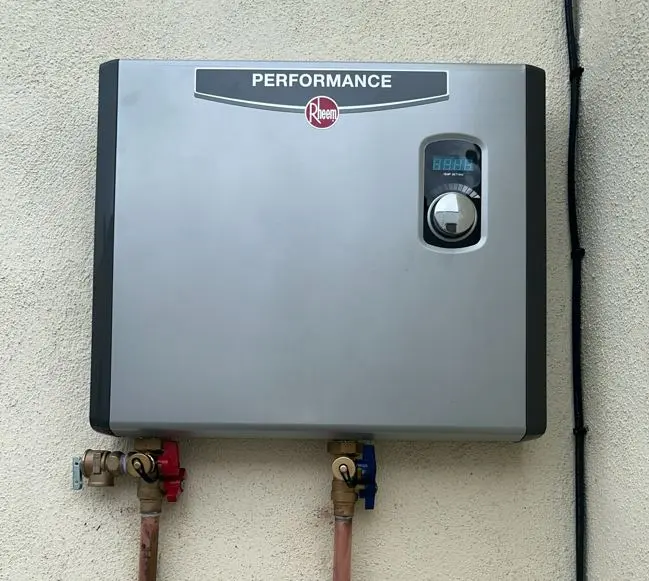
An electric tankless water heater is a wall-mounted on-demand water heating system that uses high-wattage electrical resistance elements to heat water instantly as it flows through the unit, eliminating the storage tank, the standby heat loss, and the finite hot water supply that characterize conventional tank water heaters. Unlike a gas tankless unit, an electric tankless unit requires no gas line, no combustion air supply, and no flue venting, which simplifies installation in homes without gas service, in all-electric new construction, and in ADUs and remote structures where running a gas line is impractical or prohibitively expensive. The installation requirement it does impose is significant electrical capacity: whole-home electric tankless units draw 120 to 240 amps of 240-volt power during operation, which is among the highest instantaneous electrical loads in a residential building and must be assessed against the available panel capacity before any unit is specified. In Southern California, where California’s progressive building electrification policy is moving residential construction away from gas appliances, and where a significant share of homes and ADUs are being built or converted to all-electric systems, electric tankless water heaters are an increasingly relevant and practical solution when the electrical infrastructure can support them.
Electric Tankless Water Heater Types We Install
Whole-Home Electric Tankless Water Heaters
A whole-home electric tankless unit serves all hot water fixtures in the home from a single installation point, typically in the utility area, garage, or equipment room where the existing water heater was located. These units are sized in kilowatts, with larger kW ratings handling higher simultaneous demand. In Southern California, where incoming groundwater runs approximately 68 to 72 degrees, and most homes need output temperatures of 104 to 120 degrees, a whole-home unit serving two to three bathrooms and a kitchen typically requires 24 to 36 kW of capacity, which draws 100 to 150 amps at 240 volts during peak operation. The electrical panel must have sufficient available capacity to support the new dedicated circuit or circuits before a whole-home unit can be installed without a panel upgrade.
Point-of-Use Electric Tankless Units
Point-of-use electric tankless water heaters are compact single-fixture units installed directly at the point where hot water is needed, typically under a sink or in a cabinet adjacent to a fixture with a long hot water wait time. They require significantly less electrical capacity than whole-home units because they heat water for only one fixture at a time, typically drawing 7 to 18 kW depending on the flow rate required. Point-of-use units are a practical solution for addressing hot water wait time at a specific remote fixture, for providing hot water to a workshop, ADU kitchenette, or outdoor sink without plumbing hot water from the main system, or for supplementing an undersized whole-home system at a fixture with high demand.
Electric Tankless for ADUs and Detached Structures
ADUs, garage conversions, and detached guest units are one of the most common installations for electric tankless water heaters in Southern California because they are frequently all-electric structures where running a gas line to the detached unit is either not feasible or not cost-effective. An electric tankless unit sized for the ADU’s fixture count and hot water demand, powered by a subpanel fed from the main electrical service, provides complete on-demand hot water for the unit without a gas connection. We assess the subpanel capacity and circuit routing conditions during the estimate visit and include any required electrical work in the scope.
Electric Tankless as Part of All-Electric System Conversion
For homeowners converting an existing gas system to all-electric as part of a broader electrification project, an electric tankless water heater replaces the gas storage or gas tankless unit in the same installation location without the gas line, which is capped at the appliance connection. The conversion involves removing the old gas unit, capping the gas connection, connecting the new electric unit to the water supply, and running the required dedicated circuits from the electrical panel. We scope all-electric conversions as a complete package that accounts for the electrical infrastructure changes alongside the water heater replacement.
Electric vs. Gas Tankless: Choosing the Right System for Your Southern California Home
| Factor | Electric Tankless | Gas Tankless |
|---|---|---|
| Gas line required | No | Yes, adequate gas supply required |
| Venting required | No | Yes, direct vent or power vent to exterior |
| Electrical panel demand | High, 100 to 240 amps for whole-home units | Low, 120V outlet for ignition and controls only |
| Operating cost (SoCal rates) | Higher, electricity costs more per BTU than gas | Lower gas is more cost-effective for water heating |
| Installation complexity | Simpler, no venting, no gas work | More involved, gas line and venting required |
| California regulatory trajectory | Aligned with the electrification direction | Gas appliance sales restricted post-2030 |
| Best for homes without gas | Yes, only practical tankless option | No, gas line installation required |
| Flow rate capacity | Limited by panel capacity, may require multiple units at high demand | Higher flow rates are achievable at a lower cost |
According to the U.S. Department of Energy, tankless water heaters can be 24 to 34 percent more energy efficient than conventional storage tank water heaters for homes that use 41 gallons or less of hot water daily. In Southern California, where the California Air Resources Board has set a 2030 deadline on sales of new gas residential water heaters, electric tankless water heaters are positioned to become the standard replacement option for a large share of the region’s housing stock as existing gas units reach the end of their service lives. For homeowners who have gas service and are comparing electric to gas tankless options, our gas tankless water heater service covers the gas option with a direct comparison of the costs and performance for each.
What Electric Tankless Water Heater Installation Cost in Southern California
Cost is driven by unit type and size, electrical panel capacity, circuit routing, and whether a panel upgrade is required. These ranges reflect what Southern California homeowners typically pay:
These are installed cost ranges, including the unit, all electrical work, water connections, permit fees, and standard patching of any access openings. We assess the panel capacity and circuit availability during the estimate visit and include all required electrical work in the estimate so there are no surprises after the project begins. Financing is available for qualified homeowners, including $0 down options.
Call (818) 483-8055 to schedule your free electric tankless assessment and estimate.
Our Electric Tankless Water Heater Installation Process
Step 1: Free On-Site Assessment
A licensed Wise Choice estimator visits your home, assesses the electrical panel capacity and available circuits, measures the hot water demand for the home’s fixture count and simultaneous use pattern, reviews the proposed installation location for the unit, and confirms whether a panel upgrade is required before the unit can be installed. The visit takes 45 to 75 minutes. You receive a written itemized estimate covering the unit, all electrical work, water connections, and permits before the end of the next business day, with no obligation to proceed.
Step 2: Permit Applications
We submit both the plumbing permit for the water heater installation and the electrical permit for the dedicated circuit and panel work. Some jurisdictions process these together under a single application; others require separate submissions. We manage both and factor permit processing timelines into the project schedule.
Step 3: Electrical Panel and Circuit Preparation
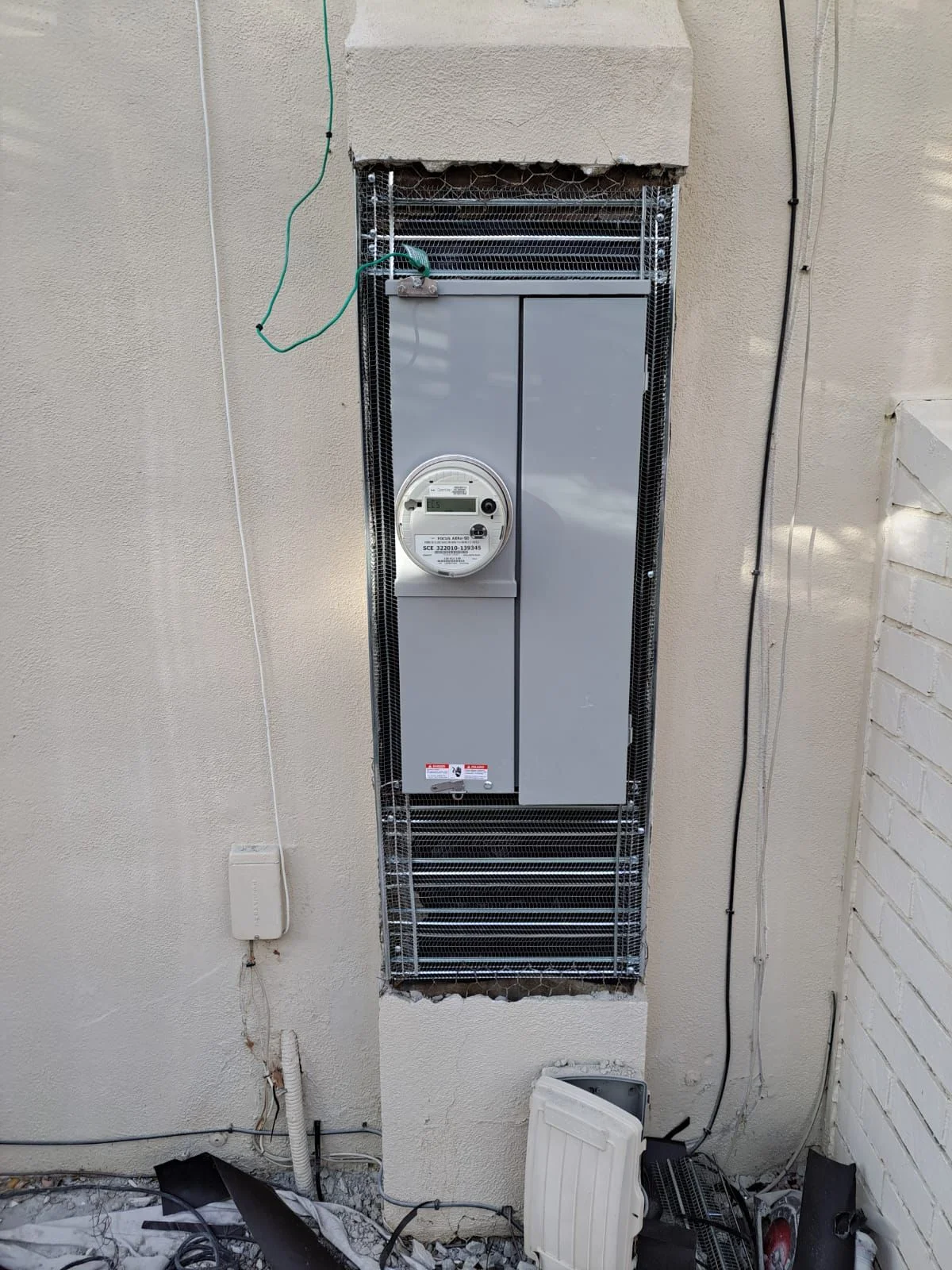
If the panel has adequate capacity, new dedicated 240-volt circuit breakers are installed for the tankless unit’s circuits and wired to the installation location. If a panel upgrade is required, the upgrade is performed first and inspected before the tankless installation proceeds. The correct wire gauge and breaker size for the unit’s amperage draw are confirmed against the manufacturer’s specification and the permit drawings before any wire is pulled.
Step 4: Water Heater Installation
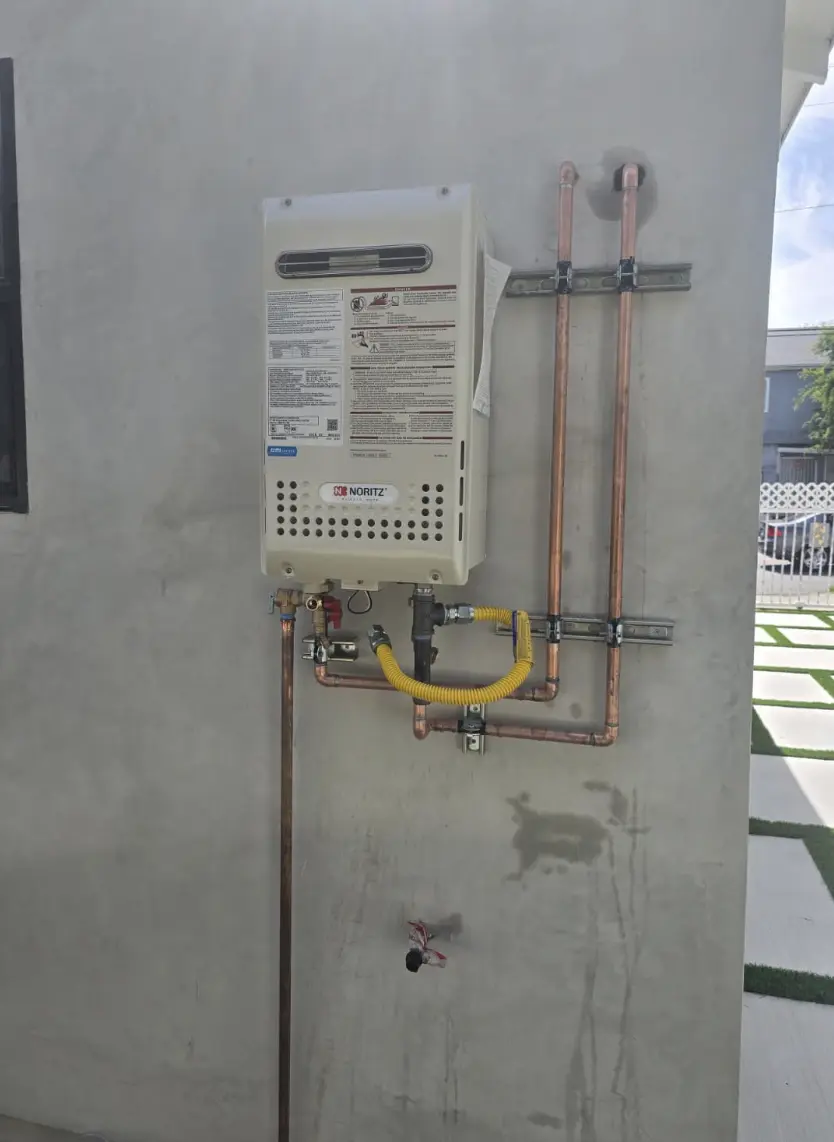
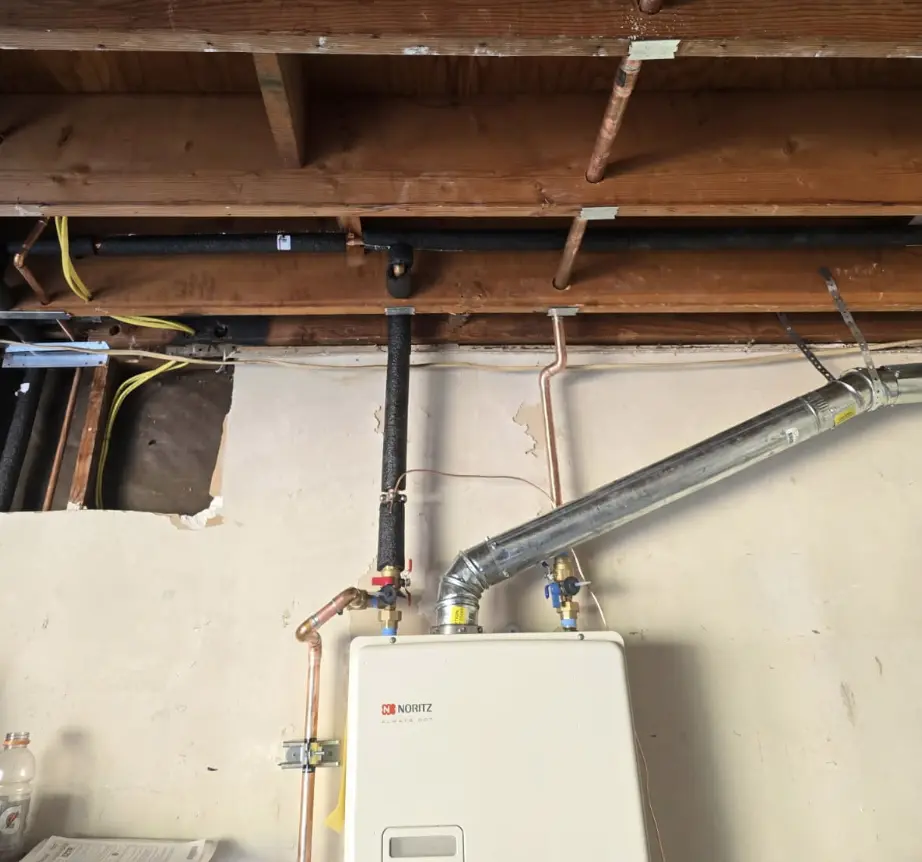
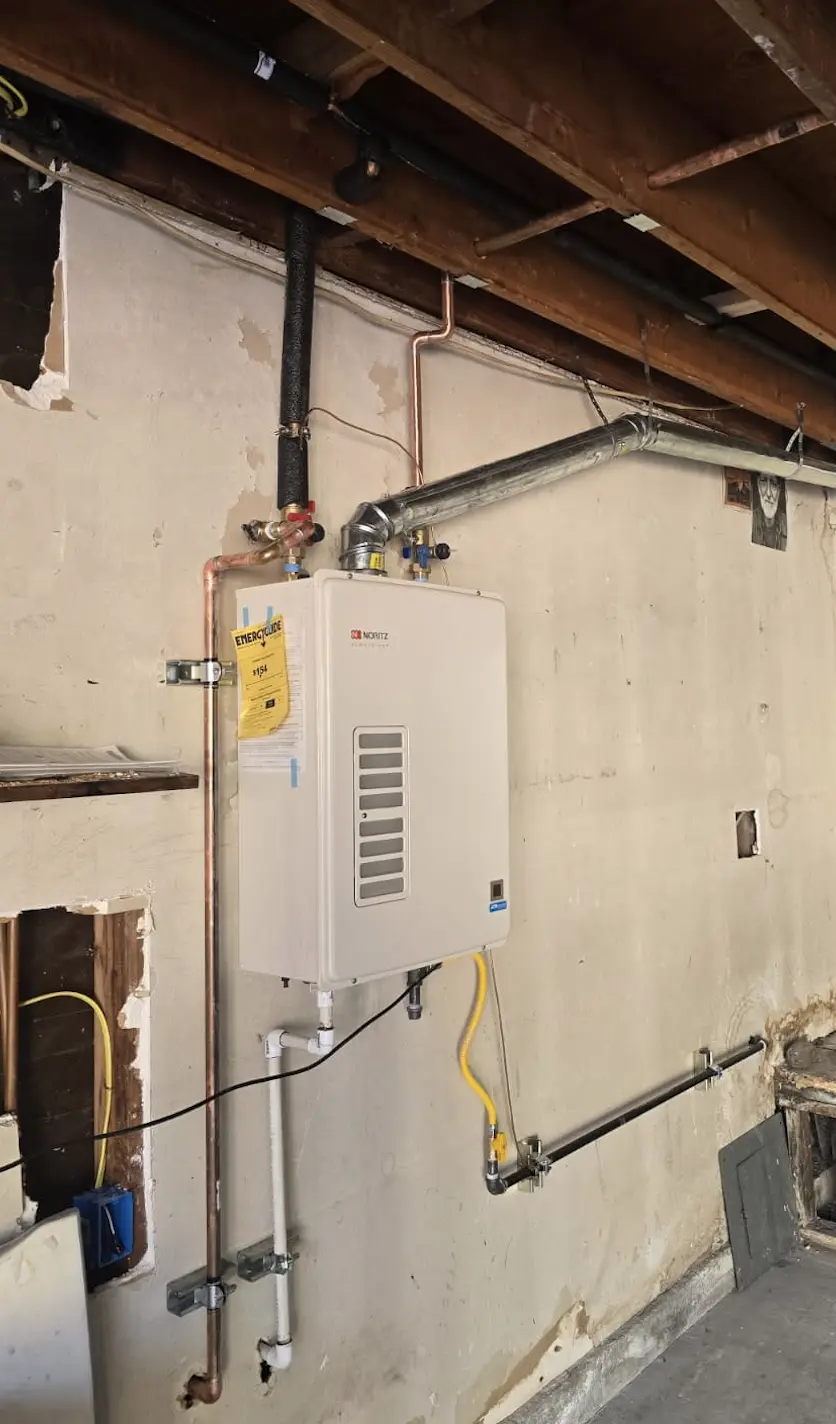
The unit is mounted at the installation location, cold inlet and hot outlet water connections are made with the appropriate pipe material and connections for the existing plumbing, and the electrical connections are made at the unit’s terminal block. For all-electric conversions, the old gas unit is removed, the gas line is capped, and the new electric unit is installed in the same location or at a new installation point better suited to the electrical routing.
Step 5: Testing and Commissioning
The unit is started up and tested under live flow conditions. Output temperature is verified at multiple fixtures, flow rate is confirmed adequate for simultaneous demand, and electrical draw is measured against the rated specification. The unit’s temperature set point is adjusted to the homeowner’s preference within the safe range. The system is confirmed to be operating correctly before the crew leaves.
Step 6: Inspections and Closeout
We coordinate the required plumbing and electrical inspections with the applicable building department. At project closeout, you receive the permit and final inspection sign-off, the 2-year workmanship warranty in writing, manufacturer warranty documentation.
If you want to understand what an electric tankless water heater would cost for your home and whether your electrical panel can support it without an upgrade, request a free estimate online or call (818) 483-8055 to schedule your on-site assessment.
Permits and California Requirements for Electric Tankless Water Heaters
Electric tankless water heater installation requires a plumbing permit for the water connections and an electrical permit for the dedicated circuit and panel work in all California jurisdictions. The permits trigger a rough electrical inspection before walls are closed if new circuits are run through walls, and a final inspection of the completed installation. The California Energy Commission’s Title 24 requirements for residential water heating are applicable to new installations and prescribe minimum efficiency standards for the equipment installed, though electric tankless units typically meet or exceed those thresholds.
California’s building electrification direction, including the California Air Resources Board’s restriction on new gas residential water heater sales after 2030, is a relevant consideration for homeowners choosing between electric and gas systems. Electric tankless water heaters installed today will not be subject to future replacement pressure from gas appliance phase-out regulations, which has practical value for the long-term use and resale of the installation.
Why Southern California Homeowners Choose Wise Choice for Electric Tankless Installation
15+ Years of Combined Experience Installing Tankless Water Heaters
We have installed electric and gas tankless water heaters across Southern California’s full range of home types, electrical service conditions, and installation situations. The electrical assessment that precedes every electric tankless installation is not a formality. An undersized panel or inadequate circuit capacity is the single most common reason an electric tankless installation produces a disappointing result, and we identify and address those conditions at the estimate stage rather than discovering them during installation.
Licensed and Insured General Contractor
Every electric tankless installation we perform is completed under our general contractor license by crew members fully covered by our insurance. You carry no liability exposure for electrical or plumbing work our team performs in your home.
Panel Assessment Included on Every Estimate Visit
We assess panel capacity and circuit availability at every electric tankless estimate visit and include the complete electrical scope in the estimate, not just the unit cost. A price that does not include the electrical work is not a full price for an electric tankless installation, and you should not be discovering the panel upgrade cost after you have approved the project.
Honest Comparison with Gas Tankless
For homes with existing gas service, we present both electric and gas tankless options with honest cost and operating cost comparisons. We do not default to electric because it is easier to install. We give you the information to choose the system that is right for your home and situation.
2-Year Workmanship Warranty
Our 2-year workmanship warranty covers all installation labor, including unit mounting, water connections, and electrical work. If any workmanship-related failure develops within two years under normal use, we return and correct it at no charge. The warranty is in writing and delivered at project closeout alongside the manufacturer’s product warranty.
Financing Available
Financing is available for qualified homeowners, including $0 down options. Ask about current programs when you schedule your estimate.
Wise Choice Remodeling brings 15+ years of combined experience to installing electric tankless water heaters across Southern California. If you want on-demand hot water without a gas line, or if your home is all-electric and you are replacing an aging tank unit, call (818) 483-8055 to schedule a free on-site assessment that confirms your panel capacity and gives you a complete written estimate before you commit to anything.