What a Licensed General Contractor Handles During a Los Angeles Repipe
Home repiping is the complete replacement of a residential water supply system, removing deteriorated pipes and installing new lines to every fixture in the house. In Los Angeles, where tens of thousands of homes still rely on original galvanized steel installed during the postwar building boom, a repipe restores water pressure, eliminates rust contamination at the tap, and removes the hidden leak risk that corroded pipes carry inside walls and beneath floors. Wise Choice Remodeling manages the full project as a licensed general contractor, handling everything from the LADBS plumbing permit through drywall patching and final inspection under a single contract.
Repiping is not a repair. A repair addresses one joint, one section, or one leak. A repipe replaces the supply system itself, which means new pipe from the main shutoff to every hot and cold connection in the home. For a house that has been patched three or four times in different decades, a full repipe ends the cycle of incremental fixes and delivers a supply system rated to last the next 40 to 50 years.
Why Los Angeles Plumbing Deteriorates Faster Than Most Cities
Los Angeles has a combination of factors that shorten pipe lifespan faster than in many other parts of the country. The housing stock is old, the water is hard, and the foundation types vary dramatically from one neighborhood to the next.
Hard Water From the Colorado River
Most of the city’s water supply originates from the Colorado River aqueduct and local groundwater sources, both of which carry high concentrations of dissolved calcium and magnesium. According to the U.S. Geological Survey, water above 120 milligrams per liter of calcium carbonate is classified as hard, and water above 180 mg/L is very hard. Los Angeles water routinely tests in the hard to very hard range, particularly in the Silver Lake, Downtown, and East Los Angeles service areas where LADWP has documented the highest mineral concentrations. Inside galvanized steel pipes, that mineral content accelerates the formation of calcium scale on already-corroding interior walls, narrowing the pipe opening year after year until water pressure at the far end of the house drops to a fraction of what it should be.
Pre-1960s Galvanized Steel in Tens of Thousands of Homes
Galvanized steel was the standard residential supply line material from the 1920s through the early 1960s. The pipe is steel coated in a layer of zinc meant to prevent corrosion, but that zinc coating wears away over time, especially in hard water. Once the zinc is gone, the exposed steel rusts from the inside out, shedding iron particles into the water and building up layers of mineral and rust deposits that choke the pipe diameter. A galvanized line that started at three-quarters of an inch may be functionally down to a quarter inch after six decades of LA water running through it. Highland Park Craftsmen, Encino postwar ranches, and Silver Lake hillside homes from the 1940s all share this problem.
Slab Foundations vs. Raised Foundations
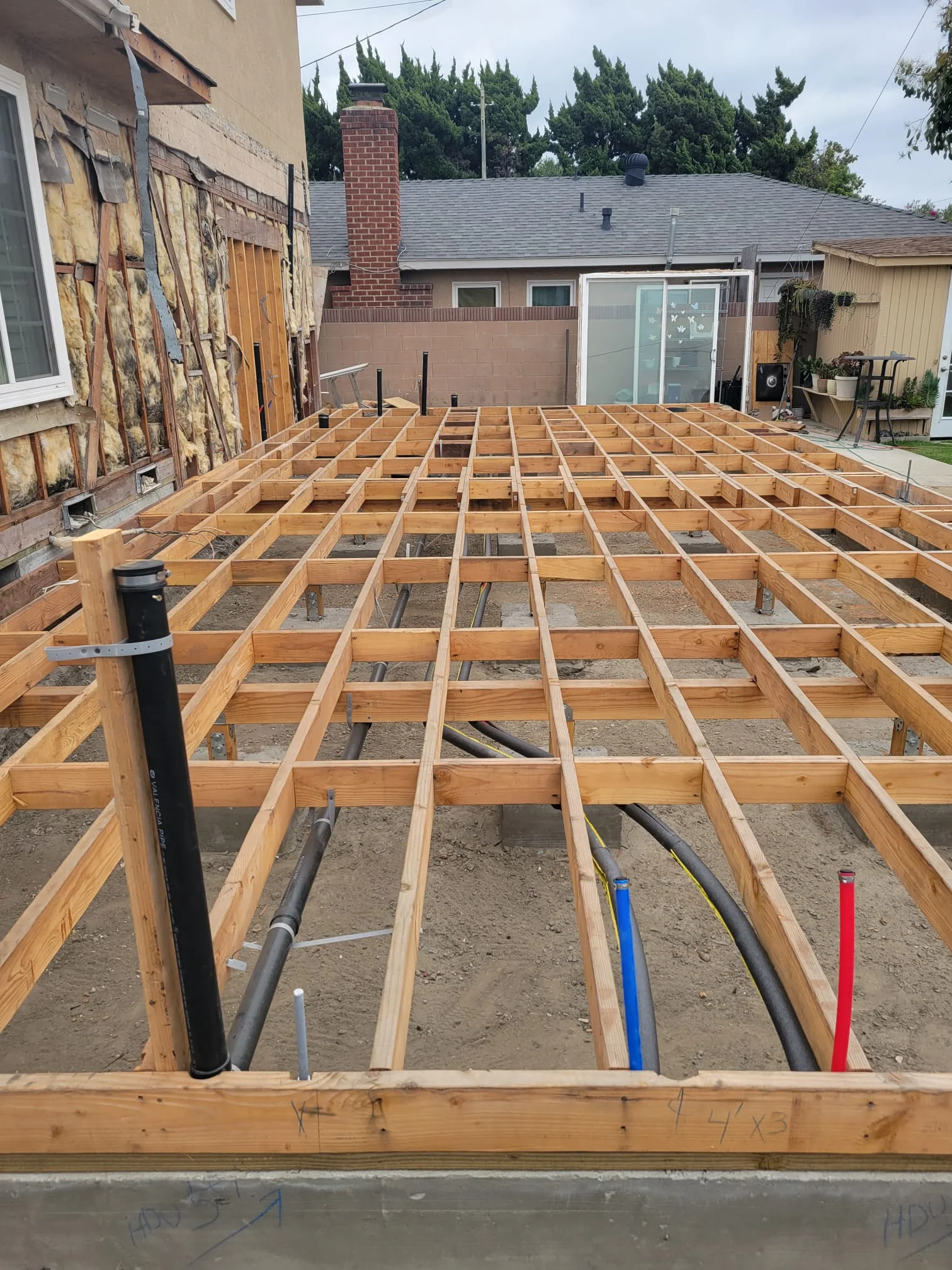
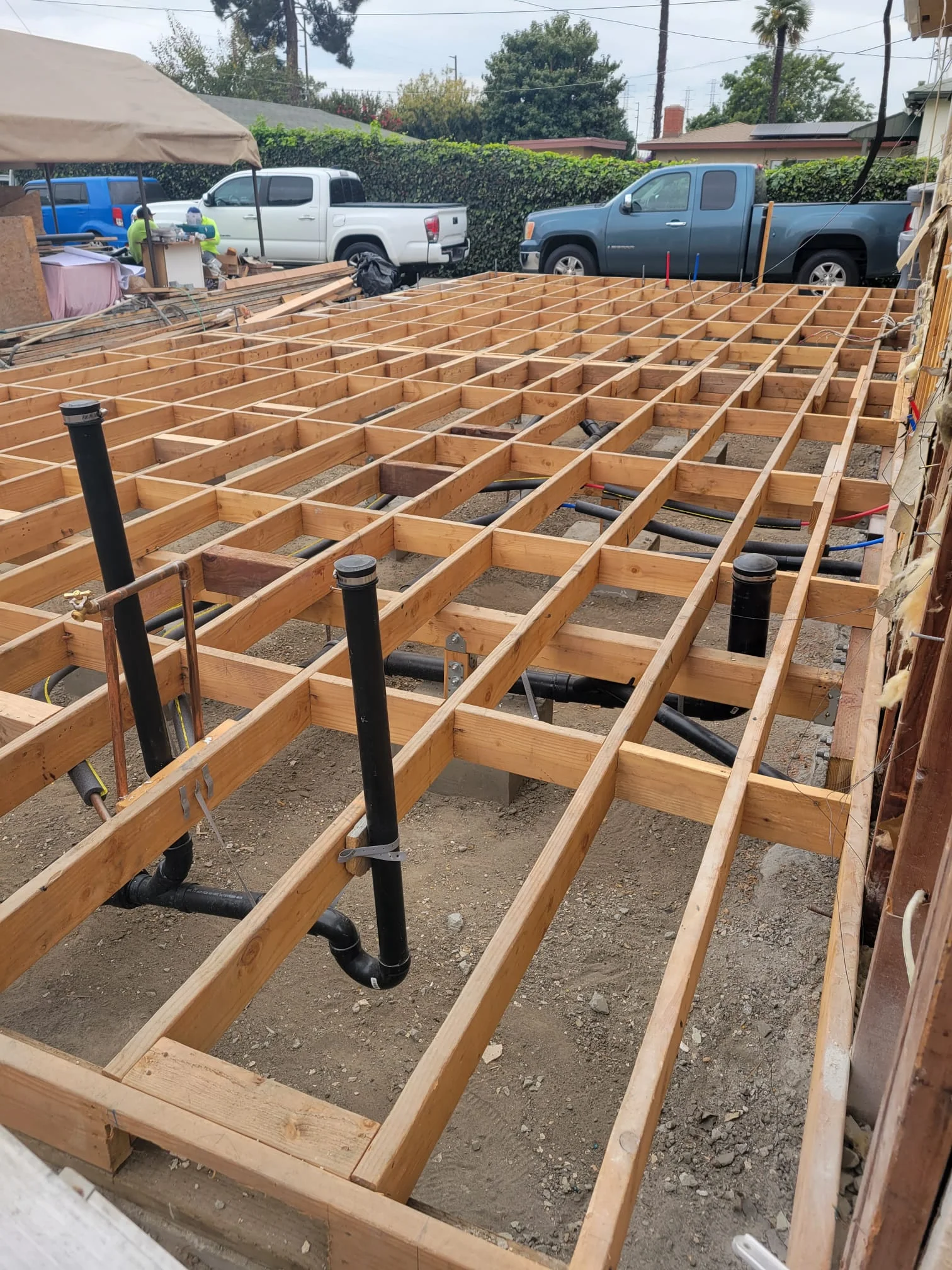
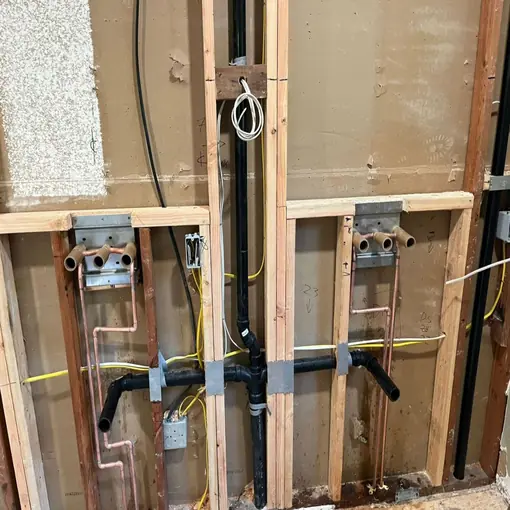
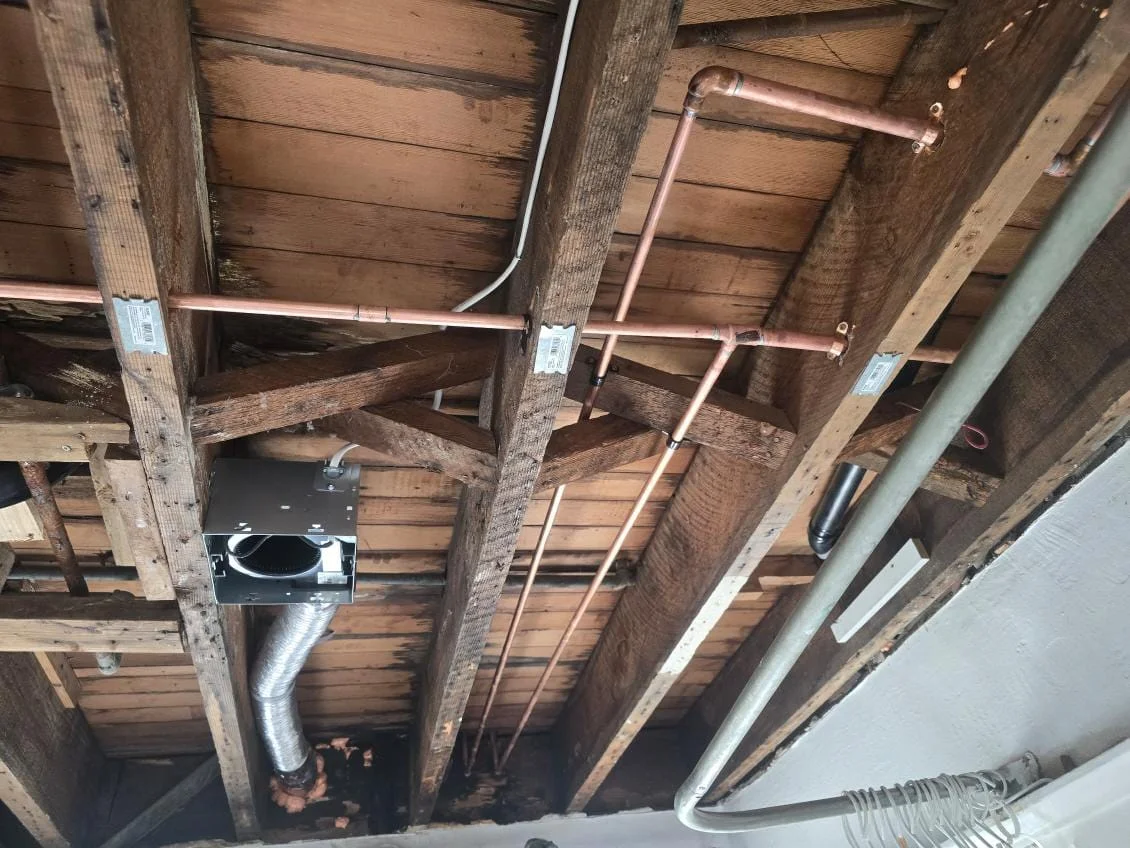
The foundation type determines how the repipe is executed. In the San Fernando Valley, the postwar ranch houses that fill Encino, Sherman Oaks, Tarzana, and Van Nuys are predominantly slab-on-grade construction. The original supply lines often run beneath or within the concrete slab, which means a repipe typically reroutes the new lines through the attic and down through interior walls to avoid cutting into the foundation. On the Eastside, the Craftsman bungalows and early 20th-century homes in Highland Park, Echo Park, and Atwater Village sit on raised pier-and-post foundations with accessible crawl spaces, allowing crews to run new lines below the floor without rerouting overhead. Each approach has different timelines, access requirements, and wall-opening patterns, and the estimate visit accounts for this before any scope is written.
Repiping Services Available Across Los Angeles
Wise Choice handles both full-system replacements and targeted partial repipes, using copper or PEX depending on the home’s layout, the homeowner’s priorities, and the specific conditions found during the inspection. The home repiping services page covers each material and method in detail.
Copper Repiping
Type L copper is the standard for residential repipes in Los Angeles. It handles the city’s hard water well, resists bacterial growth, and has a documented track record lasting 50 years or more under normal conditions. Copper requires soldered joints at every fitting, which means more labor time but a rigid, proven system. For homeowners in HPOZ neighborhoods like Highland Park or Hancock Park, copper has the additional advantage of matching what inspectors and preservation boards expect to see in a historically appropriate plumbing system.
PEX Repiping
PEX is a flexible plastic tubing that routes through walls, ceilings, and tight spaces with fewer connection points than copper. Fewer joints means fewer potential leak points over the life of the system. PEX also resists interior scale buildup better than metal pipes, which is a meaningful advantage in a hard-water city. For slab homes where the repipe reroutes supply lines through the attic, PEX’s flexibility reduces the number of fittings needed to navigate turns and drops through interior walls.
Partial Repiping
Not every home needs a full-system replacement. When corrosion is isolated to one section of the supply system, a partial repipe replaces the failing lines while leaving the functional sections intact. This is common in homes where a previous owner replaced part of the system decades ago, and the newer section remains sound. The inspection confirms where the boundaries are.
| Factor | Copper | PEX |
|---|---|---|
| Expected lifespan | 50+ years | 40-50 years |
| Scale resistance in hard water | Good; scale forms on interior walls over decades | Excellent; smooth interior resists mineral adhesion |
| Joint type | Soldered fittings at every connection | Crimp or expansion fittings; fewer joints needed |
| Flexibility for slab reroutes | Rigid; requires more fittings through turns | Flexible; routes through walls and attics with fewer connections |
| Installation timeline | Longer; soldering at each joint | Shorter; mechanical fittings and flexible routing |
| HPOZ / historic home compatibility | Preferred by preservation review boards | Acceptable for concealed supply lines |
How a Los Angeles Repipe Project Works
The process starts before anyone picks up a wrench. A project manager visits the property, inspects the existing plumbing system, and delivers a written estimate covering the scope, material, timeline, and what the homeowner should expect during each phase. That visit takes approximately 45 to 60 minutes and includes checking exposed pipes in the garage, crawl space, or utility area, identifying the pipe material, and discussing the home’s layout and access points.
Permit Filing Through LADBS
Residential repiping in the City of Los Angeles requires a plumbing permit from the Los Angeles Department of Building and Safety. Wise Choice files the application, submits the plan documentation, and coordinates the inspection schedule. For a standard residential repipe, LADBS typically processes the permit through the over-the-counter pathway, which means approval can happen within the same day for straightforward scope. More complex projects involving rerouting through structural areas may go through expanded plan check. The homeowner does not need to visit LADBS or manage any part of the permit process.
Installation Day
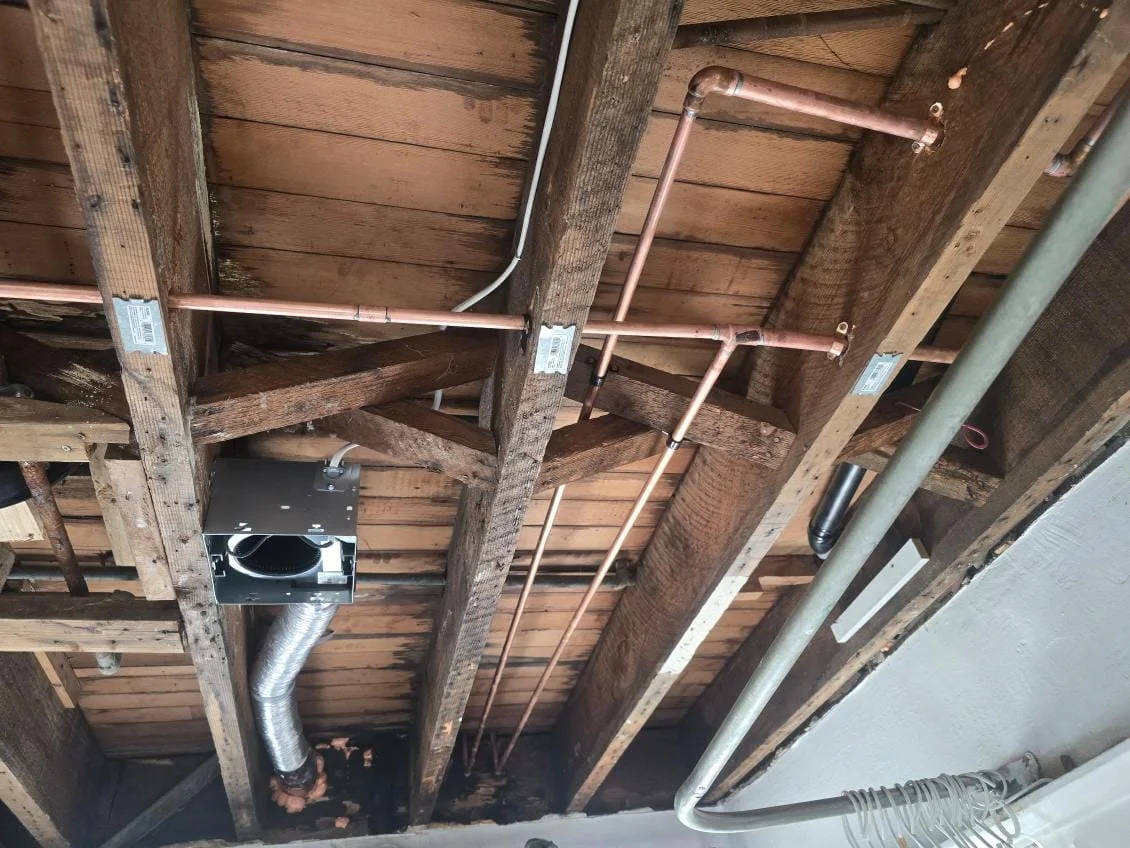
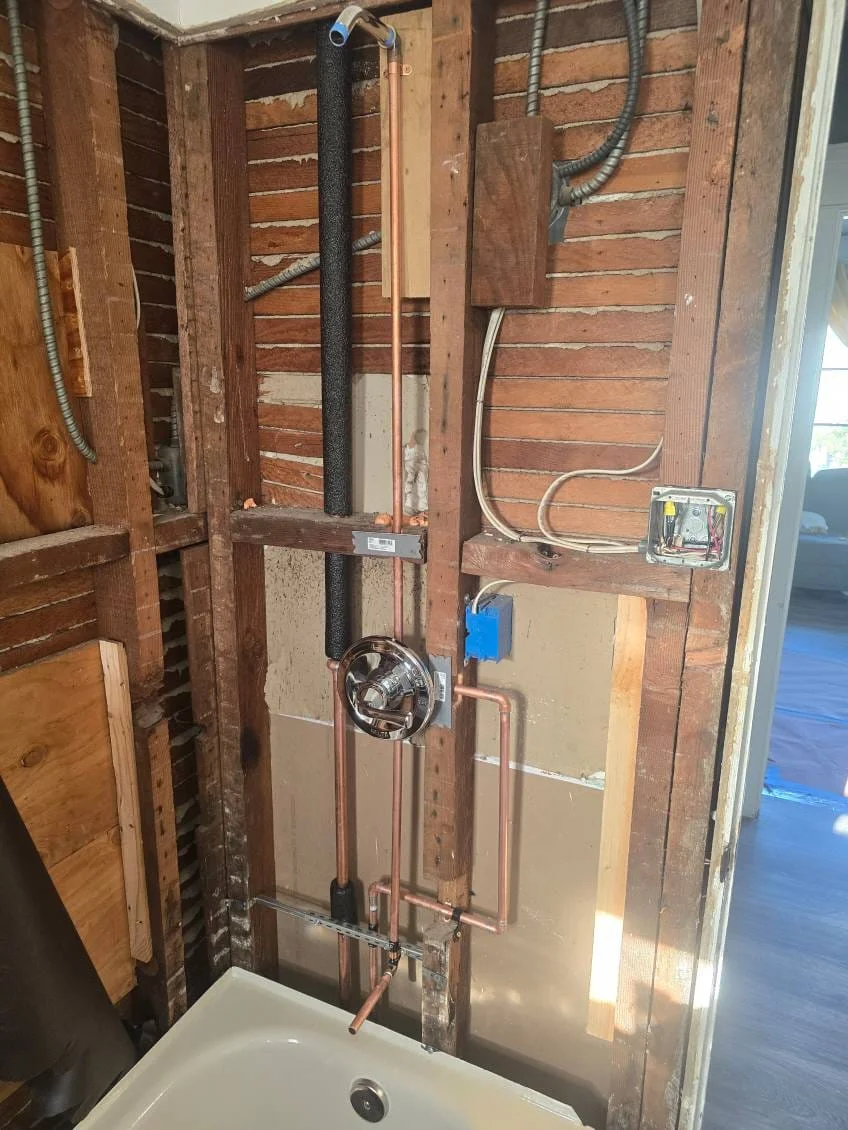
The crew works room by room, opening access points in walls and ceilings to remove the old lines and install the new supply system. On a slab home in the Valley, that typically means routing new lines up through the attic and dropping them down to each fixture through interior wall cavities. On a raised-foundation home on the Eastside, crews can run lines through the crawl space below the floor. Water is shut off during active work hours and restored before the crew leaves for the day. The work area is cleaned at the end of each day, and protective coverings are placed over flooring and furniture in active zones.
Inspection, Patching, and Closeout
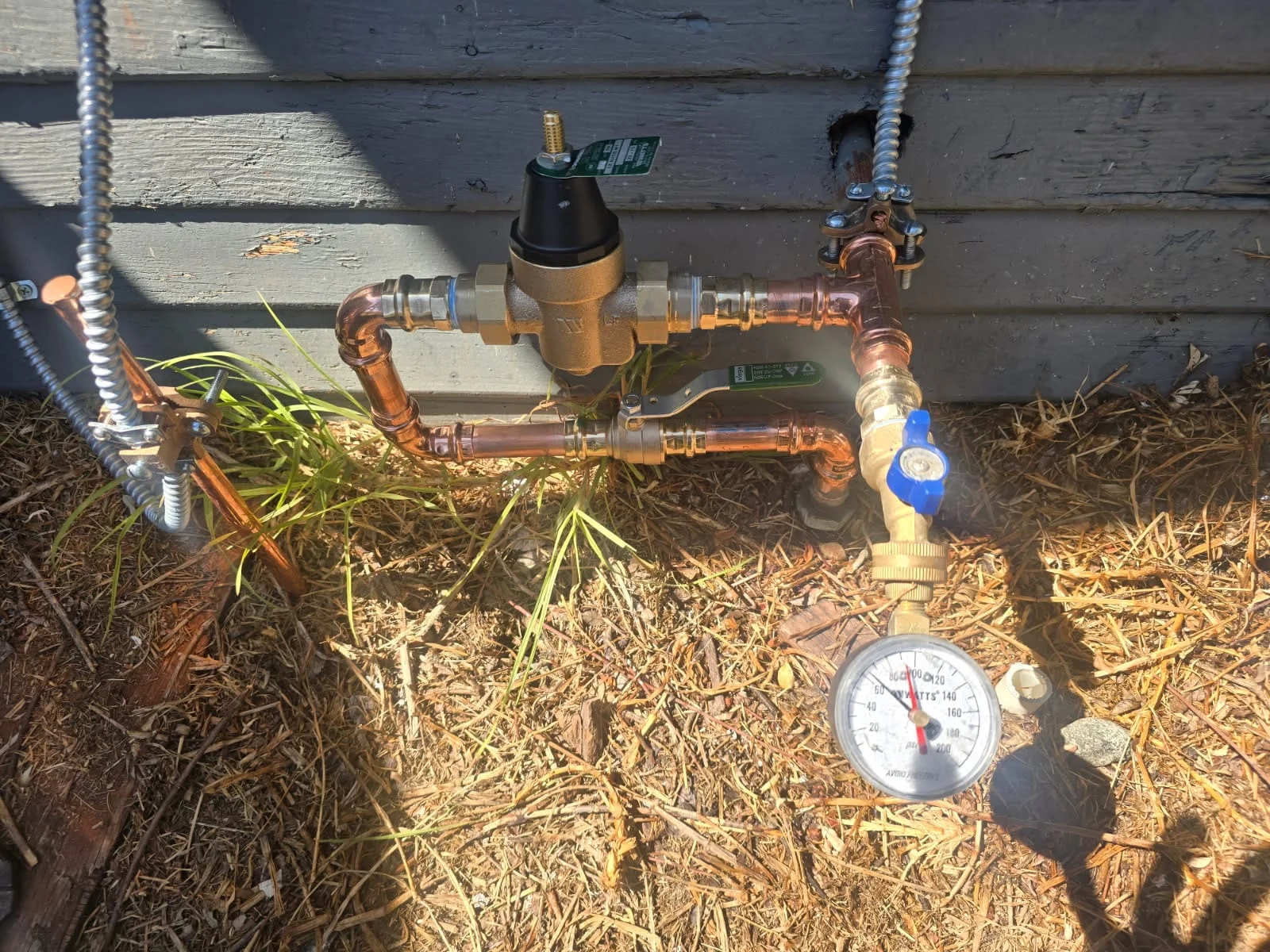
After the new system is pressure-tested and activated, LADBS conducts the plumbing inspection. Wise Choice coordinates the scheduling. Once the inspection is passed, the drywall access points are patched, the texture is matched to the surrounding surface, and the patches are primed. Matching the texture on older LA homes with hand-applied knockdown, orange peel, or skip-trowel finishes takes attention, and this work is included in the project scope. The homeowner receives the signed LADBS permit, warranty documentation, and a project summary at closeout.
Call (818) 483-8055 to schedule a free on-site estimate, or request an estimate online.
LADBS Plumbing Permits for Residential Repiping
The Los Angeles Municipal Code requires a plumbing permit for any installation or modification of potable water piping within the City of Los Angeles. A whole-home repipe is not a like-for-like fixture swap. It replaces the entire supply system, which triggers permit requirements, plan review, and a post-installation inspection by an LADBS inspector. Wise Choice handles every step of this process.
The permit application is filed through LADBS, either via the ePlanLA portal for standard plan check or through the PermitLA express pathway for qualifying scopes. After the repipe is complete and the system passes a pressure test, LADBS schedules an inspection to verify the installation meets the California Plumbing Code. The signed permit becomes part of the property’s permanent record, which protects the homeowner during future sales, insurance claims, and any subsequent remodeling work that touches the plumbing system.
Homeowners in unincorporated Los Angeles County or in cities outside LA city limits are permitted through their local building department, not LADBS. Wise Choice handles permits in both jurisdictions.
Neighborhoods Where Repiping Is Most Common
Pipe age and material vary by neighborhood because the housing stock was built in distinct waves across different parts of the city. The pattern of failures follows the construction history.
In the San Fernando Valley, the postwar subdivisions of Encino, Sherman Oaks, Tarzana, Woodland Hills, and Van Nuys were built primarily during the 1950s and 1960s. These homes are slab-on-grade with galvanized supply lines that are now 60 to 70 years old. The combination of slab construction, original galvanized pipe, and decades of hard water makes this the highest-volume repiping corridor in the city. A typical project here involves rerouting supply lines through the attic to avoid cutting into the concrete slab.
On the Eastside, Highland Park, Echo Park, Silver Lake, Atwater Village, and Eagle Rock contain Craftsman bungalows, Spanish Revival cottages, and early mid-century homes built from the 1900s through the 1940s. Many of these are raised on pier-and-post foundations, which gives crews crawl-space access for running new lines. The pipe material varies; some homes were originally plumbed with galvanized steel, others with early copper joined by lead-containing solder (pre-1986), and a handful of pre-war homes still have sections of cast iron on the drain side. Homes in the Highland Park HPOZ may require a Certificate of Appropriateness from the Office of Historic Resources before any exterior-visible plumbing modifications can proceed, though interior-only repipes are generally exempt from HPOZ review.
In Mid-City, Hancock Park, Koreatown, Mid-Wilshire, and West Adams contain a mix of 1920s Spanish Colonial Revival estates and 1940s to 1950s multifamily buildings. The single-family homes here often have a combination of original galvanized supply lines and partial copper replacements done at different times, resulting in mixed-material systems with galvanic corrosion at the transition fittings. The HPOZ overlay in Hancock Park and South Carthay adds a review layer for any work affecting the exterior appearance of the structure.
Why Los Angeles Homeowners Choose Wise Choice Remodeling
Over 15 Years of Combined Experience
The Wise Choice team brings over 15 years of combined experience managing repiping and plumbing projects across Southern California, including the specific challenges of LA’s older housing stock, hard water, and mixed foundation types.
Licensed and Insured Under One Contract
Wise Choice holds CSLB License #1104186 and manages every phase of the repipe under a single contract. One project manager, one point of contact, and full accountability from the first inspection through the final LADBS sign-off. The homeowner is never left coordinating between a plumber, a drywall patcher, and a permit runner.
2-Year Workmanship Warranty
Every repiping project is backed by a 2-year workmanship warranty covering the installation, fittings, connections, and drywall patching. If a connection leaks or a fitting fails within the warranty period, Wise Choice returns to repair it at no cost. Pipe materials carry separate manufacturer warranties, which are reviewed during the estimate visit.
Financing Available
Financing is available with $0 down options for qualified homeowners. The project manager walks through current programs during the estimate visit.
Wise Choice Remodeling has managed repiping projects across Los Angeles for homeowners dealing with the exact conditions this city produces: galvanized pipes choked by decades of hard water, slab homes that need rerouted supply lines, and raised-foundation bungalows with crawl-space access. With over 15 years of combined experience, 320+ reviews at 4.8 stars, and a 2-year workmanship warranty on every project, the team is built for this work. Call (818) 483-8055 to schedule a free on-site estimate, or request your estimate online.