What PEX Repiping Is and When a Home Needs It
PEX repiping is the process of removing a home’s existing water supply lines and replacing them with cross-linked polyethylene (PEX) tubing, a flexible plastic piping material that resists corrosion, scale buildup, and chlorine degradation over a projected lifespan of 40 to 50 years. For homeowners living with galvanized steel pipes that have spent decades corroding from the inside out, PEX repiping eliminates the source of discolored water, pressure loss, and recurring leaks in a single project rather than through years of patchwork repairs.
The signs that push a homeowner toward repiping tend to arrive in clusters. Rust-tinted water at the tap every morning. Pressure that barely fills a glass in the master bathroom while the kitchen runs at half strength. A pinhole leak under the house that gets fixed, only for another to appear four months later in a completely different run. These are not isolated plumbing failures. They are symptoms of a supply system that has corroded past its useful life.
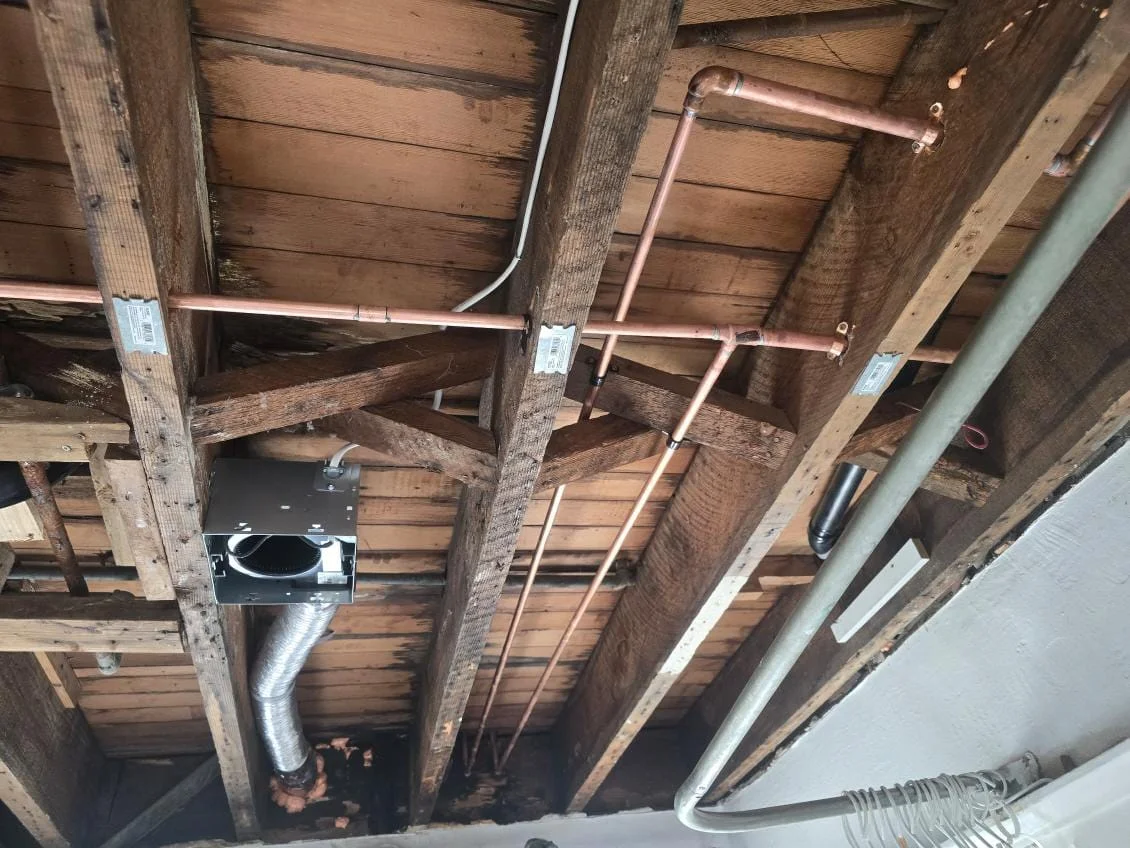
Consider a 1953 ranch home with original galvanized supply lines running through the crawl space and up into the walls. Every hot water faucet spits rust-colored water for the first thirty seconds each morning. The shower pressure has dropped so far that two fixtures cannot run at the same time without one slowing to a trickle. A plumber patches the worst joint under the house, but six months later the next weakest section starts weeping into the insulation. That house does not have a single pipe problem. It has a system that has reached the end of its useful life, and the only permanent resolution is a full repipe. According to the U.S. Department of Housing and Urban Development, PEX is now used in more than 60 percent of new residential water supply systems nationwide, a figure that reflects how thoroughly it has replaced older piping materials in both new construction and retrofit projects.
PEX Tubing Types and How They Differ
Not all PEX tubing performs the same way. The two types most commonly used in residential repiping are PEX-A and PEX-B. Both are made from cross-linked polyethylene, but the cross-linking process and the resulting physical properties differ in ways that affect installation, fitting type, and long-term behavior in the home.
PEX-A (Peroxide Cross-Linked)
PEX-A is manufactured using the Engel method, where peroxide is introduced during extrusion while the polyethylene is still molten. This produces a cross-link density of roughly 85 percent, giving the tubing high flexibility and the ability to recover from minor kinks when reheated with a heat gun. PEX-A connects with expansion-style fittings: the pipe end is expanded, the fitting is inserted, and the tubing contracts around it to form a seal. Because the fitting sits inside an expanded pipe rather than a reduced one, the interior diameter at each connection stays nearly full, which helps maintain consistent water pressure across the system.
PEX-B (Moisture-Cure Cross-Linked)
PEX-B is produced through a post-extrusion moisture-cure process that creates a slightly stiffer tube. It connects with crimp rings or stainless-steel cinch clamps secured over insert fittings. These insert fittings reduce the interior diameter at each joint, which can create a small pressure drop at every connection point. PEX-B offers strong chlorine resistance and a marginally higher burst-pressure rating in laboratory testing. Kinks in PEX-B cannot be repaired with heat and must be cut out and reconnected with a coupling, which matters when routing through tight wall cavities.
| Characteristic | PEX-A | PEX-B |
|---|---|---|
| Cross-linking method | Peroxide (Engel), during extrusion | Moisture-cure (silane), after extrusion |
| Flexibility | Highest among PEX types | Moderate; stiffer, needs wider bend radius |
| Kink repair | Reheatable with a heat gun | Must be cut and reconnected |
| Fitting type | Expansion fittings (full-diameter flow) | Crimp or cinch insert fittings (reduced interior) |
| Pressure at connections | Minimal restriction | Slight reduction at each fitting |
| Chlorine resistance | Strong | Slightly higher rated |
| Expected lifespan | 40 to 50 years | 40 to 50 years |
Layout Options: Manifold vs Trunk-and-Branch
Beyond the tubing type, the layout of a PEX system affects water pressure, hot water delivery speed, and the number of fittings buried inside the walls. The two primary approaches are the manifold (home-run) layout and the traditional trunk-and-branch layout.
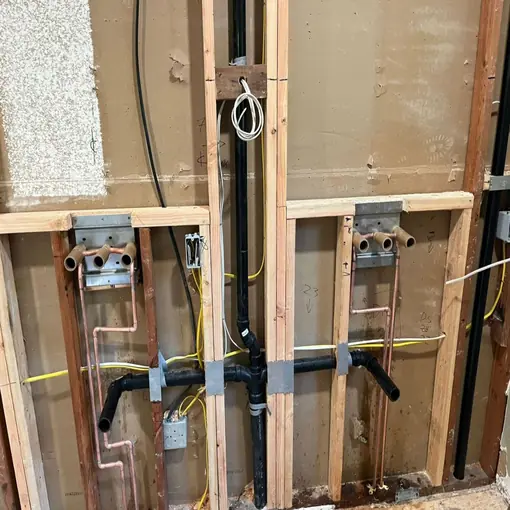
A manifold system runs a dedicated PEX line from a central distribution point to each fixture. This means every sink, shower, and toilet gets its own direct line with no shared sections and no intermediate fittings inside the walls. The result is more even pressure across all fixtures and faster hot water delivery, because the smaller-diameter dedicated lines hold less standing water between the heater and the tap. It uses more tubing but fewer buried connections.
A trunk-and-branch layout uses larger main lines that split into smaller branches at tee fittings along the route. It uses less tubing overall but places more fittings inside the wall cavities. Each fitting is a potential service point over the life of the system. For homes with straightforward layouts and fewer fixtures, trunk-and-branch remains a practical option. For larger homes or homes where multiple fixtures run simultaneously, a manifold layout delivers noticeably more consistent pressure. The estimator recommends the layout best suited to each home’s floor plan, fixture count, and water heater location.
How a Whole-House PEX Repipe Works
A PEX repipe follows a defined sequence that keeps the home’s water downtime to the shortest window possible. For homeowners considering a full home repiping project, understanding each phase removes much of the uncertainty about what the process involves.
Assessment and Written Estimate
A licensed estimator visits the property, inspects exposed piping in the garage, crawl space, or basement, identifies the existing pipe material and condition, counts every fixture connection, and maps the routing for new PEX lines. The visit typically takes 45 minutes to an hour. The homeowner receives a written estimate detailing the full scope, recommended PEX system type, number of wall access points, restoration work included, and projected timeline.
Permit Filing and Material Staging
Wise Choice files the plumbing permit with the local building department on the homeowner’s behalf. Once the permit is issued, materials are staged, and the installation is scheduled. If the home has HOA architectural review requirements for any exterior-visible work, Wise Choice provides the documentation the board needs before work begins.
Installation and Wall Access
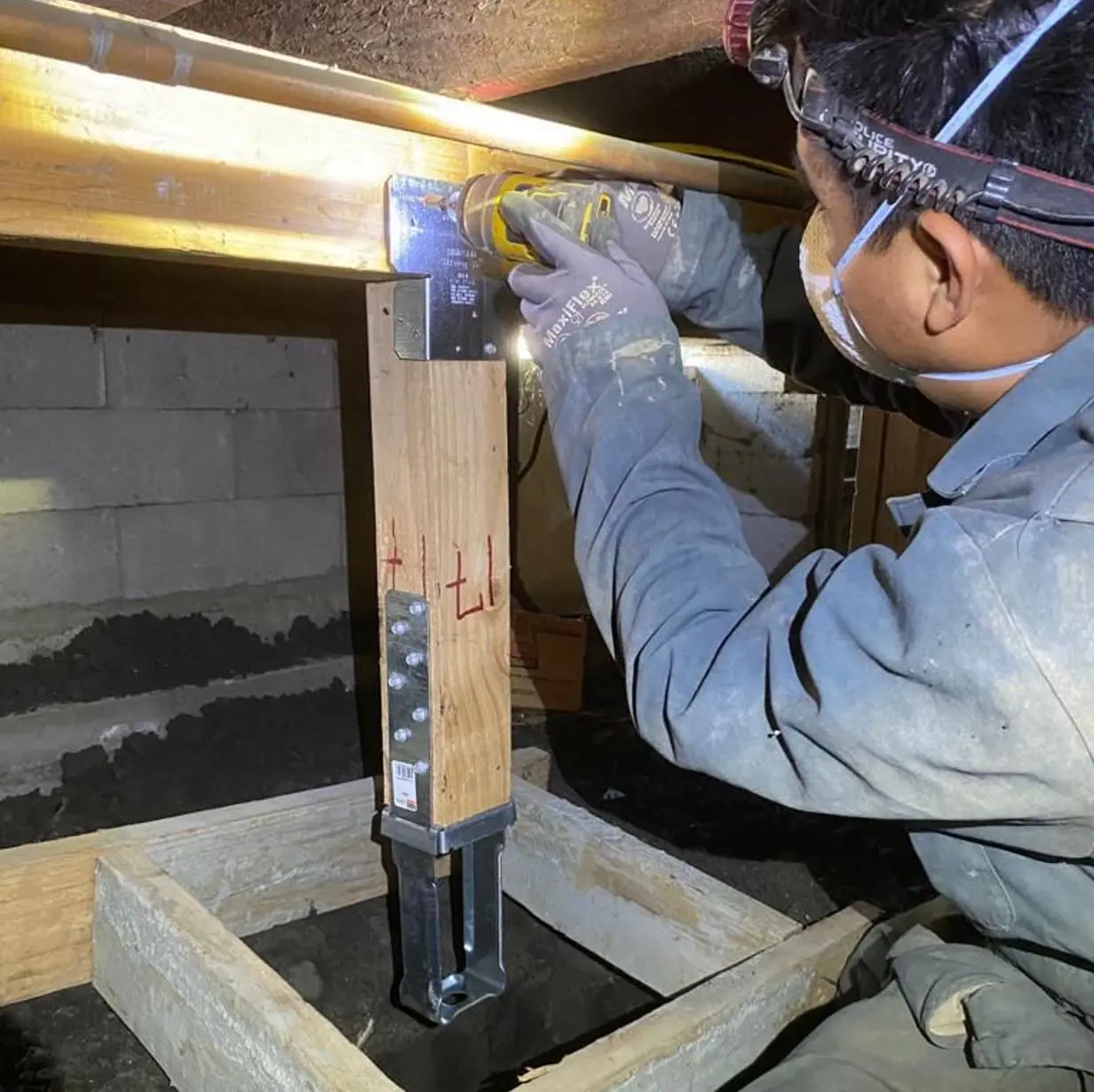
On installation day, the existing supply lines are shut off, and new PEX is routed through the home. Wall openings are pre-planned and cut to the minimum size needed to run tubing and make connections. In homes with accessible crawl spaces, a significant portion of the routing can happen below the floor without additional wall cuts. Old galvanized or copper lines are removed and disposed of as part of the project. One detail that many repiping pages overlook: in homes where the electrical system uses the old metal water pipes as part of the grounding path, removing those pipes requires that the electrical ground be verified or rerouted to a proper grounding electrode. Wise Choice accounts for this during the assessment so there are no surprises mid-project.
Inspection, Restoration, and Closeout
After installation, the new PEX system is pressure-tested, and a city inspector verifies that all connections, supports, and routing meet code. Once the inspection passes, every wall opening is patched with new drywall, taped, mudded, and texture-matched to the surrounding surface. The California Plumbing Code requires that new PEX systems be flushed before use, and Wise Choice completes this flushing protocol before restoring water service. At closeout, the homeowner receives the approved permit, the passed inspection record, and warranty documentation.
What Determines the Scope of a PEX Repipe
No two repipe projects are identical, because the scope depends on factors specific to each home. The primary variables are the total number of fixture connections (every sink, toilet, shower, hose bib, and appliance feed), the number of stories, the foundation type, the existing pipe material, and how accessible the current plumbing runs are.
A single-story home with an open crawl space and ten fixture connections is a fundamentally different project from a two-story home on a concrete slab with eighteen fixtures and pipes buried in finished walls. Slab homes require more wall access points because pipe cannot be rerouted under the floor without jackhammering concrete, which most homeowners and contractors avoid in favor of overhead or in-wall rerouting. The existing pipe material also matters: galvanized steel corrodes unevenly and often hides the worst deterioration deep inside wall cavities, while copper homes being converted to PEX may involve fewer surprises but still require the same access and permit process. The written estimate accounts for all of these variables so the homeowner sees a complete scope before any work begins.
Permits and California Plumbing Code Requirements
A whole-house PEX repipe requires a plumbing permit from the local building department in every jurisdiction across Southern California. The permit ensures that the new system is installed by a licensed contractor, that the materials and methods meet the California Plumbing Code, and that a city inspector verifies the work before it is closed inside the walls.
The California Plumbing Code includes specific provisions for PEX installations that go beyond what other states require. PEX must be installed using approved fittings and support spacing, and new installations must be flushed before the system is put into regular use. The flushing protocol is designed to clear residual manufacturing compounds from the interior tubing walls. Wise Choice handles every step of the permit process, from filing the application to coordinating the inspection schedule with the building department. Unpermitted repiping work can create serious complications during a home sale, an insurance claim, or a future renovation, which is why the permit is non-negotiable on every project.
Wall Restoration, Cleanup, and Disposal
Wall access is the part of a PEX repipe that concerns most homeowners, and it deserves a direct answer. Yes, openings in the drywall are required. No, the home does not end up looking like a demolition site. Every access point is planned before the first cut is made, sized to the minimum needed for routing and connections, and patched after the plumbing passes inspection.
The restoration process includes new drywall patches, taping, joint compound, and texture matching. The goal is a finished surface that blends with the surrounding wall so that once the homeowner paints, the repair is not visible. All removed pipe, fittings, and construction debris are disposed of as part of the project. The property is cleaned at the end of each workday and left broom-clean at closeout.
Why Choose Wise Choice Remodeling
Over 15 Years of Combined Repiping Experience
Wise Choice Remodeling brings over 15 years of combined experience across repiping and plumbing projects in Southern California. That experience covers galvanized-to-PEX conversions, copper-to-PEX upgrades, slab-adjacent routing, and multi-story homes where access planning determines whether the project stays on schedule. The team has worked on homes from every major construction era found in the region, from post-war tract housing with original galvanized steel to 1970s builds with mixed copper and CPVC.
One Licensed Contractor, One Contract, One Warranty
Every PEX repipe is managed under a single contract by one licensed general contractor. That means one project manager coordinating the plumbing, the permit, the inspection, and the wall restoration. One point of contact from the first estimate through final closeout. And one 2-year workmanship warranty that covers every connection, fitting, hanger, and drywall patch installed on the project. If anything installed by Wise Choice fails within two years, the repair is handled at no additional cost.
Financing Available
Wise Choice offers $0 down financing options for qualified homeowners, making it possible to replace a failing pipe system without waiting for the next leak to force the decision.
Wise Choice Remodeling has over 15 years of combined experience delivering whole-house PEX repipes across Southern California, backed by 320+ reviews at 4.8 stars and a 2-year workmanship warranty on every project. Call (818) 483-8055 to schedule your free estimate, or request one online to get a written scope, timeline, and material recommendation for your home.