What Attic Insulation Does for Southern California Homes
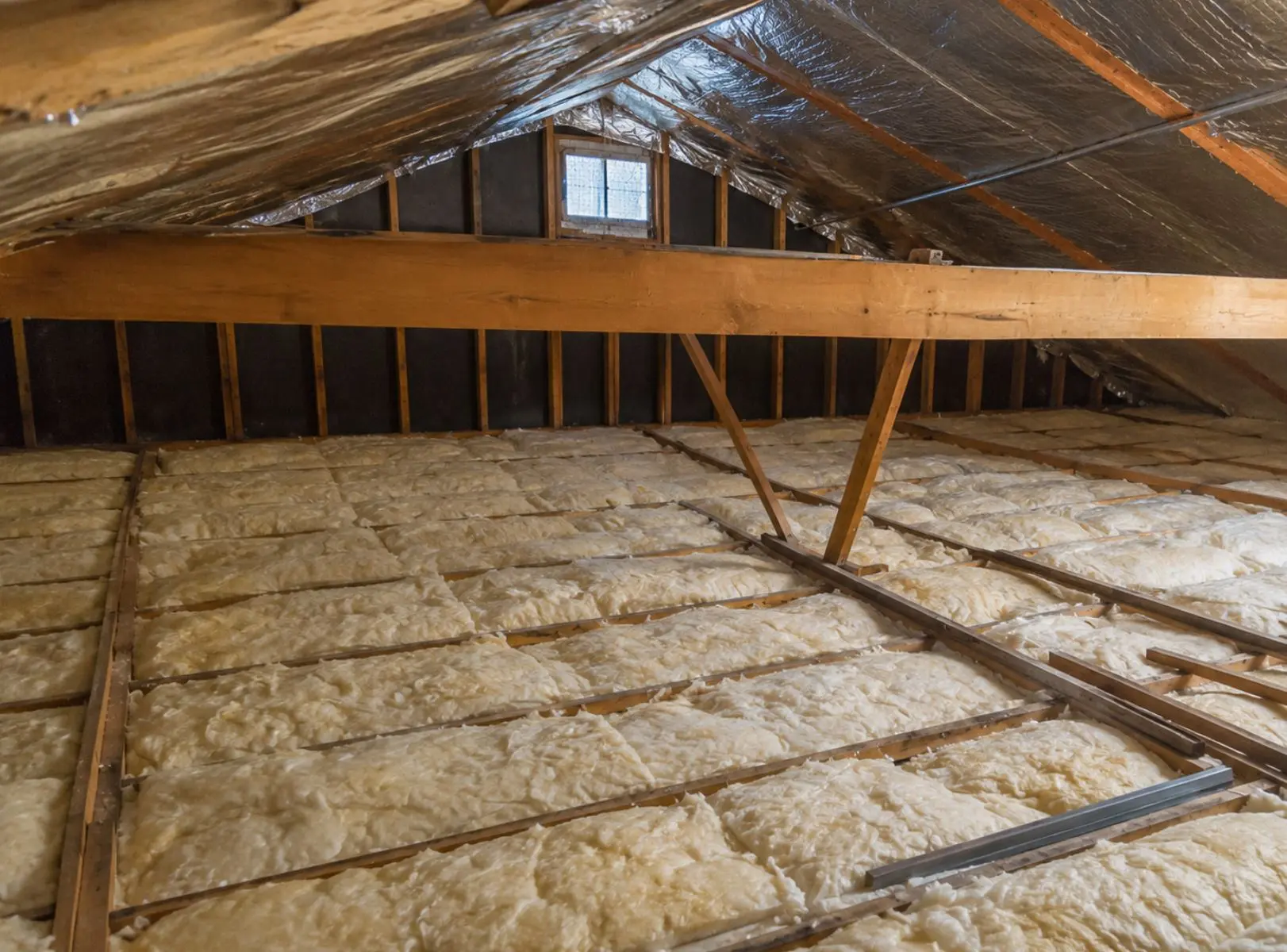
Attic insulation is the primary thermal barrier between a Southern California home’s living space and the roof above it, and in this climate it functions primarily as a heat blocker rather than a heat retainer. Attic air temperatures in Southern California can exceed 150 degrees Fahrenheit on summer afternoons. Without adequate insulation between that attic and the rooms below, that heat radiates and conducts directly into the living space regardless of how hard the air conditioning runs, creating rooms that never reach setpoint, equipment that short-cycles or runs continuously, and utility bills that reflect the energy cost of fighting a thermal barrier that was never properly installed. Adding attic insulation to meet or exceed California’s Title 24 R-38 minimum for most Southern California climate zones reduces heat transfer through the attic floor by 70 percent or more compared to an uninsulated or minimally insulated attic, lowers the load on the home’s cooling system, and reduces the temperature differential between upstairs and downstairs rooms that makes older Southern California homes uncomfortable in summer.
Attic Insulation Types We Install
Blown-In Cellulose Insulation
Blown-in cellulose is made from recycled paper fiber treated with borate-based fire retardant and is installed by blowing loose-fill material over the attic floor to a depth that achieves the required R-value. Cellulose is the most common material for attic insulation upgrades in Southern California because it fills completely around framing members, pipes, wiring, and obstructions that batt insulation cannot reach, it has a higher density than fiberglass batts which reduces air movement through the insulation layer, and it is manufactured from recycled content. Cellulose settles slightly over time, and we account for that by installing to a depth that achieves the target R-value after settling.
Blown-In Fiberglass Insulation
Blown-in fiberglass is installed using the same process as blown-in cellulose and achieves comparable R-values at similar depths. Fiberglass does not settle as much as cellulose over time and is inert and moisture-resistant, making it a good option for attics with ventilation conditions that produce occasional condensation.
Batt Insulation for New Construction and Open Attics
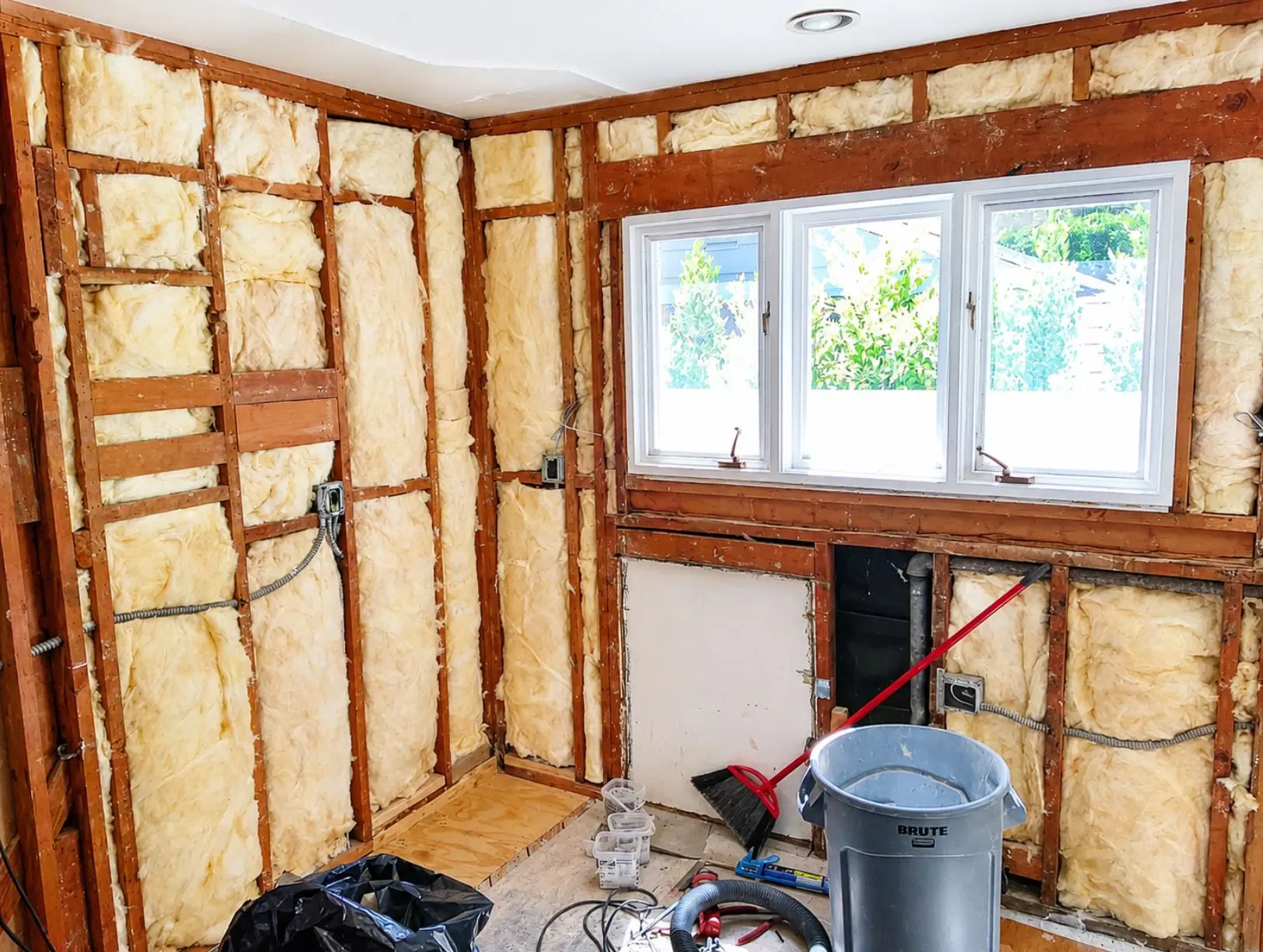
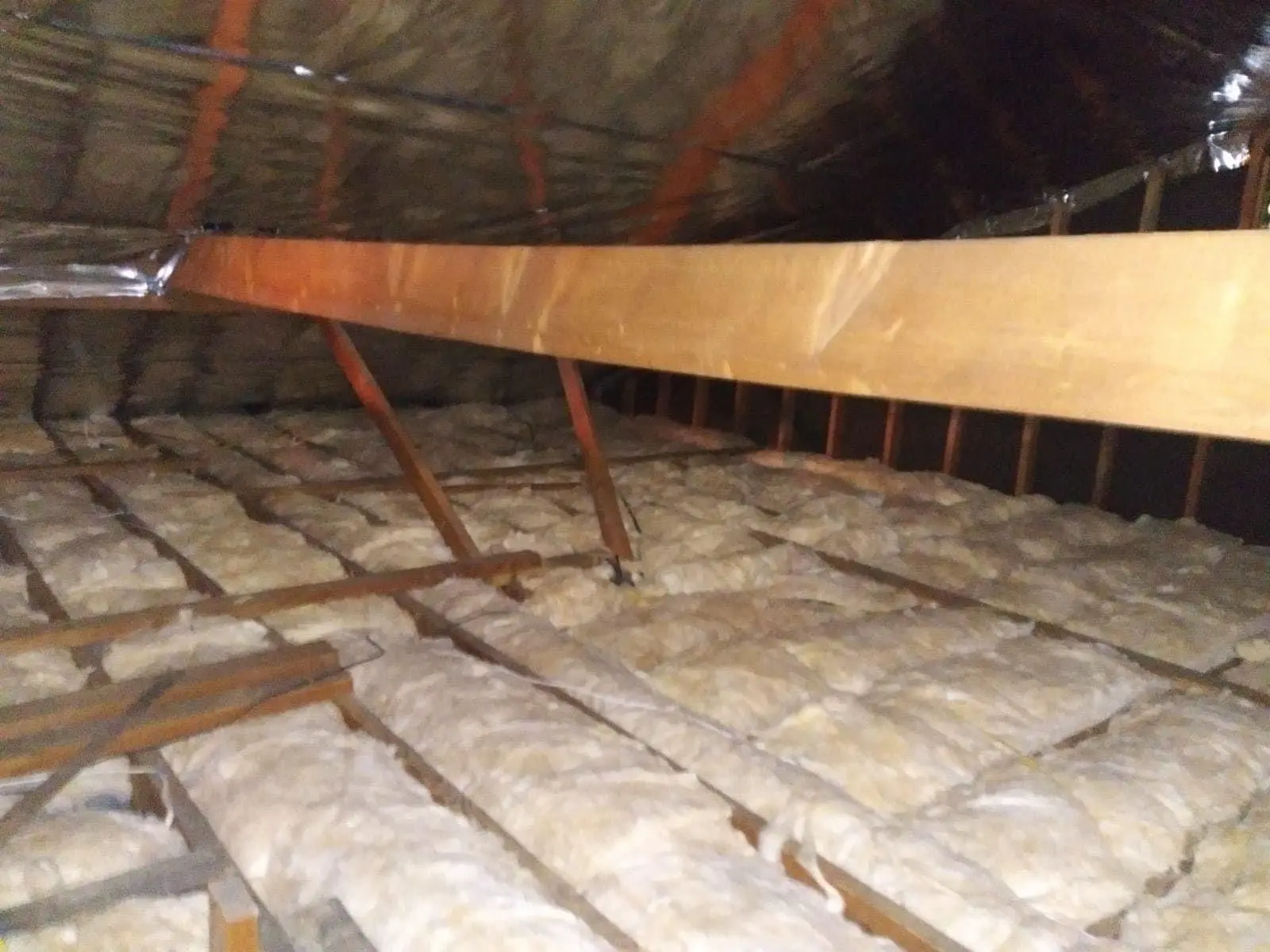
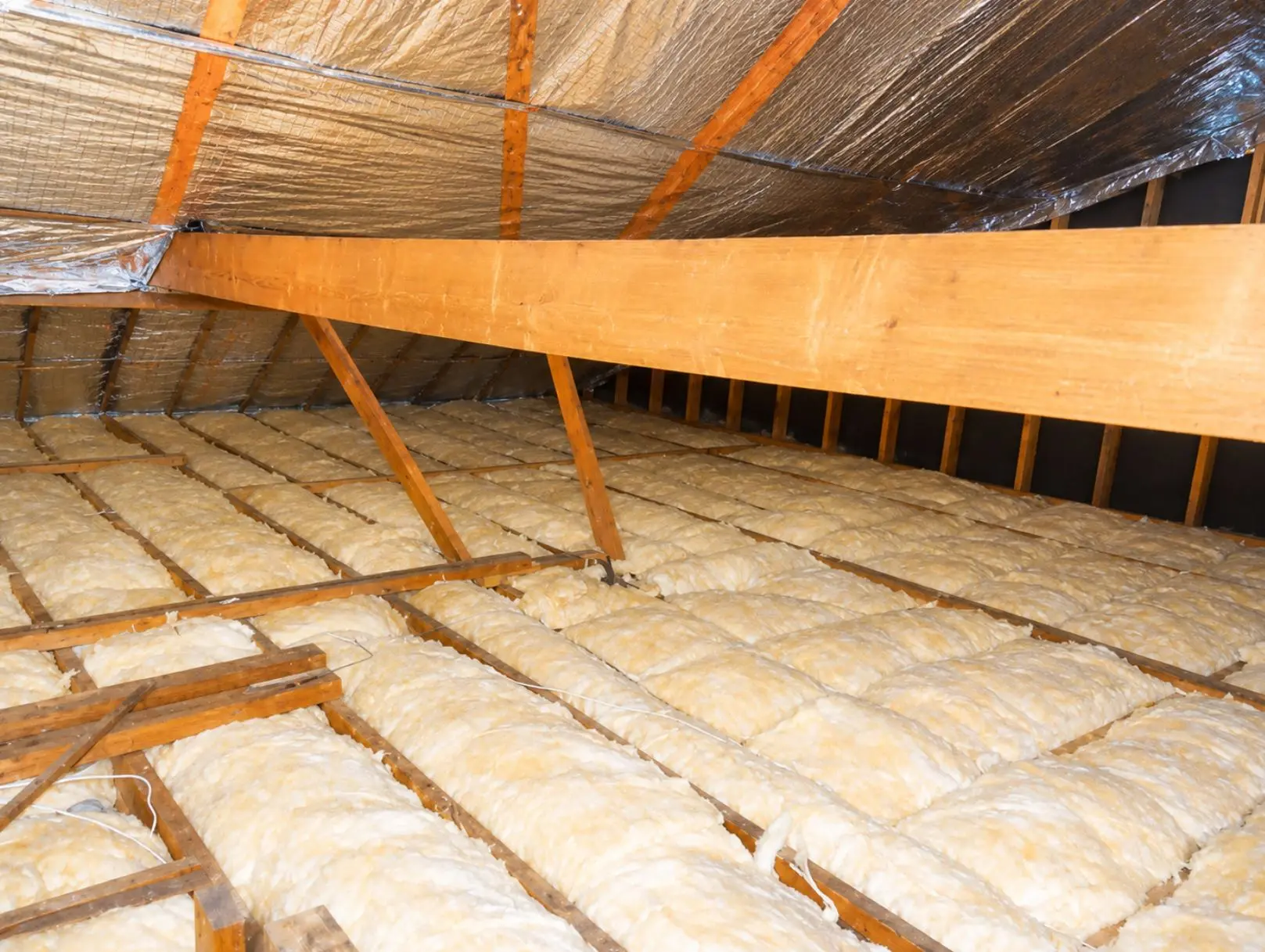
Fiberglass or mineral wool batt insulation installed between attic floor joists is the standard approach for new construction where the framing is exposed and accessible before any existing insulation is in place. For existing homes, batts are rarely the right choice for an upgrade because they cannot be placed tightly against existing framing without gaps, and the gaps between batts and framing members create thermal bridges that reduce the effective R-value of the assembly below the rated value of the batt material itself. We use batts where they are the correct solution for the specific attic condition and blown-in material everywhere else.
Spray Foam Insulation at the Roof Deck
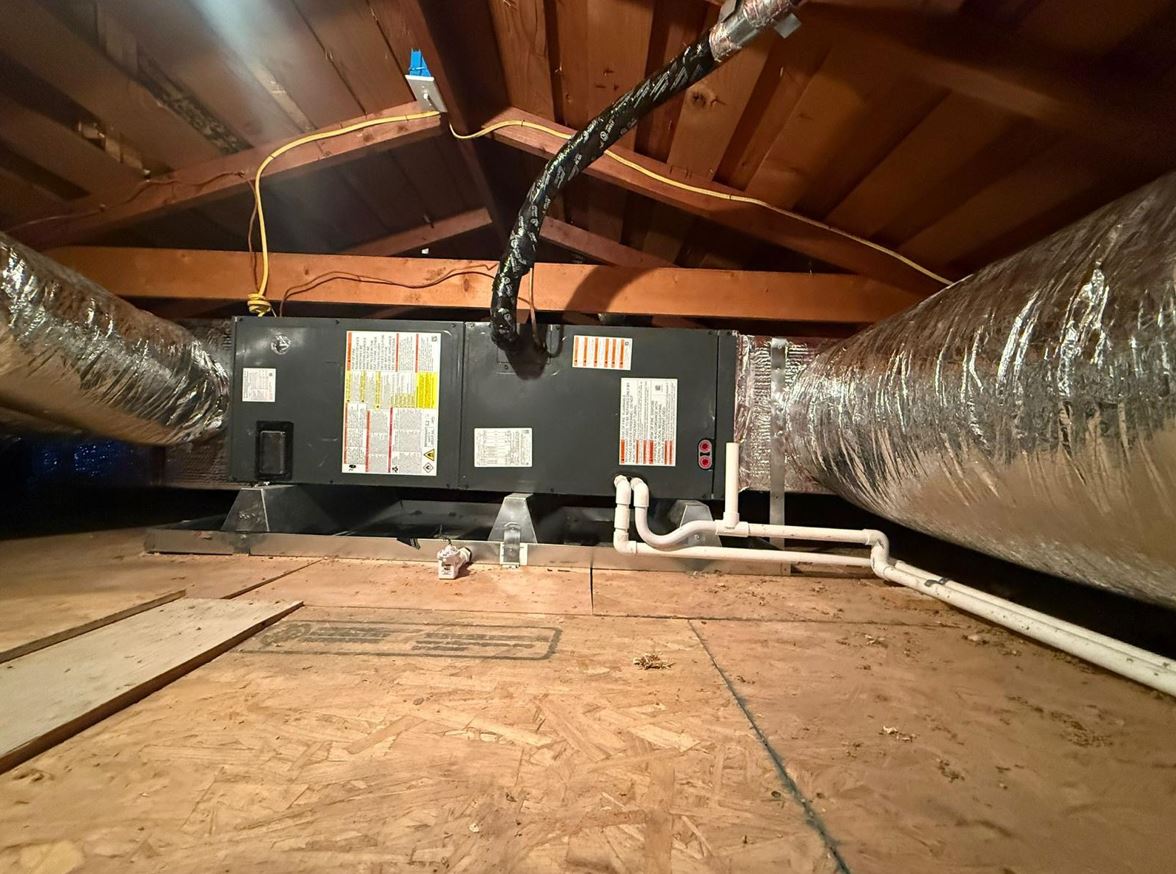
For homes with HVAC ducts running through the attic space, insulating at the roof deck with closed-cell or open-cell spray foam rather than at the attic floor creates a conditioned or semi-conditioned attic space that dramatically reduces duct losses. When attic ducts are surrounded by 150-degree air, conditioned air inside those ducts loses a significant portion of its cooling effect before reaching the living space regardless of how well the ducts are sealed. Moving the insulation layer to the roof deck eliminates that problem. Spray foam at the roof deck is a higher-cost installation than blown-in at the floor, and we present the cost and performance comparison for both approaches during the estimate visit for homes where duct conditions make it relevant.
R-Value Requirements for Southern California Attics
| Climate Zone | Title 24 Minimum R-Value (Attic Floor) | Typical SoCal Areas | Most Common Existing Condition |
|---|---|---|---|
| Zone 6 | R-38 | Coastal Los Angeles, Santa Monica, Long Beach | R-11 to R-19 in homes built before 1990 |
| Zone 8 | R-38 | San Fernando Valley, Pasadena, Burbank | R-11 to R-19 or uninsulated in older stock |
| Zone 9 | R-38 | Inland Orange County, Riverside, San Bernardino | R-11 to R-19 or uninsulated in older stock |
| Zone 10 | R-38 | High desert, San Bernardino mountains | Variable, some areas have older R-19 installations |
According to the U.S. Department of Energy, adding insulation to an under-insulated attic is typically one of the most cost-effective energy improvements available to a homeowner, with payback periods that compare favorably to most other home improvements at current energy prices. For Southern California homes running air conditioning through a long cooling season, the annual savings from upgrading from R-11 to R-38 are typically more significant than the national average because the cooling load is larger and the season is longer. Homeowners pairing an attic insulation upgrade with new energy efficient HVAC equipment can reduce the required size of the new system, which further reduces the equipment cost and operating cost of both improvements combined. Our home insulation services cover the full range of insulation improvements available for Southern California homes.
What Goes Into an Attic Insulation Quote
Attic insulation is quoted after an on-site visit, and the price comes down to attic square footage, how much usable insulation is already up there, the material chosen, and how accessible the attic is to work in.
Air sealing is priced with the insulation rather than after it, because insulating over open top plates and recessed can housings buys you far less than the R-value on paper suggests.
Every project is quoted free on-site. Financing is available for qualified homeowners including $0 down options.
Our Attic Insulation Installation Process
Step 1: Free On-Site Attic Inspection and Measurement
A licensed Wise Choice estimator visits your home, accesses the attic through the existing access hatch, measures the existing insulation depth at multiple locations across the attic floor, inspects the attic ventilation, checks for moisture or pest damage in the existing insulation, and identifies any air sealing work that should be performed before insulation is added. The visit typically takes 30 to 60 minutes. You receive a written itemized estimate before the end of the next business day, with no obligation to proceed.
Step 2: Air Sealing Before Insulation
For homes where the attic inspection reveals open penetrations at top plates, recessed light fixtures, attic hatches, or plumbing and electrical chases, air sealing is performed before insulation is installed. Sealing these gaps first is important because adding insulation over unsealed penetrations does not stop air movement through those openings, and the performance of the insulation is limited by the unobstructed air paths beneath it. We discuss which air sealing items are present in your attic and include them in the project scope where they are relevant to the performance outcome.
Step 3: Insulation Installation
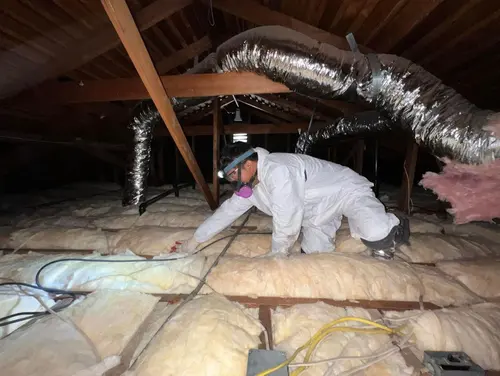
The blown-in installation crew accesses the attic with hoses connected to the blowing machine staged outside the home. Baffles are confirmed in place at the eaves to maintain ventilation channels between the attic floor insulation and the roof sheathing. Insulation is blown to the depth required to achieve the target R-value after settling, measured at multiple points across the attic floor using depth markers placed before blowing begins. The crew works systematically across the full attic floor without leaving gaps at framing members, pipes, or obstructions. The attic hatch is insulated and weatherstripped as part of the standard scope.
Step 4: Cleanup and Documentation
All equipment, hoses, and materials are removed from the property. The installation area around the attic access is cleaned. You receive your closeout package including the 2-year workmanship warranty in writing, the installed R-value confirmation, material product documentation, and itemized receipts.
If you are ready to find out what attic insulation would cost for your home, request a free estimate online or call (818) 483-8055 to schedule your attic inspection.
Permits and California Requirements for Attic Insulation
Blown-in attic insulation added to an existing attic floor is generally permit-exempt in most California jurisdictions for standard residential applications. California’s Title 24 energy code is the relevant standard for R-value requirements, and it applies to new construction and additions under permit. For existing homes, the Title 24 R-38 target serves as the practical standard for an insulation upgrade even when a permit is not required for the installation itself.
When attic insulation is installed as part of a permitted HVAC replacement, an ADU project, or a remodel that requires a permit, the insulation scope may be included in that project’s permit. We determine the applicable requirement for your project and jurisdiction during the estimate visit and confirm whether a permit applies to the insulation scope before work begins.
California requires that insulation installers provide a Certificate of Insulation Installation that documents the installed R-value, material type, coverage area, and the number of bags of material used. We provide that certificate at project closeout as part of your documentation package.
Why Southern California Homeowners Choose Wise Choice for Attic Insulation
15+ Years of Combined Experience Installing Attic Insulation
We have upgraded attic insulation in Southern California homes spanning every era of construction, from 1940s homes with no insulation whatsoever to 1990s tract homes with R-11 batts that were code minimum at the time and are well below current standards. Each attic presents different conditions, and our estimators assess what is actually there before recommending a scope rather than applying a standard package to every job.
Licensed and Insured General Contractor
Every attic insulation installation we perform is completed under our general contractor license by crew members fully covered by our insurance. You carry no liability exposure for work our team performs in your home.
Air Sealing Assessment Included in Every Estimate
We do not propose attic insulation without assessing whether air sealing should be performed first. Adding insulation over unsealed penetrations produces a fraction of the performance improvement available from addressing both together. We identify the relevant gaps during the attic inspection and present the air sealing scope as part of the same estimate so you can make an informed decision about whether to address both at the same time.
Written Estimates with No Changes Without Your Approval
The price in the estimate is what you pay for the scope described. If the attic inspection reveals additional conditions not visible from outside, we discuss them with you before including them in the scope. Nothing is added to the invoice without your prior approval.
2-Year Workmanship Warranty
Our 2-year workmanship warranty covers the installation, air sealing, and all work our crew performs in the attic. If any workmanship-related issue develops within two years under normal conditions, we return and correct it at no charge. The warranty is in writing and delivered at project closeout.
Financing Available
Financing is available for qualified homeowners including $0 down options. Ask about current programs when you schedule your estimate.
Wise Choice Remodeling brings 15+ years of combined experience to upgrading attic insulation in Southern California homes. If your home runs hot in summer despite running the AC continuously, or if you have never had the attic inspected and do not know what R-value is currently installed, the starting point is a free attic inspection and a written estimate that shows you exactly what an upgrade would cost and what it qualifies for. Call (818) 483-8055 to schedule yours.