What Tankless Water Heater Installation Involves
Tankless water heater installation is the process of replacing a conventional storage tank water heater with a wall-mounted, on-demand unit that heats water only when a fixture calls for it. For most Southern California homes, the conversion requires upsizing the gas supply line, installing a new Category III or IV stainless steel vent, running electrical to the unit’s ignition and control board, and pulling plumbing and mechanical permits before work begins. Wise Choice Remodeling is a licensed general contractor that handles every trade involved in the conversion under one contract.
According to ENERGY STAR, certified gas tankless water heaters save a family of four roughly $95 per year on gas bills compared to a standard storage model, and the units carry a life expectancy of about 20 years. That efficiency gain is real, but only if the installation is done correctly. A tankless unit mounted on undersized gas piping, vented through a duct that was never designed for it, or installed without permits is a liability, not an upgrade.
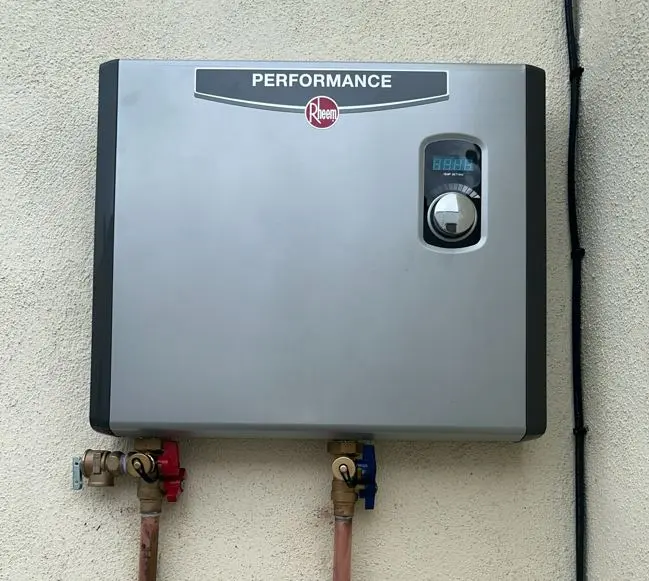
Types of Tankless Water Heater Installations
Whole-House Gas Tankless
The most common configuration in Southern California. A single gas-fired unit rated between 150,000 and 199,000 BTU per hour handles full-home demand in a typical three-bathroom house. The unit mounts on an exterior wall or an interior wall with dedicated venting to the outside. Gas supply piping is sized from the meter forward to meet the manufacturer’s minimum inlet pressure requirements and the total connected load under the California Plumbing Code.
Electric Tankless
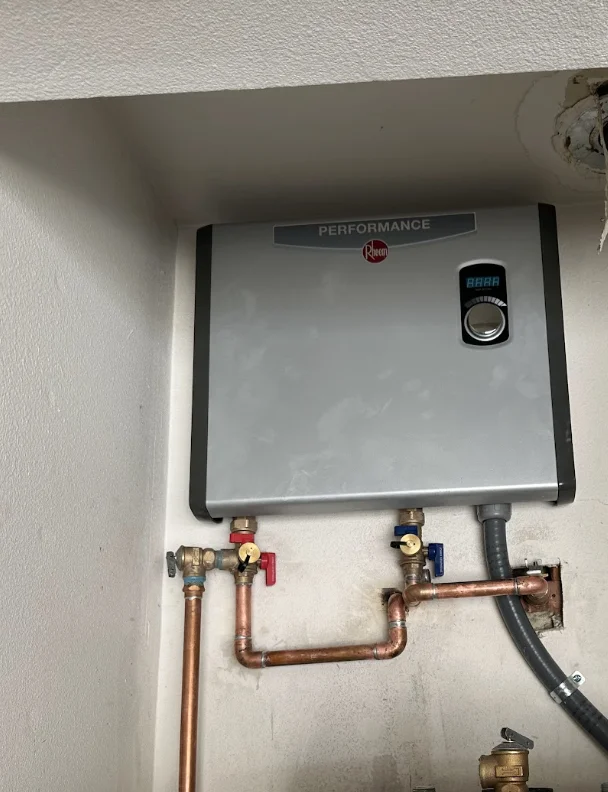
Electric models eliminate gas venting and combustion air requirements, but they need dedicated 240-volt circuits and often a panel upgrade to support the amperage draw. Whole-house electric tankless units work well in smaller homes or condos where gas is unavailable, but their flow rate at Southern California’s incoming water temperatures is lower than comparable gas units.
Point-of-Use Units
A compact electric unit installed directly at a single fixture, typically a bathroom sink or a guest bath far from the main water heater. Point-of-use units supplement a whole-house system when one fixture is too distant to receive hot water without a long wait. They are not a substitute for a whole-house unit.
Tank-to-Tankless Conversion
The full-scope project. The existing 40- or 50-gallon storage tank is removed, the gas line is upsized, new venting is installed, electrical is run, and the tankless unit is mounted and connected. This is the conversion most homeowners are searching for, and it is the project with the most moving parts. The project manager who handles your tank-to-tankless conversion coordinates plumbing, gas, electrical, and the building department inspection under one schedule.
Signs Your Water Heater Needs to Be Replaced
A 50-gallon tank sitting in a 1978 Woodland Hills garage with rust-colored water trickling from the hot side every morning is not a mystery. That unit has been quietly failing for months. The following signs mean the tank is at or past the end of its useful life:
- Rusty or discolored hot water, especially after the system sits idle overnight
- Rumbling or popping sounds during heating cycles, caused by sediment hardened on the tank floor
- Visible corrosion or moisture at the base of the tank or around the T&P relief valve
- The unit is over 10 years old and recovery time between showers has noticeably increased
- The pilot light or burner assembly fails repeatedly after relighting
- Water pooling under or around the tank, which can indicate a slow leak in the tank liner
Waiting for a full tank failure often means an emergency replacement on the installer’s schedule, not yours, with water damage to the garage floor, drywall, or the room below an attic-mounted unit. A planned conversion gives you time to size the system correctly, pull permits, and schedule the work around your household.
Gas Tankless vs. Electric Tankless vs. Storage Tank
| Factor | Gas Tankless | Electric Tankless | Storage Tank (Gas) |
|---|---|---|---|
| Flow rate (typical whole-house) | 4 to 8 GPM | 2 to 5 GPM | Limited by tank volume and recovery rate |
| Standby energy loss | None | None | Yes, continuous |
| Expected lifespan | ~20 years | ~20 years | 8 to 12 years |
| Venting required | Yes, Category III or IV stainless steel | No | Yes, standard B-vent or direct vent |
| Gas line upgrade likely | Yes, in most existing homes | Not applicable | Rarely |
| Electrical panel upgrade likely | Rarely | Yes, often | Rarely |
| Floor space required | Wall-mounted, minimal | Wall-mounted, minimal | Full tank footprint on floor |
| Annual maintenance | Descaling flush recommended | Descaling flush recommended | Anode rod check, sediment drain |
| Outdoor installation option | Yes, eliminates indoor venting | Model-dependent | No |
Our Tankless Water Heater Installation Process
Step 1: On-Site Evaluation and Written Estimate
A Wise Choice project manager visits the home and inspects the existing water heater location, measures the gas meter capacity and supply line diameter, checks the electrical panel for available capacity, and evaluates venting routes. For a 1960s Van Nuys ranch house where the tank sits on an 18-inch platform in the garage, and the B-vent runs straight through the roof, the conversation is different from a 2005 Valencia two-story where the tank is in a dedicated utility closet on the second floor. Each layout changes the scope. The visit typically takes 30 to 45 minutes. The homeowner receives a written estimate that details every line item: unit, gas line work, venting, electrical, permits, disposal, and the 2-year workmanship warranty.
Step 2: Permit Filing
Wise Choice files plumbing and mechanical permits with LADBS for properties within the City of Los Angeles, or with the county building department or local jurisdiction for homes outside city limits. If the gas line upgrade triggers a new meter set or if electrical work is needed, those permits are filed simultaneously. No work begins until every permit is approved.
Step 3: Installation
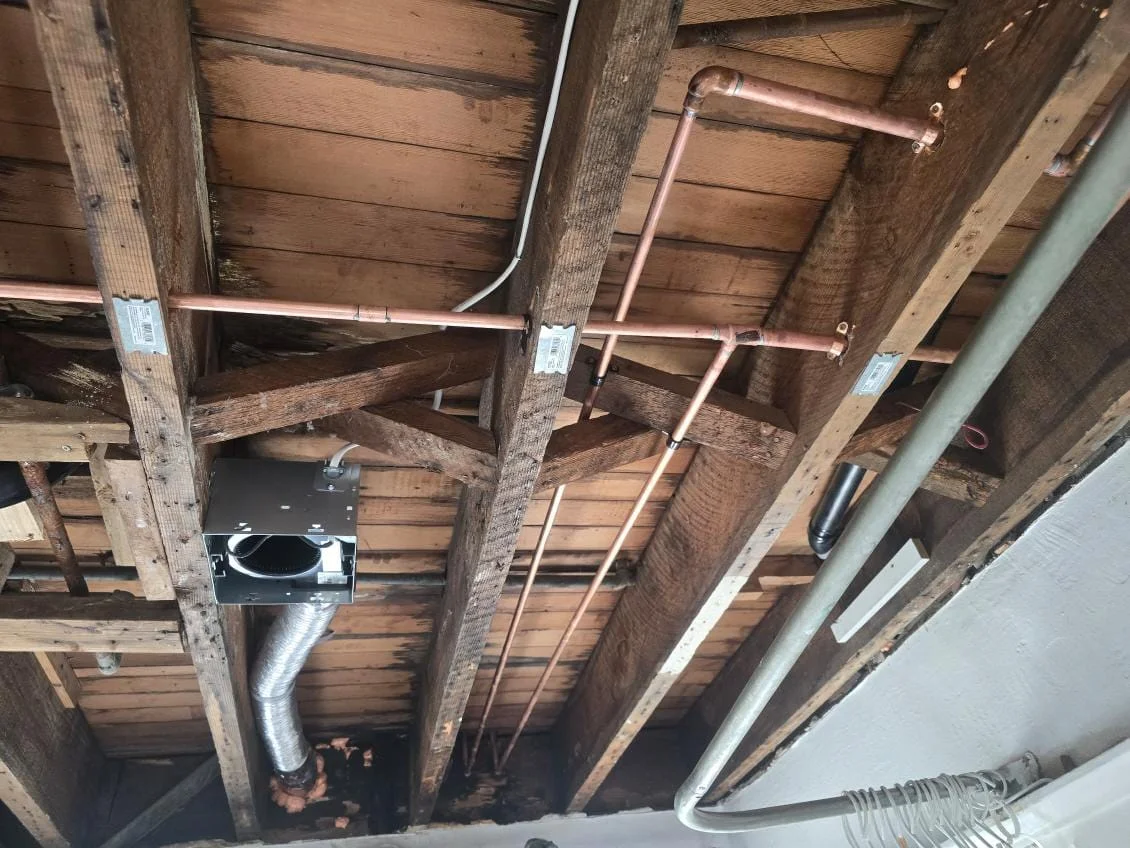
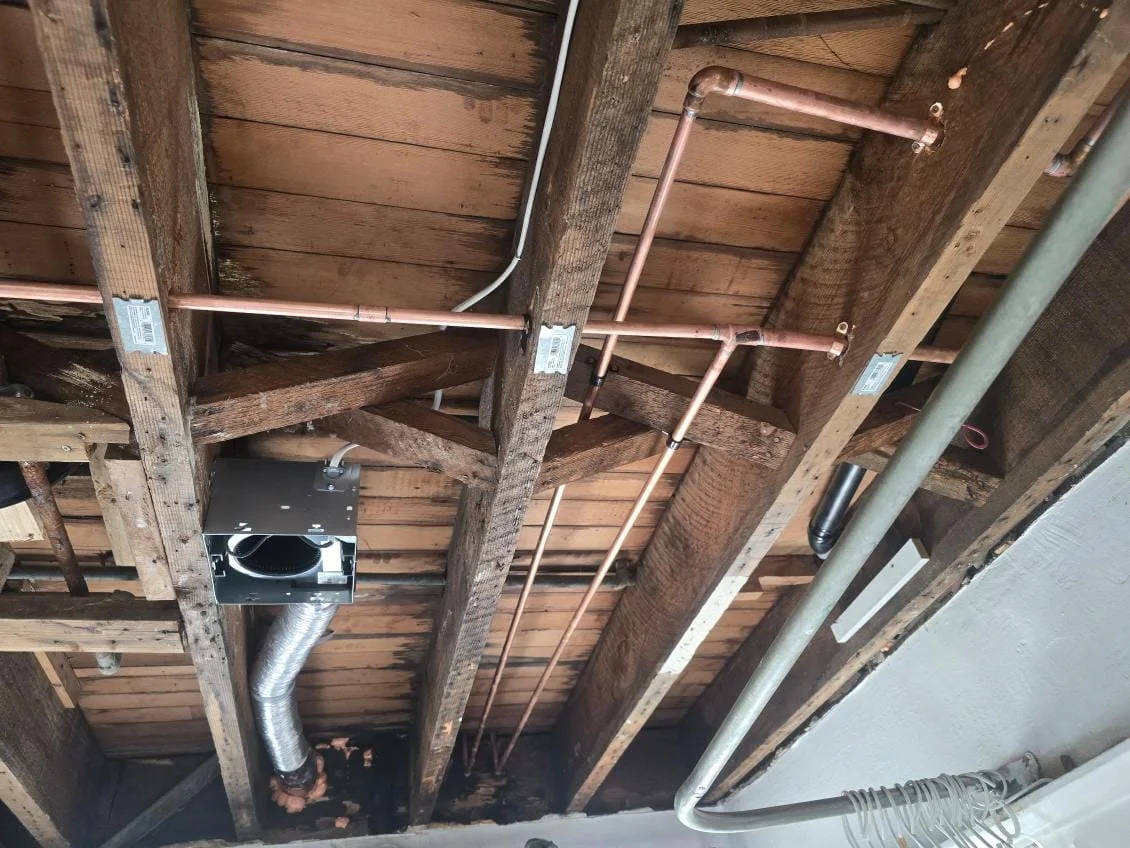
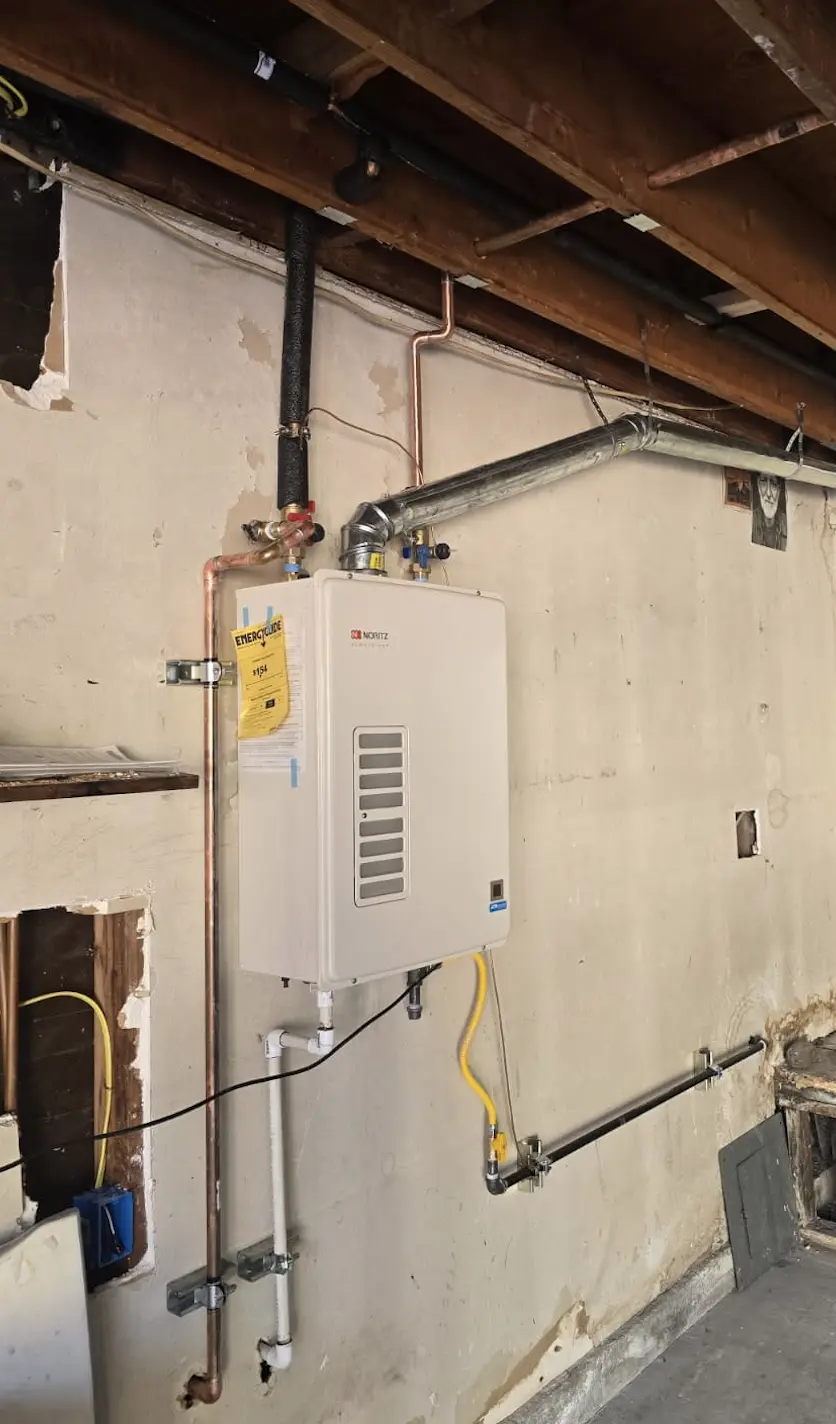
The existing tank is drained, disconnected, and removed. New gas piping is run from the meter (or the nearest adequately sized branch) to the unit location. The tankless heater is mounted per the manufacturer’s clearance and seismic bracing requirements under California Plumbing Code Section 507.2. A stainless steel vent is routed to the exterior. Water supply and hot-water distribution lines are connected. If the homeowner opted for an isolation valve kit for future flushing, those valves and service ports are installed at the same time. The old tank is hauled off-site for disposal.
Step 4: Final Inspection and Closeout
The building department inspector verifies gas pressure testing, vent termination clearances, seismic bracing, and overall code compliance. Once the inspection passes, the homeowner receives the signed-off permit card, the manufacturer’s warranty registration, and the Wise Choice 2-year workmanship warranty documentation. If anything installed under that warranty fails due to workmanship within two years, Wise Choice returns to correct it at no cost.
Ready to replace an aging tank with a properly sized and permitted tankless system? Call (818) 483-8055 or schedule a free estimate online.
What Drives the Scope of a Tankless Installation
No two tankless conversions are identical. The scope depends on five variables that the project manager evaluates during the estimate visit:
Gas line condition and capacity. If the existing gas supply piping is undersized for the new unit’s BTU demand plus all other connected gas appliances, a new dedicated line from the meter is required. This is the single most common scope addition in tank-to-tankless conversions.
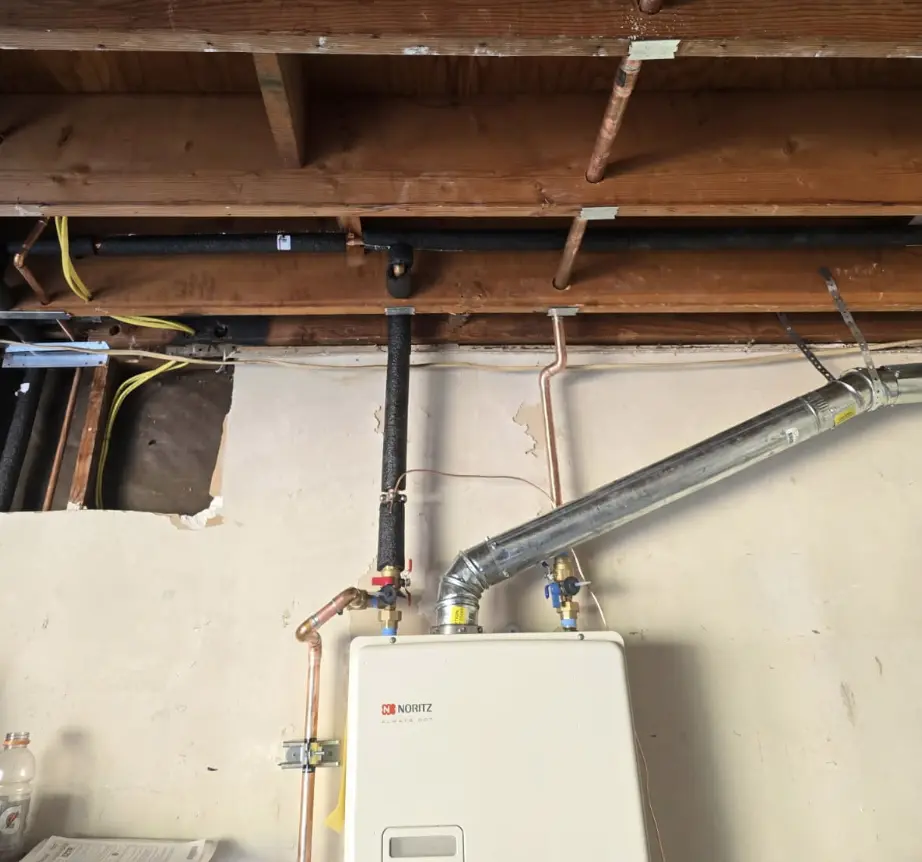
Venting path. Gas tankless units cannot share a B-vent chimney flue with other appliances. They require their own Category III or IV vent run, typically stainless steel or polypropylene depending on the model. The length and routing of that vent run changes with the unit’s location, wall construction, and exterior clearance requirements.
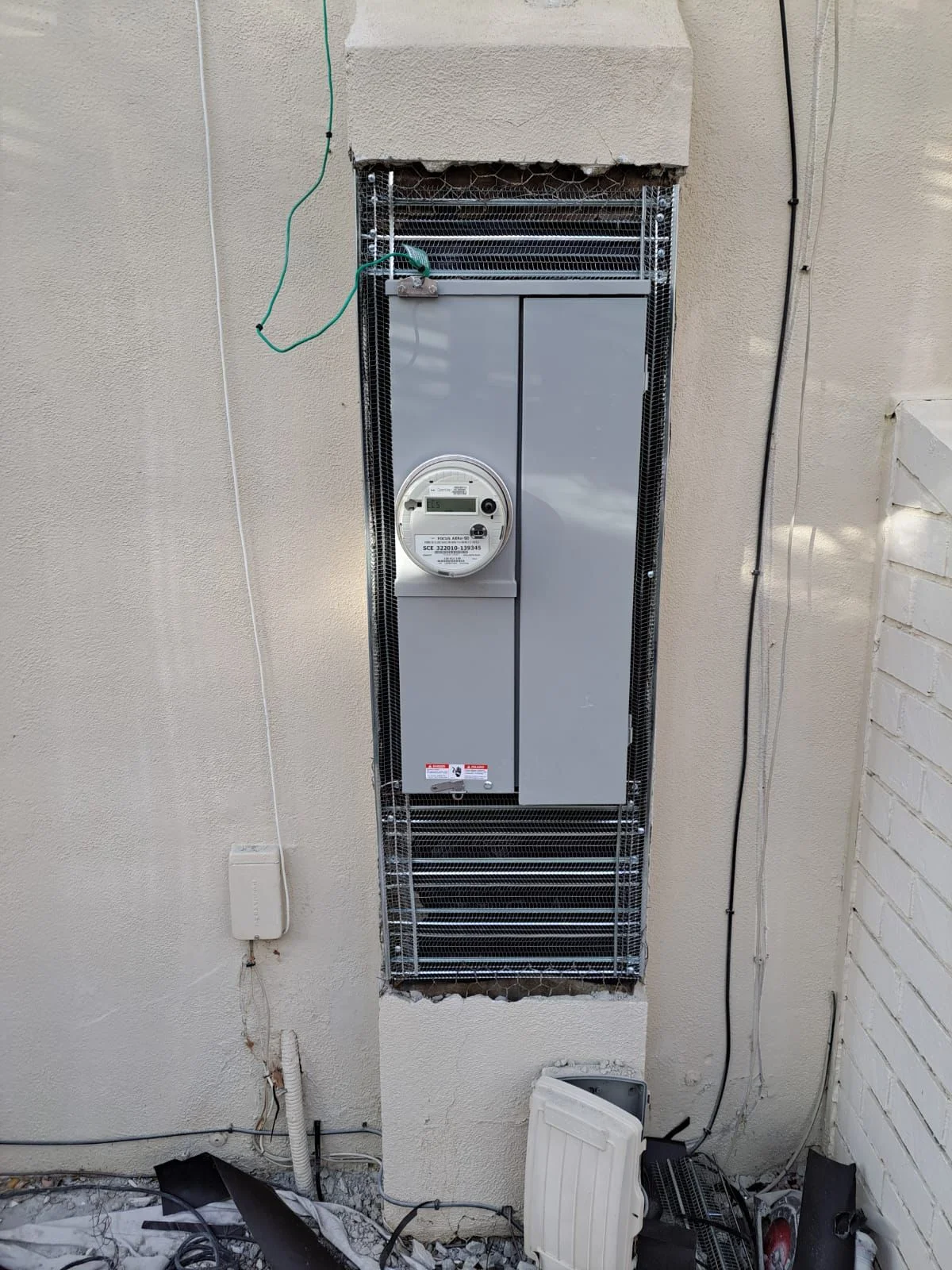
Electrical requirements. Gas tankless units need a standard 120-volt outlet for the electronic ignition and control board. Electric tankless units need dedicated 240-volt circuits and potentially a panel upgrade. The electrical scope is evaluated during the estimate.
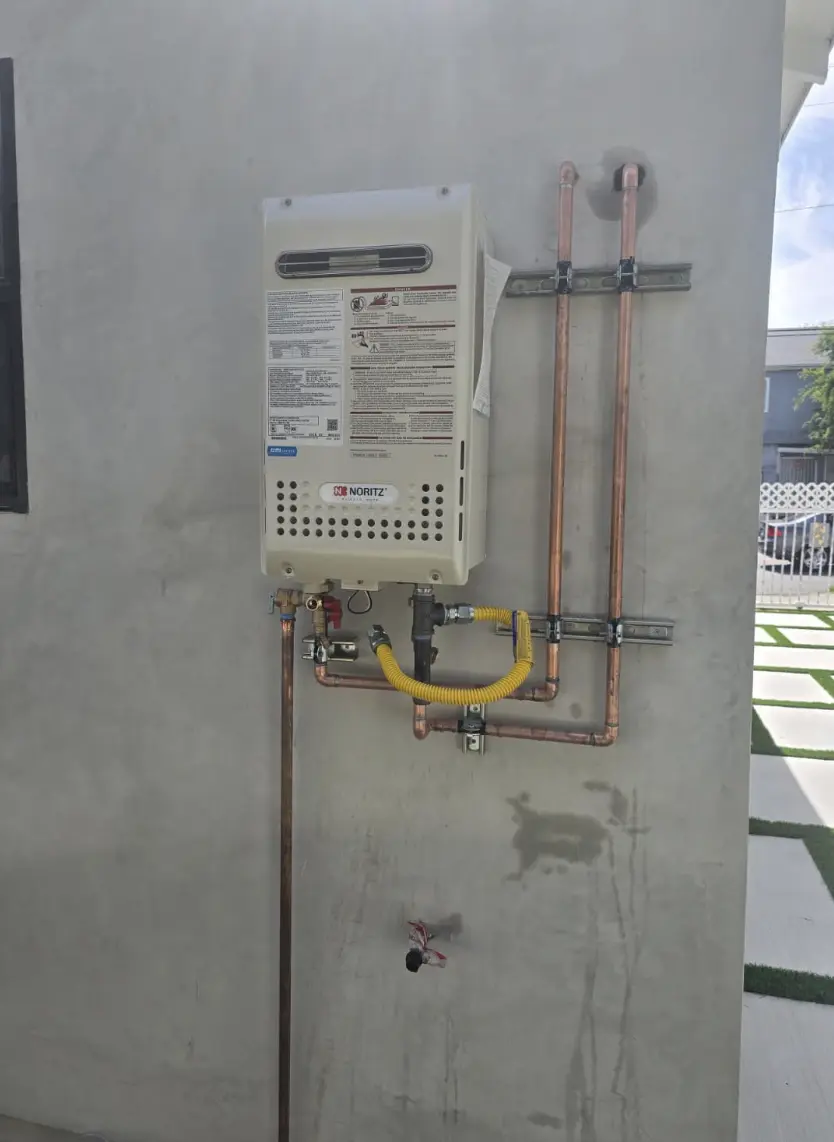
Installation location. Exterior wall-mount installations simplify venting because the unit draws combustion air and exhausts directly outside. Interior installations require longer vent runs and combustion air provisions. In Southern California’s mild climate, outdoor installations are a practical option year-round, provided the unit is rated for exterior use and placed with proper clearances.
Home age and existing infrastructure. A 1952 Pasadena craftsman with galvanized gas piping and a shared flue presents a different project than a 2010 build with a modern CSST gas system and dedicated utility space. Older homes often require more infrastructure work, which is why the written estimate covers every line item before work begins.
Permits and California Code Requirements
A tankless water heater installation in California requires plumbing and mechanical permits at minimum. Within the City of Los Angeles, LADBS issues these permits. Outside city limits, the applicable county building department or local jurisdiction handles them. If the gas line is upsized beyond the existing system or new electrical circuits are added, additional permits for those trades are filed as well.
The California Plumbing Code governs the installation. Key requirements include gas pipe sizing calculations for the total connected BTU load from the meter to the most remote appliance, a sediment trap installed downstream of the appliance shutoff valve, a temperature and pressure relief valve with a drain line that terminates to daylight outside the building, seismic bracing per CPC Section 507.2, and supply-line insulation on the first five feet of hot and cold piping at the unit. Venting must comply with the manufacturer’s specifications and the California Mechanical Code, and positive-pressure vent joints must be sealed airtight from the flue collar to the termination point.
Wise Choice Remodeling handles every permit application. At project closeout, the homeowner receives the signed-off permit card confirming the installation passed all required building department inspections. That documentation is valuable for insurance records and any future sale of the home.
Hard Water and Annual Maintenance in Southern California
Southern California’s water hardness varies widely. Homes served by MWD-sourced supply in many parts of the region receive moderately hard water, while some groundwater-fed utility districts deliver significantly harder water. That mineral content deposits calcium and lime scale inside the tankless unit’s heat exchanger over time. Scale buildup reduces flow rate, forces the unit to work harder, and shortens its operational life.
Manufacturers recommend flushing the heat exchanger with a food-grade descaling solution at least once a year. Homes in harder-water areas may need the flush every six months. Installing an isolation valve kit at the time of installation makes future flushing simple: a licensed plumber connects a small pump, circulates the solution for 30 to 45 minutes, and the unit is back in service. The entire maintenance visit takes under an hour.
Skipping the annual flush is the most common reason tankless units underperform. A unit that should last 20 years can develop heat exchanger damage within 5 to 7 years in a hard-water area without regular descaling. The maintenance is straightforward, but it is not optional.
Homes Across Southern California Trust Wise Choice
Homeowners in Burbank, Anaheim, Riverside, Rancho Cucamonga, Oceanside, and Pasadena have relied on Wise Choice Remodeling for tankless water heater installations that are sized, permitted, and inspected the first time correctly. Whether the home is a 1940s post-war cottage with galvanized piping that has never been touched or a 2015 production build with a tank that already failed at nine years, the conversion follows the same disciplined process: evaluate, permit, install, and close out.
Why Choose Wise Choice Remodeling
Over 15 Years of Combined Experience
The team behind every tankless conversion brings over 15 years of combined experience across plumbing, mechanical, and general contracting work in Southern California. That depth shows in the details: correctly sized gas lines, properly terminated vents, and installations that pass inspection without callbacks.
Licensed and Insured
Wise Choice Remodeling is a licensed general contractor. Every project is managed under one contract, one schedule, and one point of accountability. The homeowner deals with one project manager from first visit to closeout.
2-Year Workmanship Warranty
The installation is backed by a 2-year workmanship warranty. If a gas connection leaks, a vent joint separates, or any installed component fails due to workmanship within that window, Wise Choice returns to correct it at no charge. The manufacturer’s product warranty covers the unit itself separately.
Financing Available
$0 down financing options are available for qualified homeowners. Terms are reviewed during the estimate visit, and the programs cover the full project scope, including gas line upgrades, venting, electrical, and permits.
320+ Reviews at 4.8 Stars
Over 320 homeowners across Southern California have reviewed Wise Choice Remodeling at 4.8 stars. That track record reflects consistent execution on projects that require coordination across multiple trades and building department inspections.
If your water heater is at the end of its life or you are ready to stop reheating a tank of water nobody is using, Wise Choice Remodeling manages the full conversion under one contract. Call (818) 483-8055 or request your free estimate online. Over 15 years of combined experience. One licensed contractor. One 2-year warranty.