What Foundation Repair Actually Involves
Foundation repair is the structural correction of a residential or commercial foundation that has cracked, settled, shifted, or deteriorated to the point where it no longer supports the building as designed. The work ranges from epoxy injection on isolated cracks to full steel pier underpinning beneath a home that has sunk several inches on one side. Every repair begins with a diagnosis: what moved, why it moved, and whether it is still moving.
Southern California complicates that diagnosis. The region sits on some of the most geologically active ground in the country. According to the U.S. Geological Survey, Southern California has over 300 faults capable of producing magnitude 6 and larger earthquakes, and half of the nation’s expected earthquake-related financial losses are concentrated here. Below that seismic stress, expansive clay soils swell during the wet season and shrink through summer drought, cycling lateral and vertical pressure against footings and slabs year after year. A home built on fill soil in a graded subdivision faces different risks than a hillside home bearing on cut-and-fill benches, and both differ from a flatland slab poured directly on native adobe clay.
That is why the repair method has to follow the soil and the structural report, not a sales pitch. A contractor who quotes pier installation before ordering a soil test or a structural engineer’s assessment is guessing, and guessing with a foundation is how homeowners end up paying twice.
Foundation Repair Types We Handle
Steel Pier Underpinning
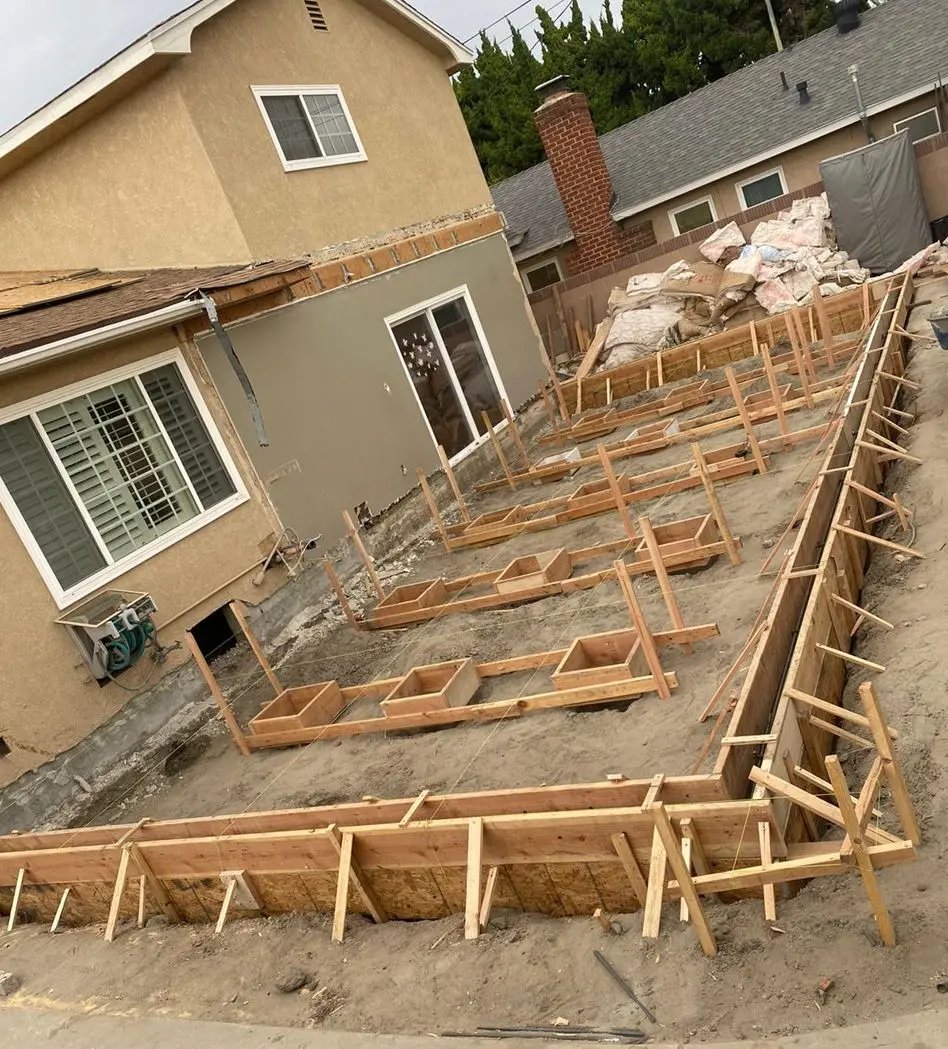
Push piers and helical piers are driven or screwed through weak surface soils to reach competent load-bearing strata below. The piers transfer the building’s weight to stable ground, and in many cases the foundation can be lifted back toward its original elevation. This is the standard permanent solution for homes experiencing active settlement.
Foundation Crack Repair
Structural cracks in poured concrete or block walls are sealed with epoxy or polyurethane injection. Epoxy bonds the concrete back to its original tensile strength. Polyurethane remains flexible and is used where minor movement may continue, such as along control joints. The method depends on whether the crack is structural or caused by curing shrinkage, and whether water is actively entering through it. Crack repair done right also includes identifying and correcting whatever caused the crack in the first place, whether that is soil pressure, settlement, or inadequate drainage. Addressing foundation crack repair early prevents small fractures from becoming structural failures.
Seismic Retrofitting
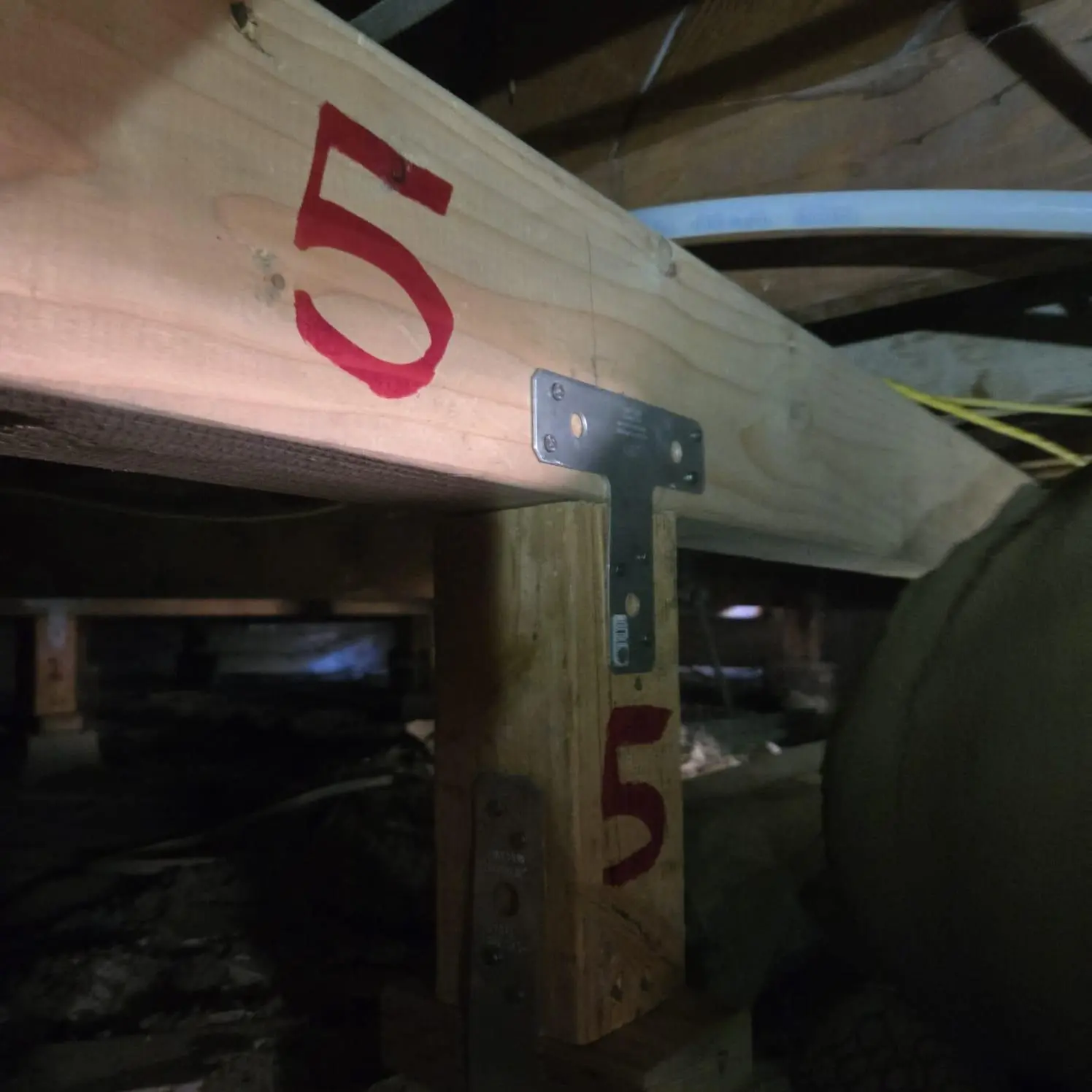
Older homes in Southern California, especially those built before 1980 on raised foundations with cripple walls, are vulnerable to sliding off their footings during an earthquake. Seismic retrofitting anchors the wood frame to the concrete foundation using mudsill anchor bolts, cripple wall plywood bracing, and hold-down hardware at shear-critical connections. The City of Los Angeles has mandatory retrofit ordinances for certain building types, and voluntary retrofit programs exist for single-family homes across the region.
Foundation Waterproofing
Water intrusion through basement walls, retaining walls, or below-grade slabs accelerates concrete deterioration and can wash away the supporting soil beneath footings. Foundation waterproofing includes exterior membrane barriers, interior drainage channels routed to a sump system, and French drain installation along the foundation perimeter. In Southern California, the most common trigger is improper grading that directs irrigation and rain runoff toward the foundation instead of away from it.
Drainage Correction
Poor drainage is the single most common contributor to foundation problems in Southern California. When water pools against the foundation perimeter, it saturates the expansive clay beneath the footings, causing the soil to swell and push against the foundation walls and slab. Drainage correction includes French drains, area drains, downspout rerouting, and surface regrading to redirect water away from the structure before it reaches the foundation.
Crawl Space Stabilization
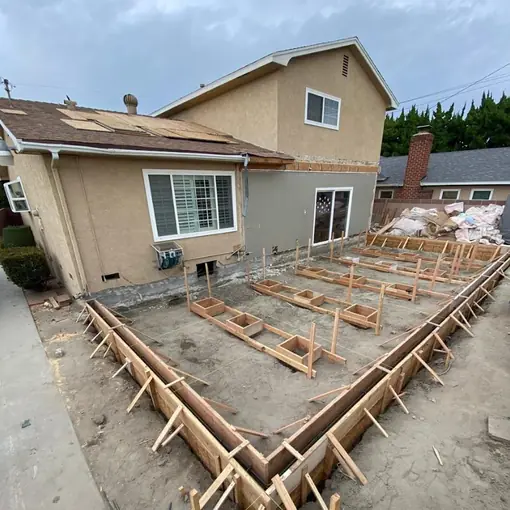
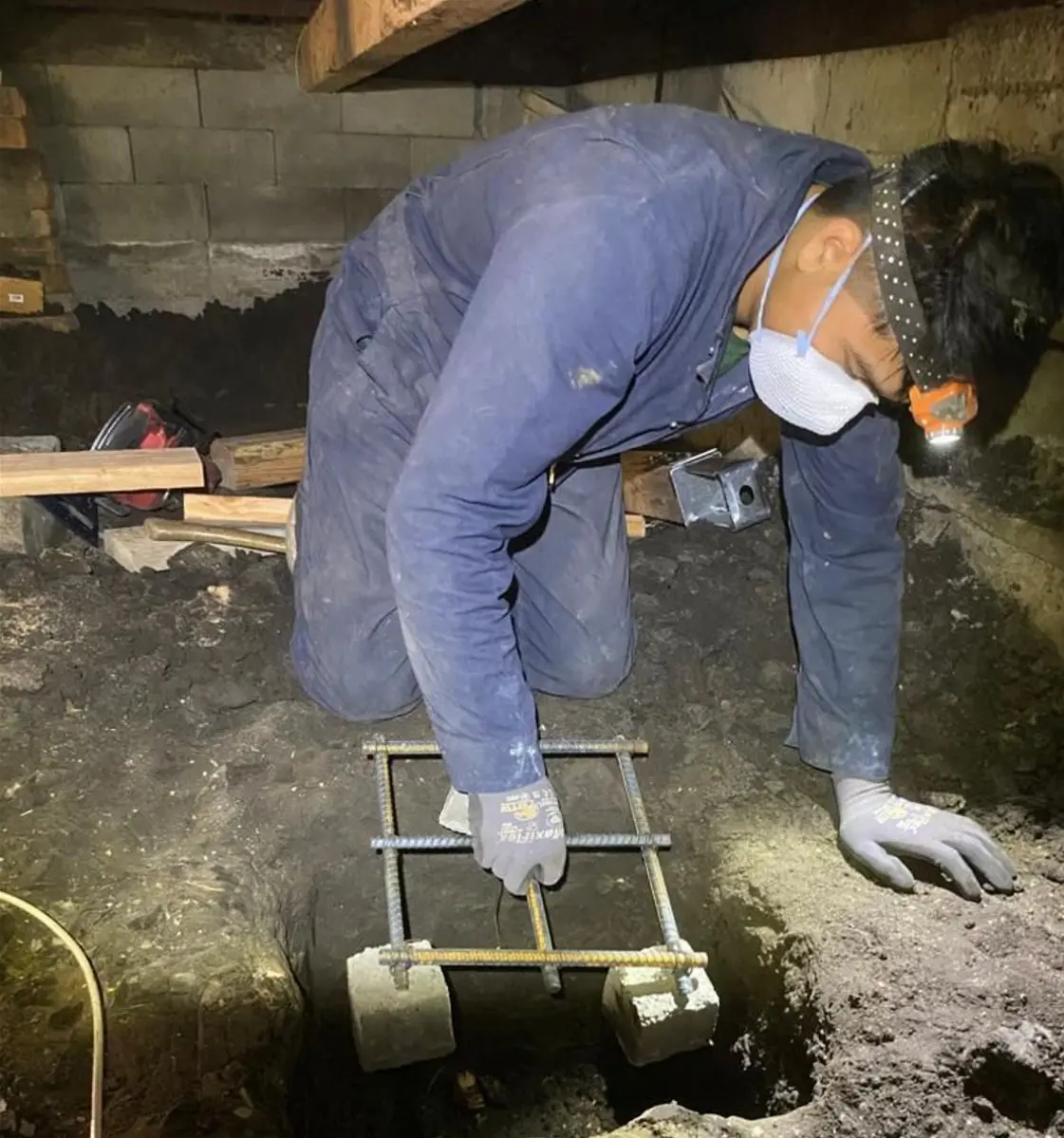
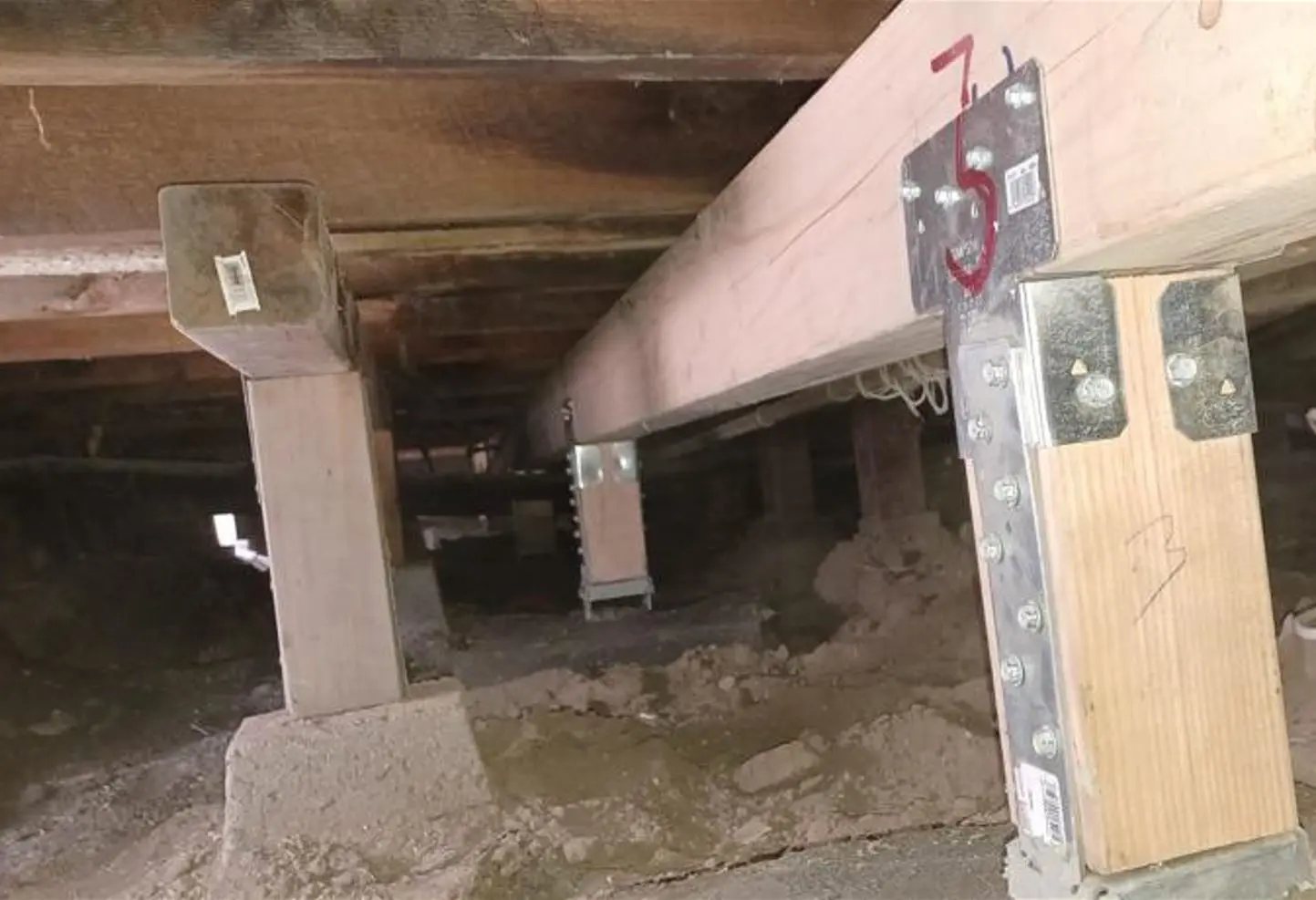
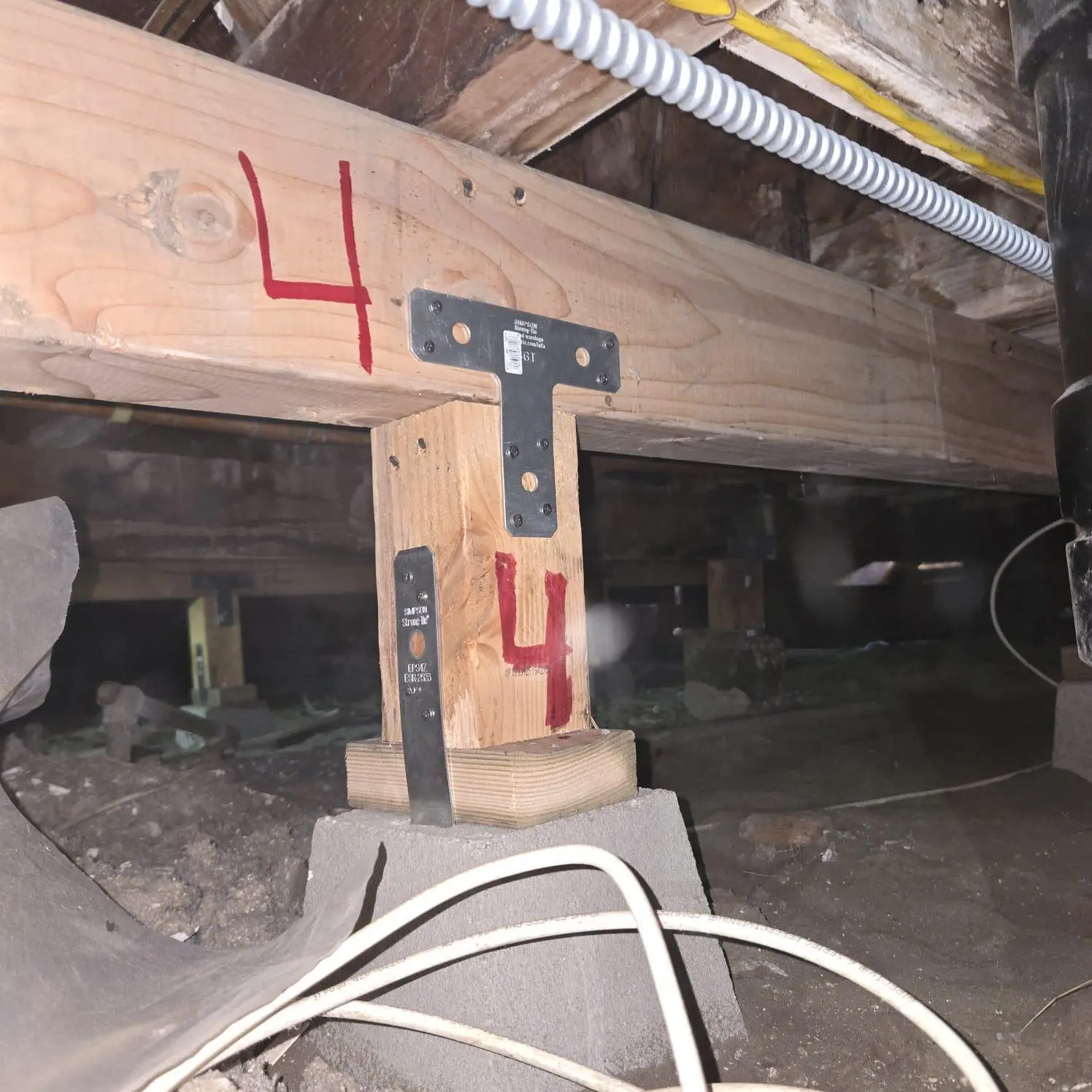
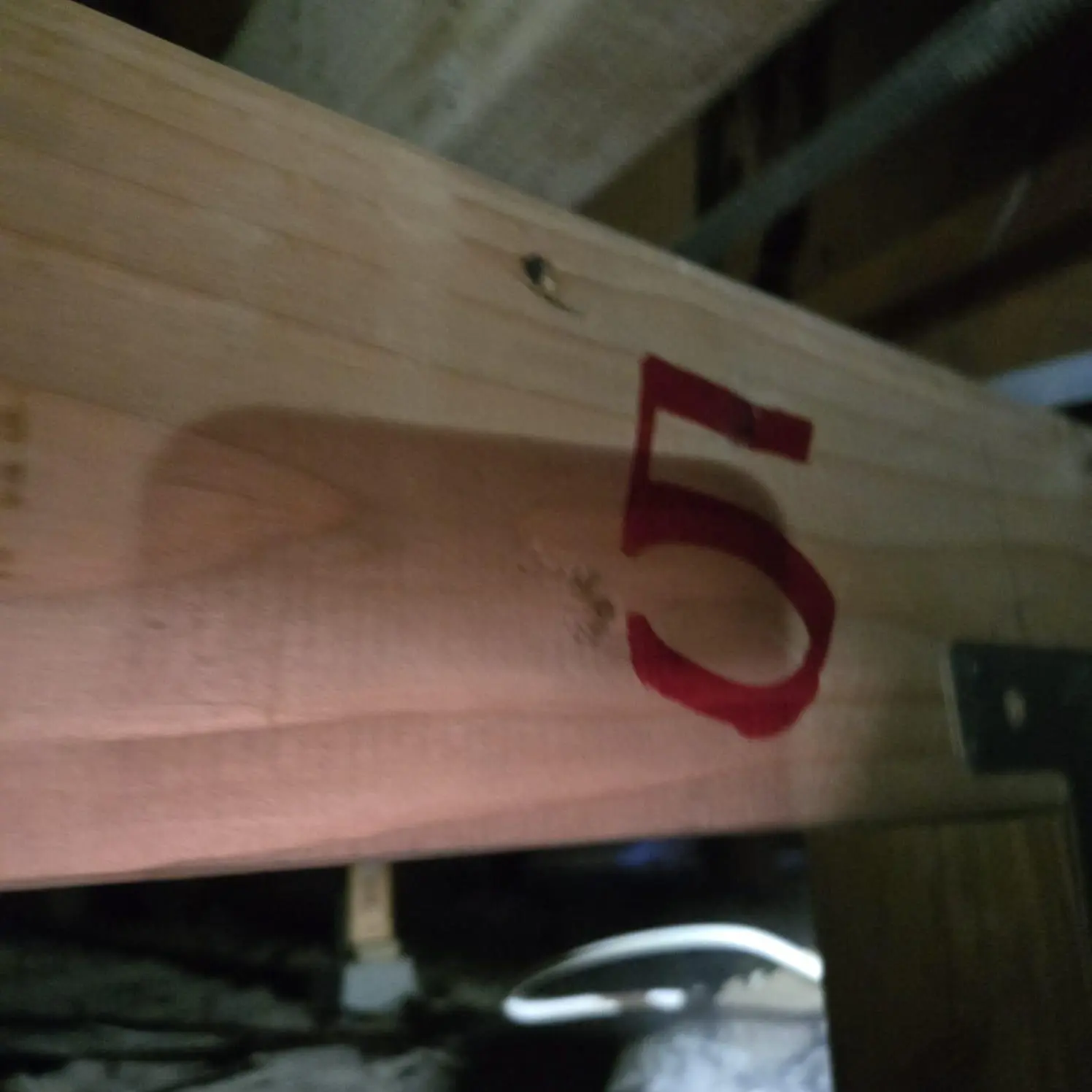
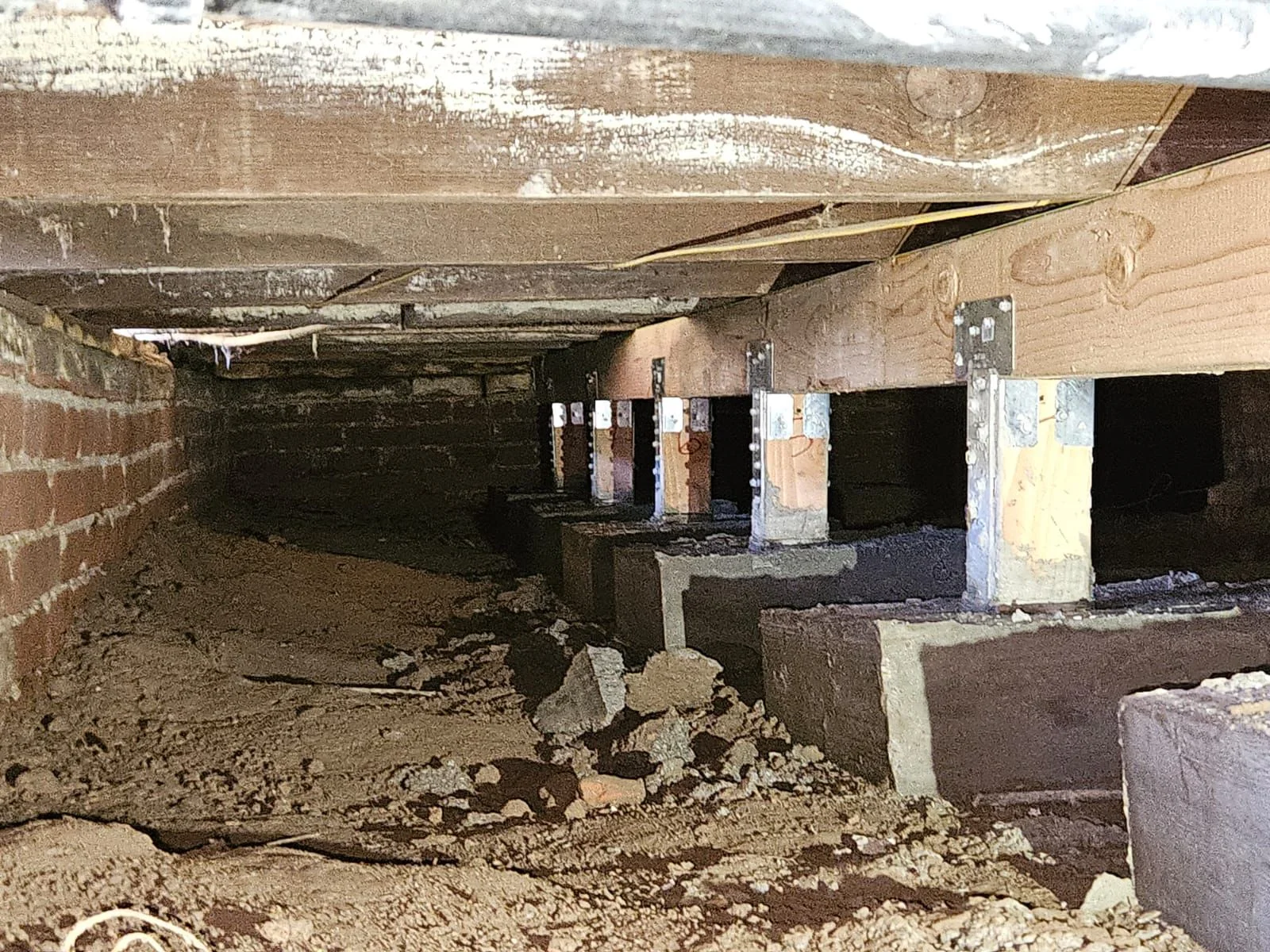
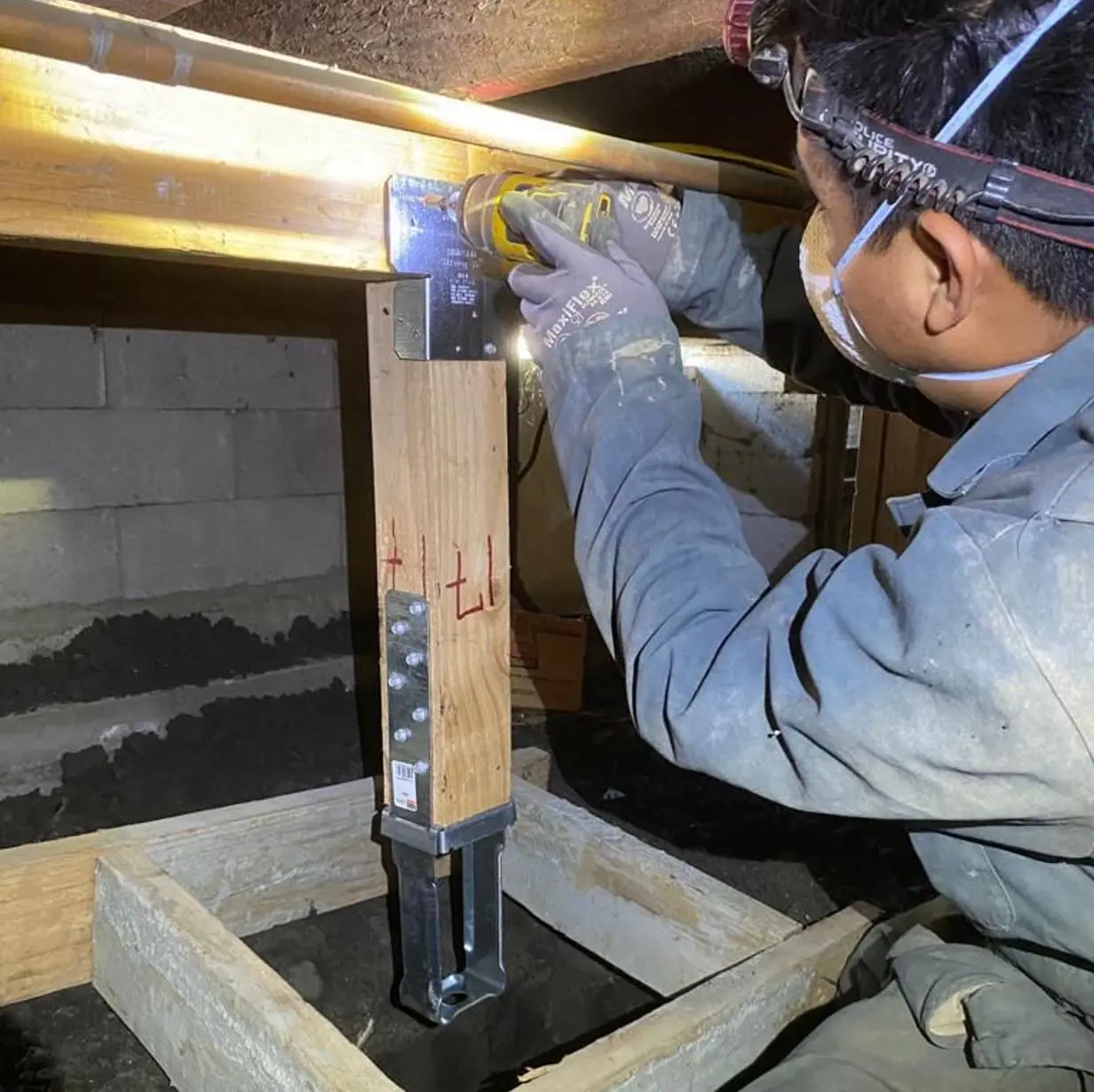
Raised-foundation homes with a crawl space beneath the first floor are common throughout Southern California, particularly in neighborhoods built before 1970. When the posts, pads, or girders in the crawl space deteriorate or shift, the floors above sag, bounce, or slope. Crawl space repair involves replacing or supplementing failing support posts, installing adjustable steel columns, adding vapor barriers to control moisture, and correcting ventilation to prevent ongoing wood rot.
Foundation Settlement Correction
Settlement happens when the soil beneath a foundation compresses, erodes, or shifts under the building’s weight. The result is uneven floors, cracked walls, and doors that no longer close properly. Foundation settlement correction uses pier systems driven to stable soil layers below the surface, combined with hydraulic lifting where the structure needs to be returned closer to its original elevation.
Signs Your Foundation Needs Attention
Foundations do not fail without warning. The symptoms show up in the house above, and they tend to appear gradually enough that homeowners adapt to them before realizing the cause.
Diagonal cracks at the upper corners of doors and windows are one of the earliest indicators. The frame is rectangular, and when the foundation shifts beneath it, the stress concentrates at the corners. Stair-step cracks in exterior block or brick follow the mortar joints and indicate differential settlement, where one section of the foundation is moving while an adjacent section stays put. Gaps between the wall and ceiling, baseboards pulling away from the floor, and floors that slope noticeably in one direction all point to the same root cause.
There is a practical test: set a marble on the floor in any room and watch it roll. If it consistently tracks toward the same wall, the floor plane has changed. Sticking doors and windows that used to operate smoothly are another signal, especially if they changed seasonally at first and then stopped returning to normal.
A 1965 slab-on-grade ranch home in Southern California offers a scenario that repeats across the region. Years of drought-then-rain cycles had shifted the perimeter footings enough to jam every sliding glass door in the house. The homeowner assumed the doors were old and the tracks were worn. A floor-elevation survey during the free estimate visit revealed nearly two inches of differential settlement between the front and back of the home, and the soil report confirmed the slab was bearing on highly expansive clay that had been cycling for decades. The fix was push pier underpinning along the settled perimeter, not new sliding doors.
Comparing Foundation Repair Methods
| Repair Method | Best For | How It Works | Typical Duration | Disruption Level |
|---|---|---|---|---|
| Push Piers | Active settlement on deep weak soils | Steel shafts driven to load-bearing strata using building weight as resistance | 3 to 5 days on site | Moderate (exterior excavation at pier locations) |
| Helical Piers | Lighter structures, new construction, limited building weight | Steel shafts with helical plates screwed into soil by hydraulic motor | 2 to 4 days on site | Moderate (exterior excavation at pier locations) |
| Epoxy Crack Injection | Structural cracks in poured concrete where movement has stopped | Two-part epoxy injected under pressure to bond crack surfaces and restore tensile strength | 1 to 2 days on site | Low (interior or exterior surface access only) |
| Polyurethane Crack Injection | Cracks with active water intrusion or minor ongoing movement | Expanding polyurethane foam seals the crack and remains flexible to accommodate minor shifts | 1 to 2 days on site | Low (interior or exterior surface access only) |
| Cripple Wall Bracing (Seismic Retrofit) | Pre-1980 raised-foundation homes with unbraced cripple walls | Plywood sheathing, mudsill bolts, and hold-down hardware anchor the frame to the foundation | 3 to 5 days on site | Low to moderate (crawl space and perimeter access) |
| Crawl Space Post Replacement | Sagging floors from deteriorated or shifted support posts | Failing posts replaced with adjustable steel columns on new concrete pads | 2 to 3 days on site | Low (all work beneath the home) |
Our Foundation Repair Process
Step 1: On-Site Assessment and Written Estimate
A project estimator visits your home, measures floor elevations across multiple rooms, inspects visible cracks inside and out, checks soil grading around the perimeter, and documents everything with photos. The visit takes 60 to 90 minutes. You receive a written scope of work and estimate that explains the structural issue, the recommended repair approach, and what each phase of the project will involve. There is no charge and no obligation.
Step 2: Structural Engineering and Permit Filing
Once you approve the scope, a third-party structural engineer reviews the assessment and designs the repair plan with calculations specific to your soil conditions and building loads. We prepare permit-ready drawings and file the building permit application with the appropriate authority. In the City of Los Angeles, that authority is LADBS. Outside city limits, the permit goes through the relevant county building department. If plan-check corrections are required, we handle them directly with the reviewing agency.
Step 3: Scheduled Repair Execution
Work begins on a confirmed start date. The crew follows the engineered plan exactly: excavating access points at pier locations, driving or screwing piers to the specified depth, lifting the structure where the plan calls for it, injecting cracks, installing bracing, or completing drainage improvements. Required city or county inspections are scheduled at each milestone, and the project manager keeps the homeowner informed of progress and any schedule updates. The estimate you signed is the price you pay. If an unexpected condition surfaces during excavation, you hear about it and approve any change before the scope adjusts.
Call (818) 483-8055 to schedule your free assessment, or request a free estimate online.
Step 4: Final Inspection and Closeout
The building inspector conducts a final inspection and signs off on the completed work. Excavated areas are backfilled, soil is regraded, and any landscaping or hardscape removed during the repair is replaced. You receive the finaled permit, the structural engineer’s letter of completion, warranty documentation, and before-and-after photos. That closeout package becomes part of your home’s permanent record and is valuable for any future sale, insurance claim, or refinance.
What Drives Scope, Timeline, and Material Choices
The scope of a foundation repair is determined by what the soil report and structural engineer’s assessment reveal, not by a flat-rate menu. Three homes on the same street can have three different repair plans if their soils, foundation types, and failure modes differ.
Factors that shape the scope include the number and depth of piers needed, the type and extent of cracking, whether the home needs to be lifted or only stabilized, the soil composition at depth, the accessibility of the foundation perimeter, and whether existing drainage is contributing to the problem. Homes on hillside lots with limited equipment access often require more hand excavation. Homes with post-tension slab foundations require different repair methods than conventional poured-concrete perimeter footings.
Material choices follow the soil report. If the competent bearing layer is 15 feet down, push piers reach it. If it is 30 feet down, the pier length increases. Helical piers are specified when the building weight alone is not enough resistance for hydraulic push installation, or when the application is a retaining wall or a lighter accessory structure. Epoxy injection is specified for cracks in stable concrete; polyurethane for cracks that may see minor seasonal movement.
The best way to understand what your specific project will involve is to schedule the free on-site assessment. The written estimate breaks down every line item so there are no surprises once the work begins.
Permits and California Requirements
Structural foundation repairs in California require a building permit. The permit ensures the repair plan meets current California Building Code standards, and the inspections required at each milestone confirm the work was installed according to the engineered plan.
For homes inside the City of Los Angeles, the permit authority is the Los Angeles Department of Building and Safety (LADBS). LADBS requires plan check review of the structural engineer’s drawings before the permit is issued, and that review process can take several weeks depending on current department workload. For homes in unincorporated Los Angeles County or in other cities within the five-county service area, the permit is issued by the respective county or city building department.
Seismic retrofitting in the City of Los Angeles falls under specific ordinance requirements for certain multi-family and soft-story buildings. Single-family homes can pursue voluntary seismic retrofit through a standard building permit. The permit application, plan check, engineering coordination, and inspection scheduling are all handled by Wise Choice Remodeling as part of the project scope. At closeout, the homeowner receives the finaled permit as part of their documentation package.
Some foundation projects in HOA-governed communities or in Historic Preservation Overlay Zones (HPOZs) also require architectural review or a Certificate of Appropriateness before the building permit can be issued. If your property falls into one of these categories, the estimator will identify that requirement during the initial visit and include the approval timeline in the project schedule.
Financing Your Foundation Repair
Foundation problems get worse and more expensive to fix the longer they go unaddressed. Financing is available with $0 down options for qualified homeowners, so the repair does not have to wait while the damage continues. Ask about current financing programs during your free estimate visit or when reviewing your written proposal.
Where We Work Across Southern California
Wise Choice Remodeling provides foundation repair services across Los Angeles County, Orange County, Riverside County, San Bernardino County, and San Diego County. Homeowners in Pasadena deal with hillside clay and older craftsman-era raised foundations. Properties in Long Beach sit on alluvial soils near the water table where drainage correction is as critical as pier work. In Anaheim and across Orange County, slab-on-grade homes built during the postwar expansion are reaching the age where original footings and soil conditions are showing their limits. Riverside and San Bernardino see extreme summer heat that accelerates the shrink-swell cycle in expansive soils, and Temecula’s rapid residential growth has put new construction on graded fill that has not fully compacted.
Why Choose Wise Choice Remodeling
Over 15 Years of Combined Foundation Repair Experience
The team behind Wise Choice Remodeling brings over 15 years of combined experience diagnosing and repairing residential foundations across Southern California. That experience spans every foundation type common to the region: slab-on-grade, raised perimeter, post-and-pier, hillside caisson, and post-tension.
Licensed, Insured, and Accountable
Wise Choice Remodeling is a licensed and insured general contractor. One company manages every phase of the project under one contract. There is one project manager, one point of contact, and one entity responsible for the outcome. If something is not right, you know exactly who to call and what warranty covers it.
2-Year Workmanship Warranty
Every foundation repair project is backed by a 2-year workmanship warranty covering the labor and installation quality of all trades involved. If a workmanship defect appears within two years of completion, we return and correct it at no additional cost. Manufacturer warranties on materials such as steel piers and epoxy products are separate and carry their own terms.
Your Estimate Is Your Price
The written estimate you receive is the price you pay. If an unforeseen condition surfaces during the work, you are informed and you approve any scope change before the cost adjusts. No surprises on the final invoice. That transparency is why Wise Choice Remodeling maintains a 4.8-star rating across 320+ reviews.
$0 Down Financing Available
Qualified homeowners can access $0 down financing so the repair starts on schedule, not when the savings account catches up to the foundation damage.
Wise Choice Remodeling brings over 15 years of combined foundation repair experience to every project across Southern California. Call (818) 483-8055 to schedule your free on-site assessment, or request your estimate online.