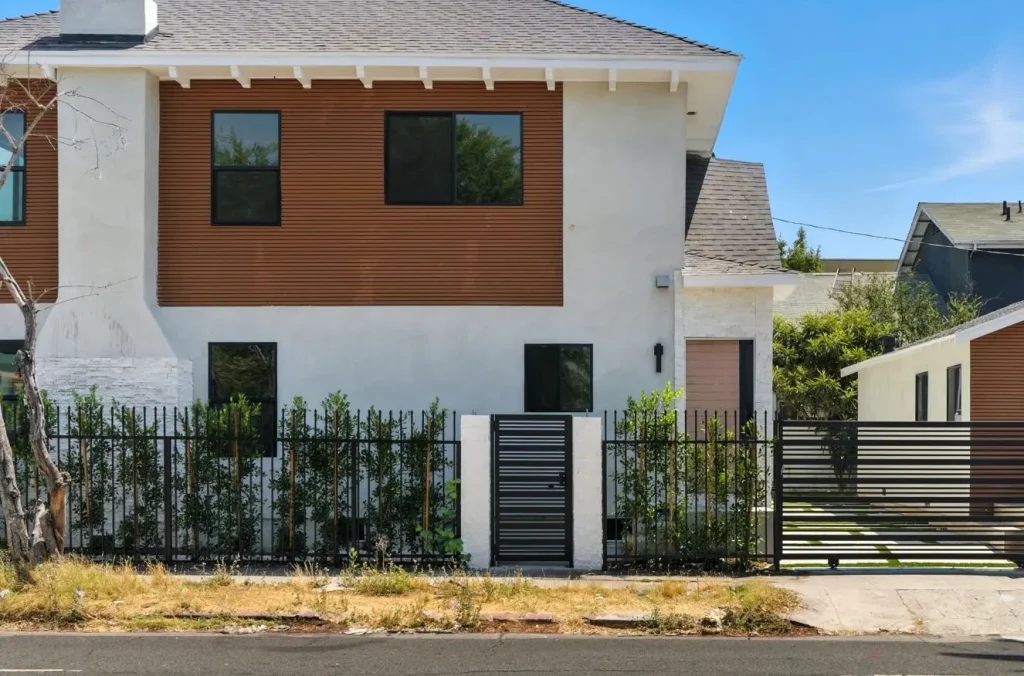
Stucco remediation is the removal of a failing stucco wall down to the framing, the repair of the water damage found behind it, and the rebuilding of the wall with a new water barrier, flashing and stucco. A wall needs it when water has reached the sheathing or framing. When the damage stays in the stucco itself, a repair is enough.
The difference matters because the two jobs are priced, permitted and scheduled differently, and a patch over a wet wall hides the problem rather than fixing it. This guide covers how to tell which one a wall needs, how the wall is tested, and what California code requires when it is rebuilt.
Repair or remediation: the difference
| Stucco repair | Stucco remediation | |
|---|---|---|
| What comes off | The damaged stucco at a crack or in one section, down to the lath at most | All stucco on the affected wall, with the lath, the paper barrier and any damaged sheathing, down to the framing |
| What gets fixed | The crack or the damaged section | The water damage, and the source that let the water in: flashing, the paper barrier, the weep screed or the grade at the wall base |
| When it fits | Moisture has not reached the sheathing, and the lath is still attached | Moisture has reached the sheathing or framing, or the same cracks keep coming back |
| Permit in the City of Los Angeles | Minor crack repair and patching is generally permit-exempt | Re-stucco is on the LADBS express permit list, as is water damage, termite damage or dry rot repair under 10% of the building’s replacement cost. LADBS confirms the route for the full scope at application |
For patching, LADBS sets a specific line in its re-stucco guide: cracks 1/16 inch wide or less, where the lath has not come away from the framing, may be repaired by patching. Wider cracks, and lath that has come away from the framing, call for more than a patch over the top.
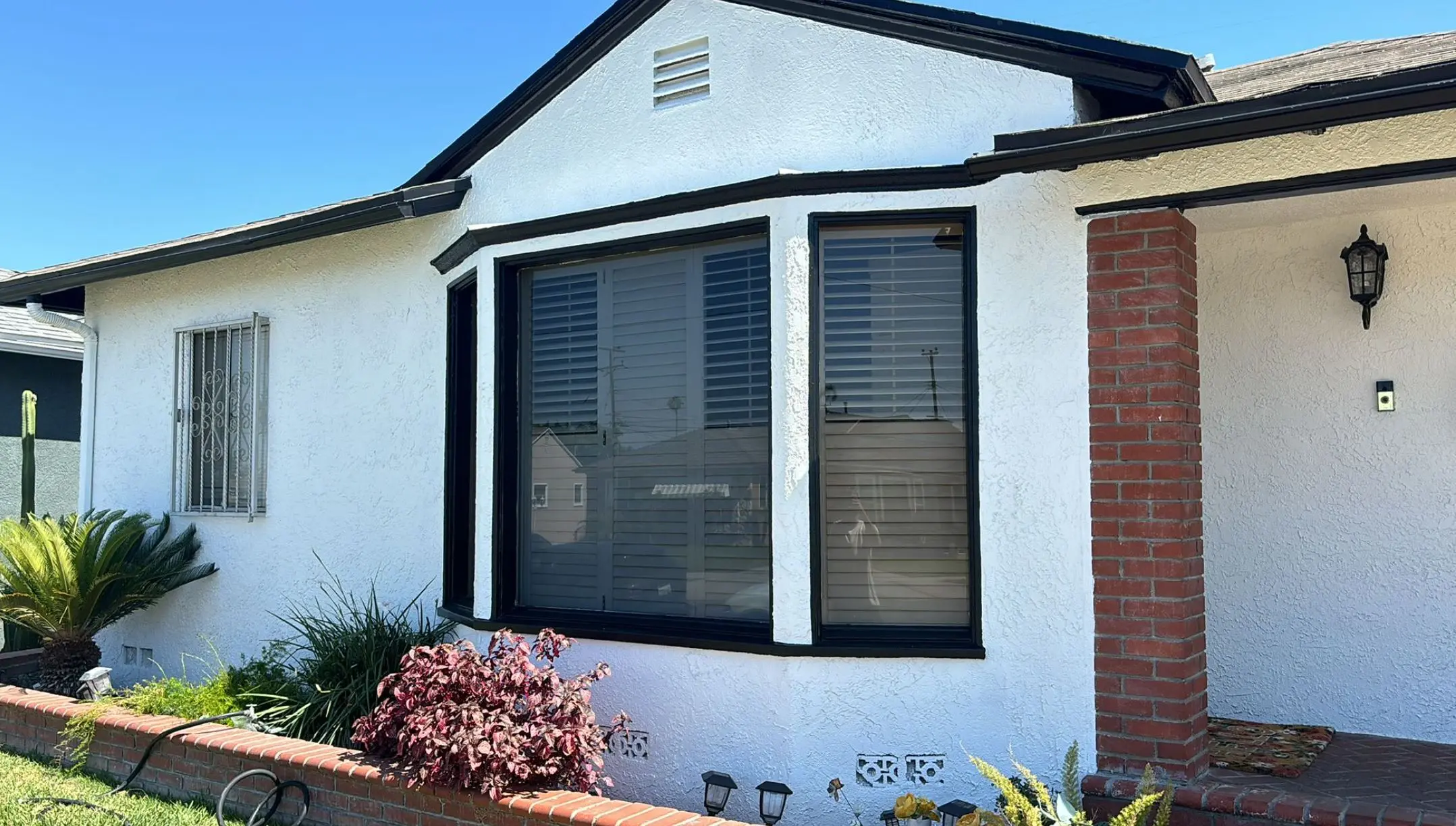
Signs that point past the surface
| What you see | What it can mean |
|---|---|
| Stucco that sounds hollow when tapped | The stucco has separated from the lath or the coat beneath it, and moisture may already be behind it |
| White, chalky deposits on the wall (efflorescence) | Water has been moving through the stucco for a sustained period |
| Dark staining below window sills or where a wall meets the roof | Water is getting in at the opening or the transition and may be reaching the sheathing |
| Cracks that return after every repaint | The cause is still active, so the finish keeps failing over it |
| Damage and staining along the bottom of the wall | Water is collecting at the base, often because soil or paving has been built up over the weep screed |
| Bubbling or blistering paint on a sun-facing wall | Moisture vapor pushing outward from inside the wall |
None of these proves the framing is wet. Each one is a reason to find out.
How to find out what is behind the wall
The question is the moisture content of the sheathing and framing, and that is not visible from the surface. Stucco-testing home inspectors report that infrared cameras and surface scanners do not reliably find moisture behind stucco, and recommend invasive testing instead: small holes are drilled through the stucco at suspect spots, such as around window corners where leaks are common, a probe measures the moisture in the wood behind, and the holes are sealed with matching caulk afterward.
The result tells you whether the job is a repair or a remediation, and where on the house the wet areas are. It is worth doing before a wall is repainted or patched, and before buying a stucco house.
What remediation involves, step by step
- Test and map the damage. The testing sets where the tear-off starts and stops.
- Pull the permit. In the City of Los Angeles, re-stucco is on the express permit list; LADBS confirms the route for the full scope at application.
- Strip the wall. The stucco, lath and paper barrier come off down to the sheathing or framing.
- Repair the wood and the cause. Wet or rotted sheathing and framing are replaced. Window and door flashing is corrected, and at the base of the wall the grade and drainage are fixed so the new wall does not sit in the same water.
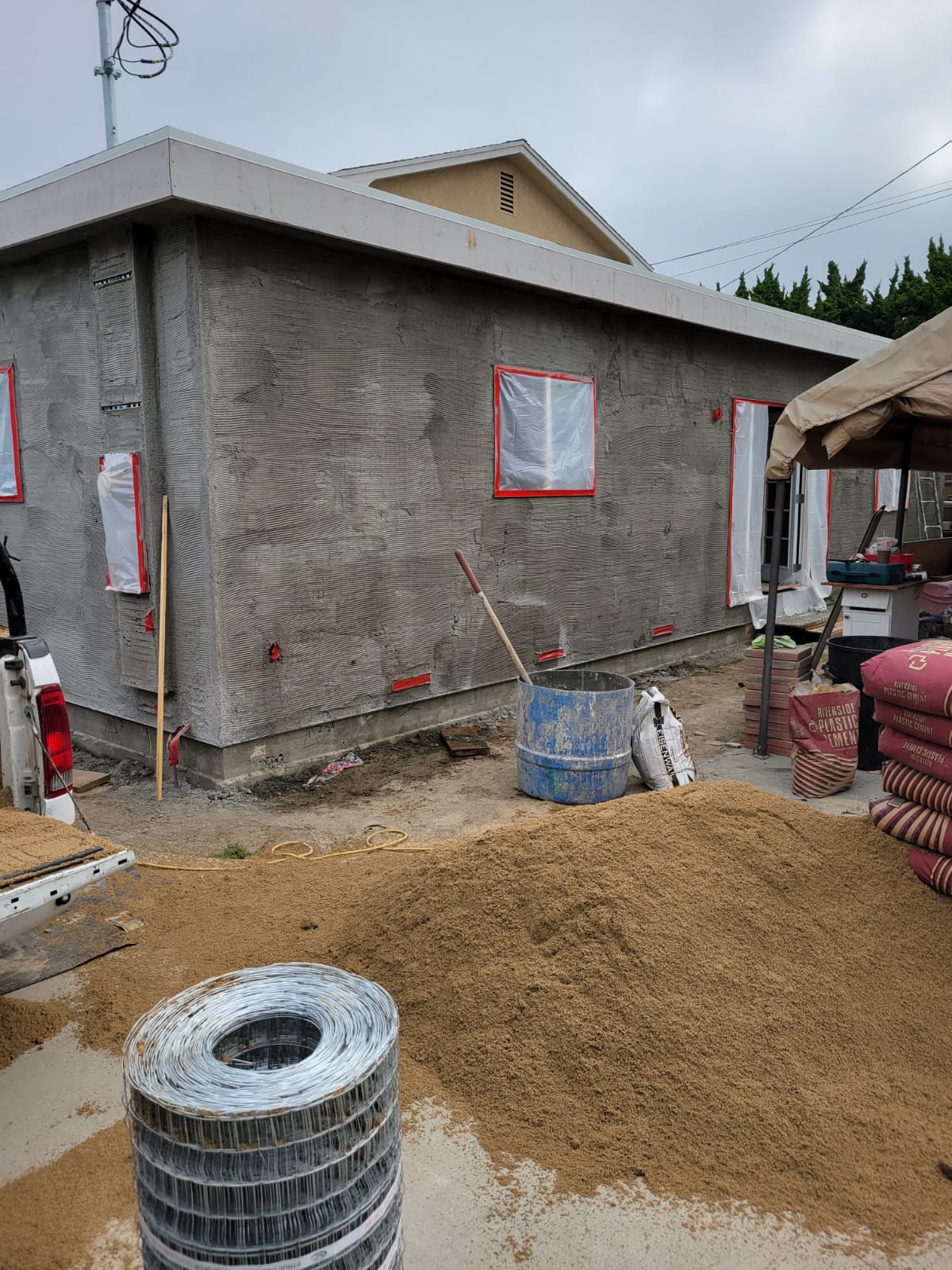
- Rebuild the wall to current code. New paper barrier, weep screed, lath and three coats of stucco, with the curing time the code sets between coats.
- Pass the inspections. Where new lath goes on, LADBS inspects it before the stucco (inspection code 325), and inspects the finished work at final (code 335).
What California code requires when the wall is rebuilt
A remediated wall is built to the code in force when the permit is issued, not the code the house was built under. In California that is the 2025 California Residential Code, effective January 1, 2026.
| Part of the wall | Requirement |
|---|---|
| Paper barrier | In Los Angeles County, which is IECC climate zone 3B, two layers of 10-minute Grade D paper or an equivalent, with flashing directed between the layers |
| Weep screed | At or below the foundation plate line, at least 4 inches above soil or 2 inches above paving, and of a type that lets trapped water drain out |
| Lath | Corrosion-resistant metal lath attached to the framing, with the paper barrier lapping the weep screed flange and the lath ending on it |
| Stucco coats | At least three coats over metal lath. LADBS calls for a finished thickness of at least 7/8 inch |
| Curing between coats | The second coat no sooner than 48 hours after the first, and the finish coat no sooner than seven days after the second |
The weep screed row is the one most often lost over time. The screed is the drain at the bottom of the wall, and when a planter, a patio or new soil buries it, water inside the wall has nowhere to go.
Homes built before 1978
Paint on a pre-1978 house may contain lead. Under the EPA’s renovation rule, work on painted surfaces in housing built before 1978 is done by a certified renovator using lead-safe practices, unless testing shows the paint is lead-free. The rule exempts small exterior jobs of 20 square feet or less, but that exemption does not apply to demolition of painted surfaces, and tearing off painted stucco is exactly that.
How we handle it
We handle stucco repair from crack sealing through section replacement to a full elevation restucco, under a general contractor license that covers the lath, the paper barrier and the stucco. The drainage and grade at the base of the wall are assessed during the free on-site assessment, and drainage correction is included where the repair needs it. A rebuilt wall gets the same three-coat system used for new stucco installation, and the work can be combined with paint, cool wall coatings and the rest of exterior remodeling.