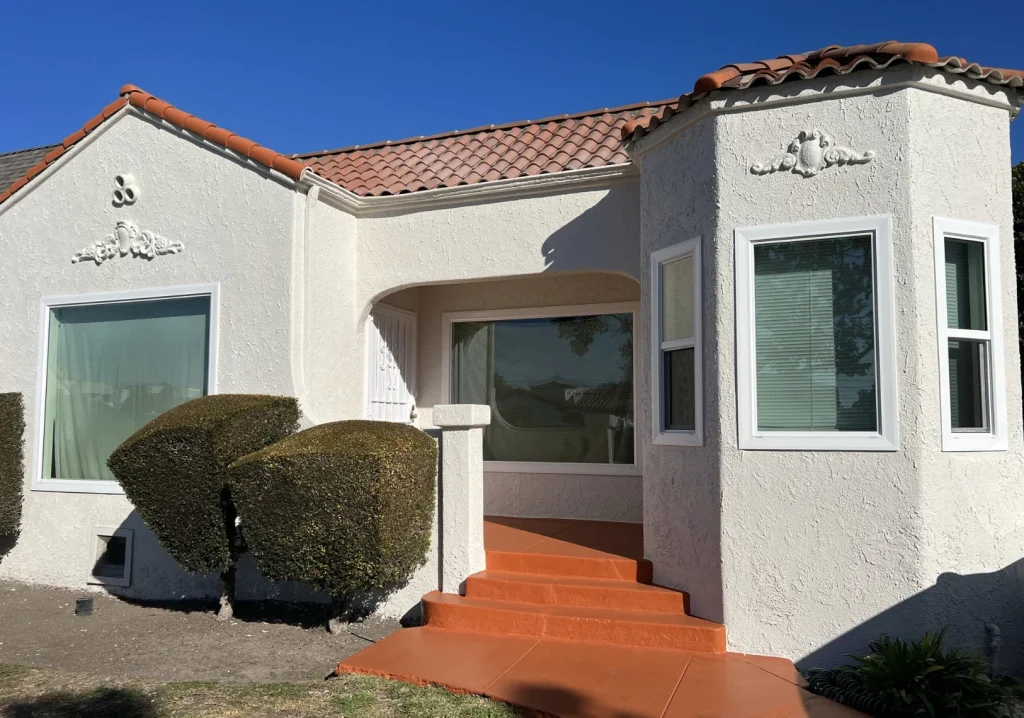
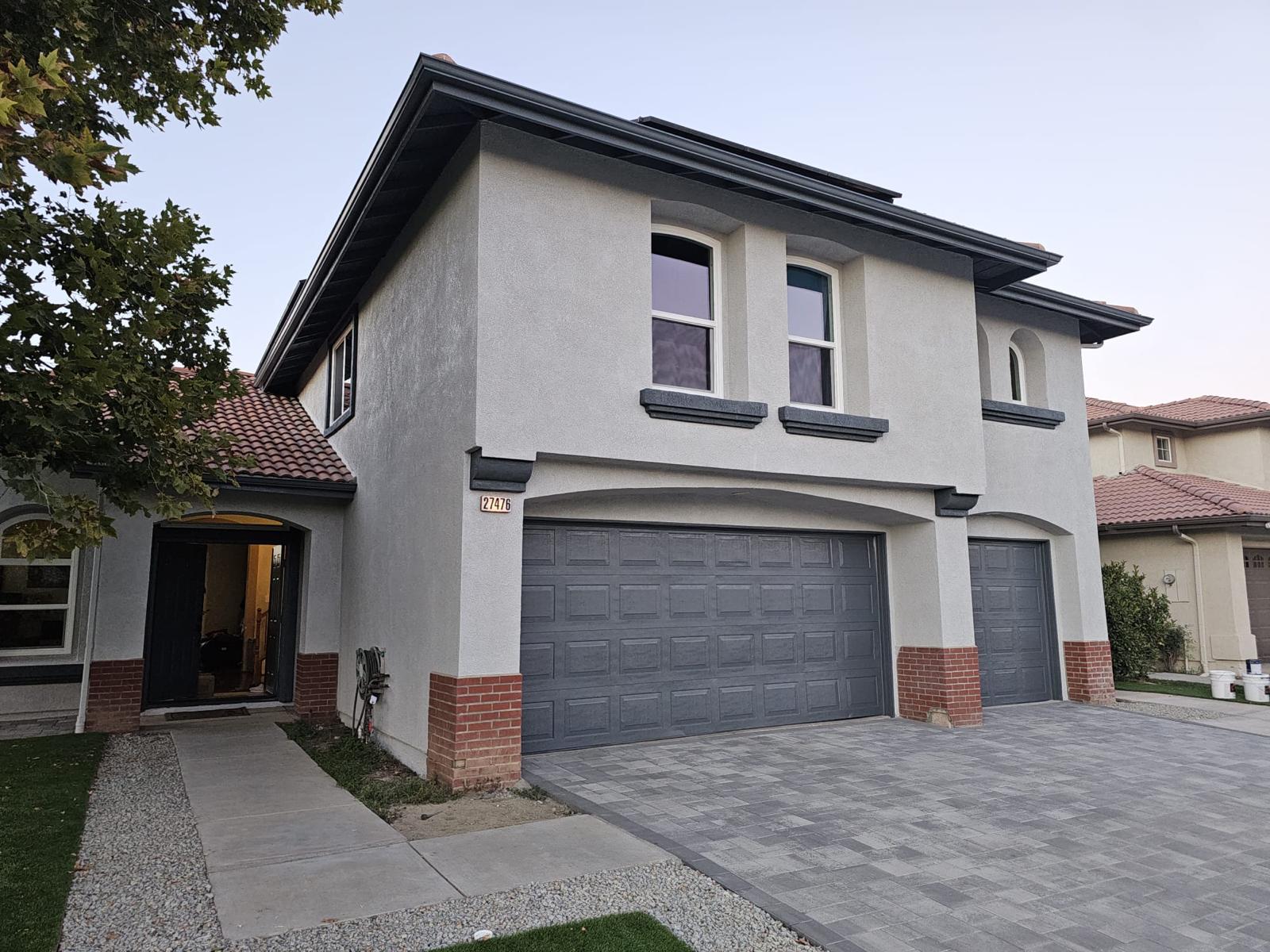
Yes, new stucco can go over old stucco when the old stucco is sound and still firmly attached to the wall. In Los Angeles, the building department describes the method: wet sandblast the weathered surface, patch cracks no wider than 1/16 inch where the lath has not detached from the framing, and apply a new finish to a total thickness of at least 7/8 inch. Wider cracks have to be repaired first, and stucco that is hollow, separated or wet behind is past what a new coat can fix.
Re-stucco is the middle option between repainting and tearing the stucco off. This guide covers how to tell whether a wall qualifies, how the work is done and permitted in the City of Los Angeles, and when removal is the better call.
Does your stucco qualify?
The test is the condition of what is already on the wall. A new coat bonds to the old one and moves with it, so anything wrong underneath comes through.
| Condition of the old stucco | Re-stucco over it? | What happens instead |
|---|---|---|
| Sound, firmly attached, hairline cracks of 1/16 inch or less | Yes | Cracks are patched before the new finish goes on |
| Cracks wider than 1/16 inch | Yes, after repair | The cracks are repaired first. In the City of Los Angeles, LADBS’s re-stucco guide sends re-stucco over walls with cracks wider than 1/16 inch to plan check at a counter |
| Sounds hollow when tapped, or has separated from the lath | No | The loose stucco is removed and the section rebuilt |
| Staining or soft spots that point to water behind the wall, or efflorescence that keeps coming back | No | The wall is opened and the water damage repaired, which is stucco remediation |
| Painted, with the paint in very good condition | Usually, after preparation | The painted surface is roughened, for example by sandblasting or high-pressure water blasting, and a bonding agent goes on so the new coat grips |
| Painted, with loose or peeling paint | Not until the paint is removed | Loose paint is sandblasted off first |
How re-stucco is done
- Clean the surface. LADBS’s method starts with wet sandblasting to remove the weathered surface of the existing finish coat. Dirt and efflorescence are washed off, because both keep the new material from bonding.
- Patch the cracks. Cracks of 1/16 inch or less, where the lath is still attached to the framing, are patched.
- Prepare painted areas. Painted surfaces are roughened and a bonding agent applied before the new coat.
- Refinish. The new finish brings the wall to a total stucco thickness of at least 7/8 inch.
- Inspection. For wet sandblast and re-stucco, LADBS usually requires one inspection, when the finish coat is complete.
Three ways to change a stucco exterior
| Repaint or coat | Re-stucco over existing | Tear off and restucco | |
|---|---|---|---|
| What it involves | Paint or an elastomeric coating over the existing finish | A new finish bonded to the existing stucco | All stucco, paper barrier and lath removed, then a new three-coat system |
| Fixes | Color and surface protection | Weathered surface and minor cracking | Failed stucco, separated lath, water damage, and the barrier behind |
| Permit in the City of Los Angeles | Painting needs no permit | Re-stucco is on the LADBS express permit list; its re-stucco guide calls for counter plan check where existing cracks exceed 1/16 inch | Re-stucco is on the express list, as is water damage, termite damage or dry rot repair under 10% of replacement cost; LADBS confirms the route for the full scope |
| Inspections | None | Usually one, at completion | Where new lath goes on, a lath inspection before the stucco (LADBS code 325), then a final (code 335) |
Wet sandblasting itself needs no separate permit outside Fire District No. 1, under the Los Angeles Building Code.
Stucco over wood siding
LADBS also allows new stucco over existing wood siding that stays in place. The rules are stricter than for stucco over stucco: two layers of Grade D weather-resistive paper go on first, the lath fasteners are lengthened by the thickness of the siding, and the stucco is applied in three coats to at least 7/8 inch. That work is usually inspected twice, once at the lath and paper stage and again when the stucco is complete.
Homes built before 1978
Paint on a pre-1978 house may contain lead. Under the EPA’s renovation rule, sandblasting and other high-speed paint removal on painted surfaces in housing built before 1978 is prohibited unless the equipment has a shroud or containment system with a HEPA vacuum attachment, and the work is done by an EPA-certified firm using certified renovators unless testing shows the paint is lead-free. Ask how the paint will be tested and removed before the work is scheduled.
Is it worth removing stucco instead?
Only when the stucco or the wall behind it has failed. Re-stucco keeps the existing paper barrier and lath, which is exactly right when they are sound and exactly wrong when they are not. A wall with water damage or separated stucco needs the affected sections torn off, because a new coat over it hides the problem while it continues.
How we handle it
Every stucco project starts with a free on-site assessment of the existing conditions. We handle stucco repair from crack repair through section replacement, and full stucco installation down to new barrier and lath, and both sit within the exterior remodeling we do across Los Angeles.