Galvanized pipes are steel water supply lines coated with zinc to slow corrosion, and when that zinc layer wears through, the steel underneath rusts from the inside out, narrowing the pipe, contaminating the water, and eventually leaking. Most homes built before the mid-1960s were plumbed with galvanized steel, and because the average functional lifespan of these pipes falls between 40 and 60 years, every original galvanized system in Southern California is now operating well past its expected service life. The signs of failure are predictable and progressive. Knowing what to look for, and what each symptom actually means, is the difference between a planned repipe and an emergency.
Why Galvanized Pipes Fail From the Inside
The zinc coating on a galvanized pipe works as a sacrificial barrier. Water reacts with the zinc first, sparing the steel underneath. But zinc is finite. Once it dissolves, the exposed steel begins to oxidize. Rust nodules called tuberculation grow inward from the pipe walls, steadily shrinking the diameter through which water can flow. A pipe that started at three-quarters of an inch can narrow to the width of a pencil eraser over decades. Because all of this happens inside the pipe, the exterior can look perfectly intact while the interior is nearly closed off. That deception is what makes galvanized failure so dangerous in older homes. There is no visible warning on the outside of the wall. The symptoms show up at the faucet, in the water itself, and in the fixtures that depend on consistent pressure and clean supply.
The Warning Signs, in Order of Severity
Dropping Water Pressure That Gets Worse Over Time
This is usually the first thing a homeowner notices. The shower that used to run strong now barely rinses shampoo. The kitchen faucet takes noticeably longer to fill a pot. What separates galvanized pipe failure from a temporary municipal pressure drop is that the problem is gradual, persistent, and uneven. You may have decent pressure at the fixture closest to the main line but almost nothing at a second-floor bathroom at the far end of the run. That pattern points to a progressive interior restriction, not a supply issue. Running two fixtures at once, a shower and a washing machine, often reveals the problem faster because the narrowed pipe cannot deliver enough volume to serve both at the same time.
Discolored Water, Especially After the Home Sits Idle
Brown, orange, or rust-tinged water when you first open a faucet in the morning is iron oxide breaking loose from corroded pipe walls. A quick way to tell whether the discoloration is coming from the pipes or the water heater: run only the cold water at a faucet that has not been used for several hours. If the cold water itself comes out brown, the source is the supply lines. If it clears within a few seconds and only the hot side is discolored, the water heater’s anode rod or sediment buildup is more likely the cause. Persistent cold-side discoloration across multiple fixtures is a system-wide corrosion signal, not a single point of failure. You may also notice brown staining inside the toilet tank, faint rings around drains, or discoloration at the bottom of the bathtub that returns no matter how often you clean it.
Recurring Leaks at Different Locations
A single pinhole leak can happen to any pipe. But when a second leak appears months later at a completely different spot, and then a third, the pattern is telling you something. Galvanized corrosion is systemic. Once the zinc is gone and rust has weakened the pipe wall, every threaded joint and every section of straight run is a candidate for the next failure. Patching one leak while the rest of the system continues to corrode is temporary at best. Threaded joints are especially vulnerable because the threading process removes some of the zinc coating during installation, giving corrosion a head start at every connection point.
Metallic Taste or Smell in the Water
Water that tastes like metal or carries a faint iron smell is picking up dissolved rust and mineral deposits as it passes through corroded pipe interiors. This is not just an aesthetic issue. Research published in Environmental Engineering Science by a Virginia Tech team found that the zinc coatings historically used on galvanized steel can contain lead at concentrations up to nearly two percent, and that lead leaches into drinking water as the coating degrades. In laboratory testing, lead concentrations in water flowing through galvanized pipes exceeded the EPA’s action level by more than ten times. Homes where copper supply lines were later connected upstream of remaining galvanized sections showed even higher lead release due to galvanic corrosion between the two metals.
Visible Exterior Corrosion at Joints and Fittings
If you can access exposed pipe in a garage, utility closet, or under a sink, look at the threaded joints where two sections meet. Darkened, pitted, or lumpy surfaces at those connections are not just cosmetic oxidation. They indicate that the pipe wall has thinned significantly from the inside. Exterior corrosion at joints often lags behind interior damage by years, so visible deterioration on the outside means the inside is in worse condition than what you can see.
How to Confirm Your Home Has Galvanized Pipes
Many Southern California homeowners are not sure what material their plumbing is made of, especially in homes that have been partially updated over the decades. The simplest confirmation takes thirty seconds. Find an exposed section of pipe where the main water line enters the home, typically near the water heater, in a utility closet, or under a bathroom sink. Hold a refrigerator magnet against it. Galvanized steel is magnetic. Copper and plastic are not. Then scratch the surface lightly with a flathead screwdriver. Galvanized steel scratches to a dull silver-gray. Copper reveals a reddish-brown penny color underneath. If the magnet sticks and the scratch is gray, the pipe is galvanized.
Homes built before the mid-1960s across much of Southern California, particularly the postwar ranch homes and dingbats that went up by the hundreds of thousands during the 1940s and 1950s, were almost universally plumbed with galvanized steel. If your home falls in that era and the plumbing has never been fully replaced, there is a strong probability galvanized pipe is still in the walls and under the slab.
The Mixed-System Problem
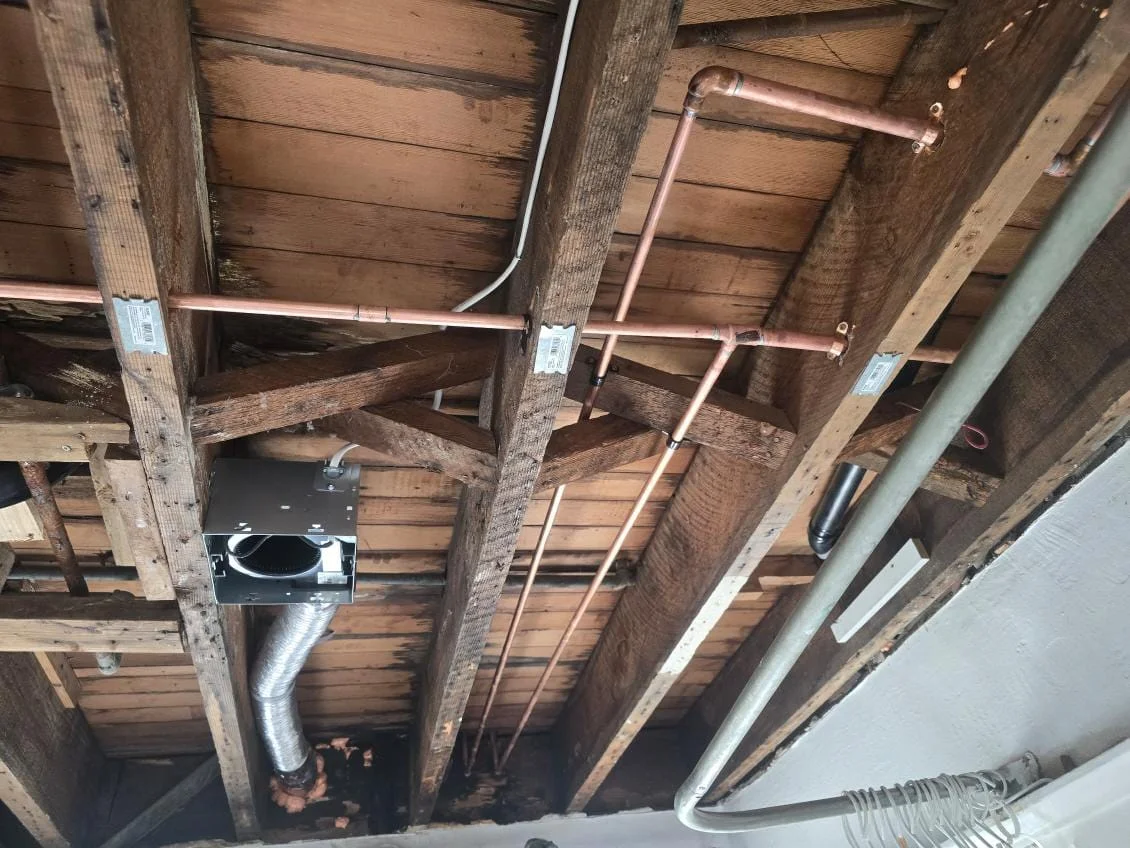
Partial repiping is common in older homes. A previous owner may have replaced the visible runs with copper but left the original galvanized lines behind walls and under the foundation. That creates a mixed-metal system. When copper and galvanized steel are connected directly, the difference in their electrical potential accelerates corrosion at the galvanized sections. This galvanic reaction speeds up the exact deterioration the copper upgrade was meant to solve. If your home has a mix of copper and gray threaded pipe, the galvanized sections are corroding faster than they would in an all-galvanized system.
What Southern California Conditions Do to Galvanized Pipes
Southern California’s mineral-rich water supply adds another layer to galvanized pipe deterioration. Hard water deposits compound the rust buildup inside the pipe, accelerating the narrowing process. The region’s older housing stock concentrates this problem. Los Angeles County alone saw over 700,000 housing units built during the 1950s, and the San Fernando Valley, Westside, and South Bay communities that absorbed that growth are full of homes now 70 or more years old with original plumbing that was never designed to last this long.
Seismic activity also stresses galvanized joints. Every tremor shifts the rigid threaded connections slightly. Over decades of small and moderate earthquakes, those micro-movements weaken joints that are already compromised by internal corrosion. A pipe system that might have lasted another few years in a seismically quiet region can fail sooner in Southern California simply because the ground moves.
What Failing Galvanized Pipes Do to Your Appliances
The damage is not limited to faucets and showerheads. Washing machines, dishwashers, and water heaters all depend on a clean, consistent water supply. Rust sediment from corroded galvanized lines clogs inlet screens, wears out solenoid valves faster, and settles at the bottom of water heater tanks, reducing efficiency and shortening equipment life. Consider the 1957 stucco bungalow in the San Fernando Valley whose homeowner replaced two water heaters in six years before a plumber traced the sediment clogging the drain valve back to the original galvanized supply lines feeding it. The water heaters were never the problem. The pipes were. Replacing appliances without addressing the pipe system feeding them is treating the symptom while the cause continues.
When a Leak Decides for You
The most expensive way to deal with galvanized pipe failure is to wait for a catastrophic leak. A burst pipe behind a wall or under a slab turns a planned home repiping project into an emergency that also involves drywall repair, flooring replacement, mold remediation, and the stress of living in a partially torn-apart house. Many homeowner insurance policies limit or exclude coverage for damage caused by pipes that were known to be deteriorating, particularly in pre-1960 homes where galvanized plumbing is listed on the original inspection report. The planned approach, where a licensed contractor evaluates the full system and replaces it on your schedule, avoids every one of those complications.
What a Professional Evaluation Looks Like
A licensed contractor can confirm the pipe material throughout the home, assess the degree of interior corrosion using pressure testing and visual inspection at accessible points, and scope the full system to identify which sections are original galvanized, which have been updated, and where the highest-risk connections are. That evaluation is the basis for a written estimate that covers the full scope of the work, including whether copper repiping or PEX is the better fit for the house, permit requirements under the California Plumbing Code, timeline, and what the finished system will look like when the work is done. For homes inside the City of Los Angeles, the permit is filed through LADBS. Outside city limits, the county building department handles the filing. Either way, permits ensure the new system is inspected and code-compliant at closeout.
Frequently Asked Questions
How do I know if my home has galvanized pipes?
Find an exposed pipe near the water heater or under a sink. Hold a magnet to it. If the magnet sticks, scratch the surface lightly with a screwdriver. Galvanized steel scratches to a dull silver-gray color. Copper reveals a reddish-brown tone, and plastic pipe will not attract a magnet at all. Homes built before the mid-1960s in Southern California are the most likely to have galvanized supply lines still in place.
Can galvanized pipes contaminate drinking water?
Yes. The zinc coating used on galvanized steel historically contained lead as an impurity, sometimes at concentrations up to nearly two percent of the coating’s composition. As the coating corrodes, that lead leaches into the water flowing through the pipe. The risk increases further in mixed-metal systems where copper pipe upstream of galvanized sections creates a galvanic reaction that accelerates lead release. Homes with original galvanized plumbing should consider water testing as part of any evaluation.
What is the typical lifespan of galvanized pipes?
Most galvanized pipes last between 40 and 60 years depending on water chemistry, usage volume, and installation quality. In Southern California, where mineral-rich water and seismic activity add stress to the system, pipes at the lower end of that range are common. Any galvanized system installed before 1970 is now past its expected functional life and should be professionally evaluated.
Is it worth repairing a single galvanized pipe leak, or should I repipe the whole house?
A single leak in a galvanized system is rarely an isolated event. Because corrosion affects the entire pipe network at roughly the same rate, a leak at one point signals that the rest of the system is approaching the same stage of deterioration. Patching one section buys time, but it does not stop the corrosion happening inside every other run. A whole-home repipe with modern materials such as copper or PEX addresses the root cause and eliminates the cycle of recurring repairs.
Does a home repipe require a permit in Southern California?
Yes. A whole-home repipe requires a plumbing permit. Inside the City of Los Angeles, the permit is filed through the Los Angeles Department of Building and Safety. In unincorporated areas and other cities within the service region, the county building department or local municipal building department handles the process. The licensed contractor managing the project typically handles the permit application, scheduling of inspections, and final sign-off. At closeout, the homeowner receives documentation confirming the work passed inspection and meets current California Plumbing Code requirements.
How long does it take to repipe a house with galvanized pipes?
Most whole-home repipes in a standard single-family residence are completed in two to four days of on-site work, depending on the size of the home, number of fixtures, and whether any lines run under a concrete slab. The permit process typically adds a few days on either side for filing and final inspection. A licensed contractor will walk you through the specific timeline during the free estimate visit, which includes a full assessment of the existing system, identification of all pipe runs that need replacement, and a written scope of work.
What happens if I sell my home and it still has galvanized pipes?
Galvanized plumbing is a standard item on home inspection reports. Buyers and their lenders will see it flagged, and in many cases it becomes a negotiation point or a condition of sale. Some buyers request that the seller complete a repipe before closing. Others negotiate a credit against the purchase price. Either way, original galvanized pipe in a pre-1960s home is unlikely to go unnoticed during a transaction, and addressing it proactively gives the seller more control over the scope and timing than waiting for a buyer’s inspection to force the issue.
Will my homeowner’s insurance cover damage from a galvanized pipe failure?
Coverage varies by carrier and policy, but many insurers treat galvanized pipe failure in older homes as a maintenance issue rather than a sudden and accidental event, which can limit or exclude the claim. Some policies require documentation that known plumbing deficiencies have been addressed. A whole-home repipe removes that ambiguity entirely and can improve insurability going forward. Check your specific policy language or speak with your agent to understand where your coverage stands before a failure forces the question.