Heating System Installation for Southern California Homes
Heating system installation is the selection, sizing, and installation of a new residential heating system including the primary heating equipment, fuel or electrical connections, duct system connections, flue venting where required, and thermostat. In Southern California, where winter temperatures across inland valleys regularly drop into the 30s and 40s at night between November and February, a functional heating system is not optional even in a climate known for warmth. The region’s mild heating load compared to colder climates does not reduce the importance of correct installation. It does change which equipment makes the most economic sense, and those differences matter when selecting a system and sizing it correctly for the home. A heating system installed without a proper load calculation, on a duct system that has not been assessed, or without the required permits is one that will underperform, cost more to operate, and create liability for the homeowner at resale.
Heating System Types We Install
Gas Furnace Installation
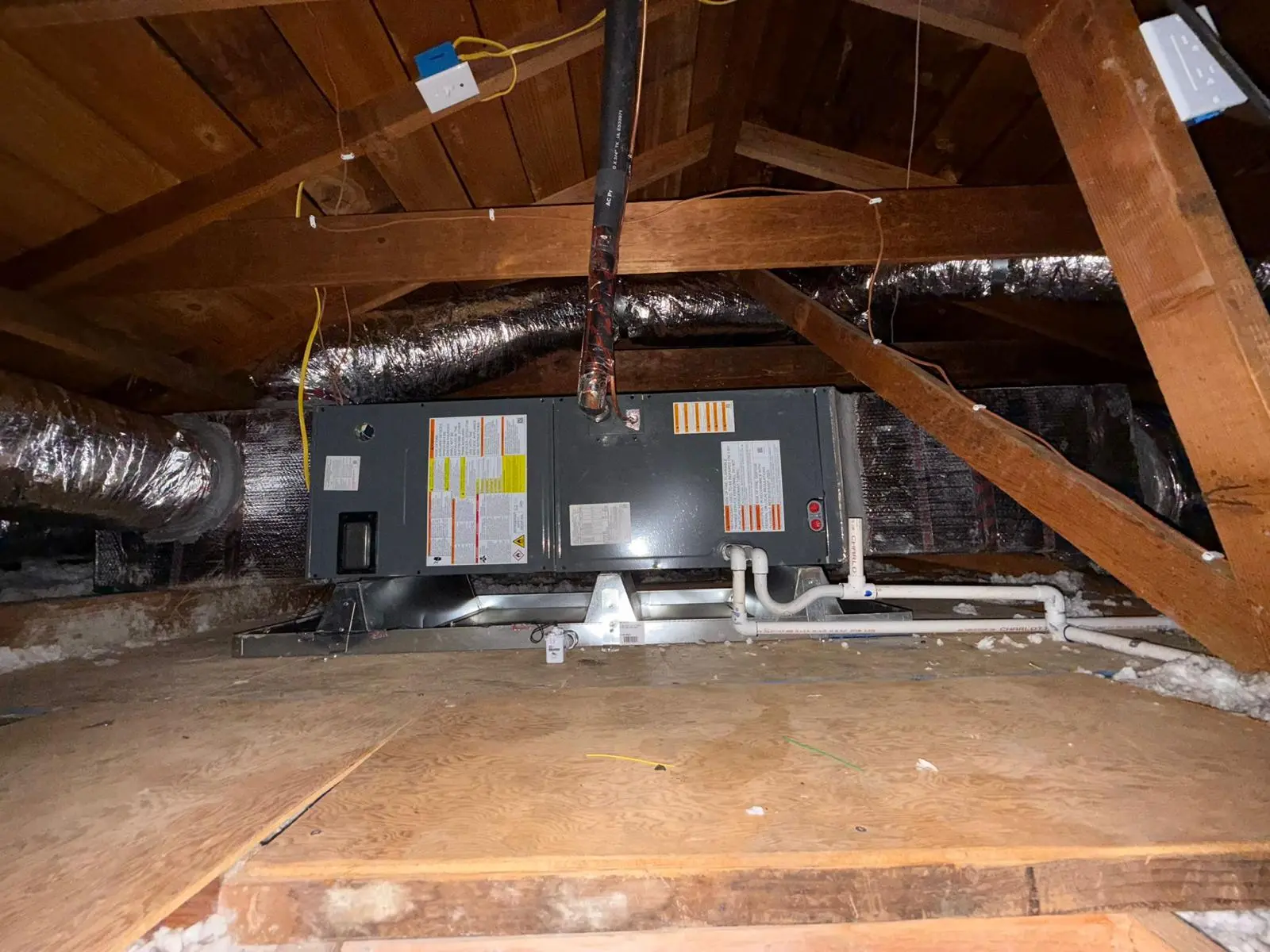
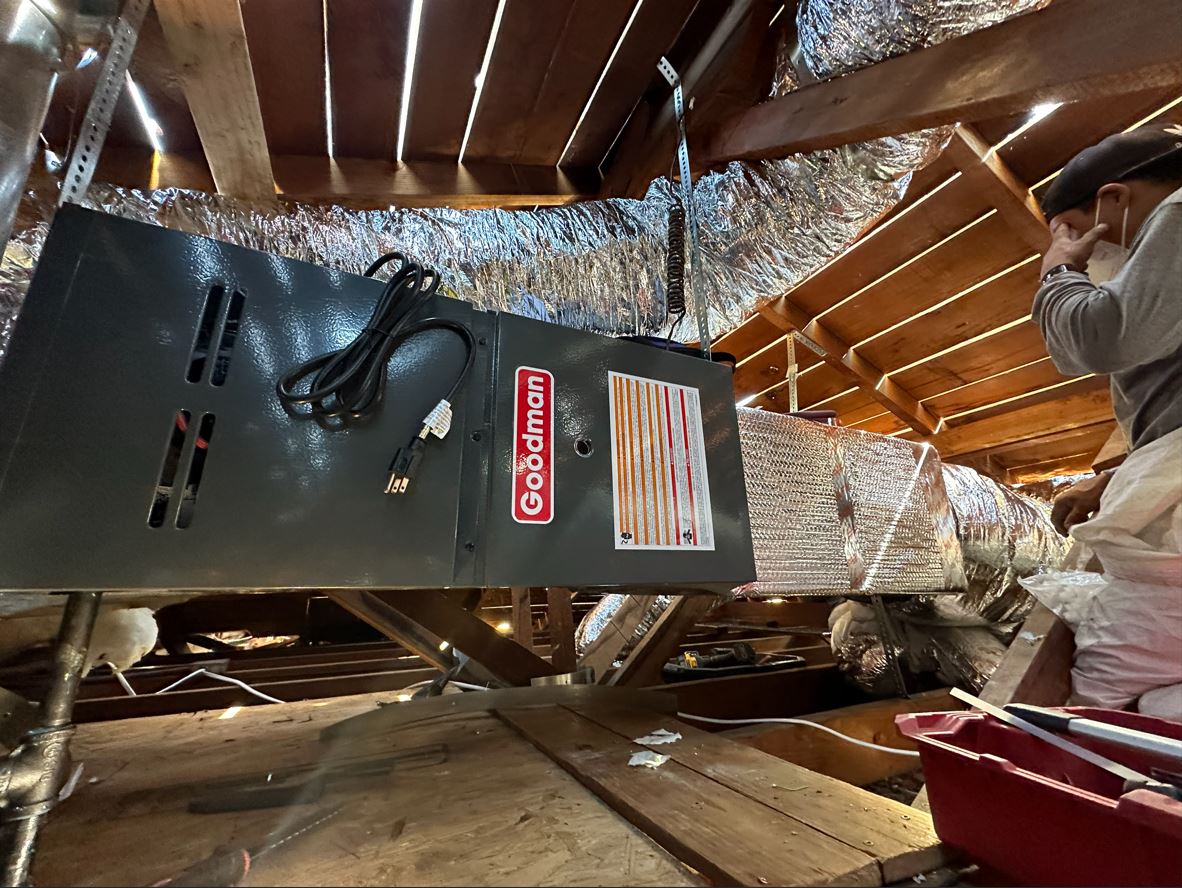
Gas furnaces are the most widely installed heating system in Southern California and remain the most cost-effective option for homes with natural gas service. A gas furnace burns natural gas in a sealed combustion chamber, transfers heat through the heat exchanger to the circulating air, and distributes that warm air through the home’s duct system. Modern high-efficiency gas furnaces achieve Annual Fuel Utilization Efficiency ratings of 95 to 98 percent, meaning nearly all of the fuel burned becomes usable heat rather than exhaust. Two-stage and variable-speed furnaces modulate their output to match the actual heating load rather than running at full capacity in short bursts, which improves comfort, reduces energy consumption, and extends equipment life. We install gas furnaces across the efficiency and feature range and discuss which tier is appropriate for your home and budget during the estimate visit.
Heat Pump Installation
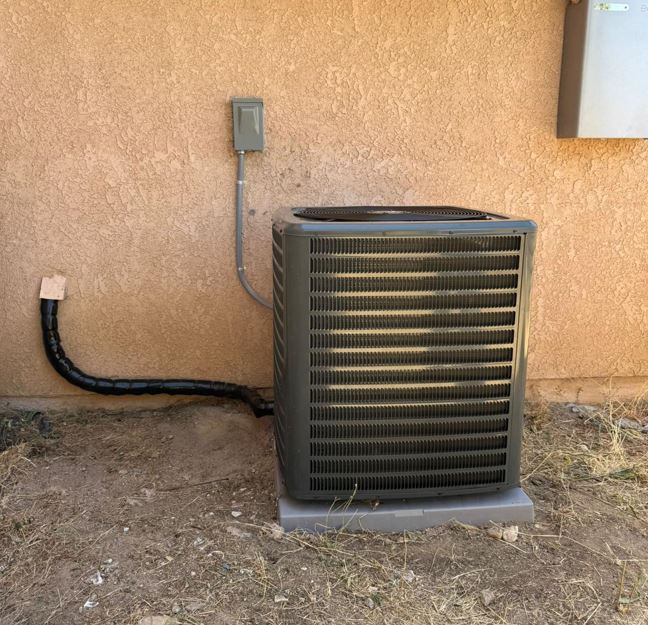
A heat pump provides both heating and cooling from a single system by moving heat between the indoor and outdoor environments rather than generating it through combustion. In heating mode, it extracts heat from outdoor air and transfers it inside. In Southern California’s climate, where winter temperatures rarely fall below freezing at lower elevations, heat pumps operate at high efficiency through most of the heating season because heat pump performance is directly related to outdoor temperature. The combination of high-efficiency heating, integrated cooling, and the progressive phase-out of gas appliances under California Air Resources Board regulations makes heat pump installation an increasingly practical choice for Southern California homeowners replacing aging equipment. We install ducted heat pump systems that connect to existing ductwork and can discuss whether a heat pump is the right fit for your home’s configuration and utility service during the estimate visit.
Electric Furnace Installation
Electric furnaces use resistance heating elements to generate heat and are an option for homes without natural gas service or in situations where gas line installation is not feasible. They are simpler mechanically than gas furnaces, carry lower installation costs, and produce no combustion byproducts. Their operating cost is higher than gas or heat pump alternatives at current electricity rates in Southern California, and we put that comparison in front of you at the estimate visit so the decision reflects the full picture over the life of the system.
Dual-Fuel System Installation
A dual-fuel system pairs a heat pump with a gas furnace backup. The heat pump handles heating efficiently when outdoor temperatures are above a set threshold, and the gas furnace takes over when outdoor temperatures drop low enough that the heat pump’s efficiency advantage diminishes. In Southern California’s climate, the crossover point is rarely reached, which means dual-fuel systems deliver most of the efficiency benefit of a standalone heat pump while retaining the comfort of gas heat as a backup.
Heating System Replacement
Replacement of an existing furnace or heat pump at the end of its service life follows the same full scope as a new installation: load calculation, equipment selection, removal and disposal of old equipment, installation of new equipment, connection to existing ductwork and fuel or electrical supply, and permit and inspection. We assess the existing duct condition during the estimate visit and include any required duct repairs or modifications in the scope rather than connecting new equipment to a distribution system that will prevent it from performing correctly.
Furnace vs. Heat Pump: What Makes Sense in Southern California
| Factor | Gas Furnace | Heat Pump |
|---|---|---|
| Heating only or heating and cooling | Heating only, separate AC required | Both heating and cooling in one system |
| Operating cost in SoCal climate | Lower per BTU at current gas rates | Very efficient in mild winters, COP above 3 common |
| Carbon monoxide risk | Present if heat exchanger cracks | None, no combustion |
| California regulatory trajectory | New gas appliance sales restricted post-2030 | Aligned with state electrification direction |
| Supply air temperature | 120 to 140°F, warmer air from registers | 90 to 100°F, cooler but sufficient for SoCal load |
According to the U.S. Department of Energy, heat pumps can reduce electricity use for heating by approximately 65 percent compared to electric resistance heating, and in mild climates like Southern California, they operate at a coefficient of performance well above 3.0 for most of the heating season, meaning they deliver more than three units of heat for every unit of electricity consumed. For homeowners whose existing central AC is also approaching end of life, replacing both with a heat pump is worth evaluating as a combined project. Our full HVAC replacement service covers that scope in a single coordinated installation.
What Heating System Installation Costs in Los Angeles
A furnace-only installation typically runs $7,000 to $12,000, and a heat pump system $15,000 to $27,000. That covers a permitted installation by a licensed general contractor with Manual J load sizing, Title 24 documentation, and a 2-year workmanship warranty.
Where a specific project lands comes down to system type, equipment size, efficiency rating, the condition of the existing ductwork, and any gas line or electrical work required. A furnace swap into sound ductwork sits at the lower end of the furnace range. Electrical upgrades, panel work, asbestos, drywall, difficult attic access, zoning and major duct modifications are usually extra.
Typical Los Angeles pricing. Final pricing depends on project size, site conditions, materials, permits, engineering requirements and scope of work. Every project is quoted free on-site. Financing is available for qualified homeowners including $0 down options.
Call (818) 483-8055 to schedule your free heating assessment and load calculation.
Our Heating System Installation Process
Step 1: Free On-Site Assessment and Load Calculation
A licensed Wise Choice HVAC estimator visits your home, inspects the existing heating equipment and flue venting, assesses the duct system condition, reviews your home’s gas or electrical service, and performs a Manual J heating load calculation. The visit takes 60 to 90 minutes for most homes. You receive a written itemized estimate covering equipment, installation labor, gas or electrical scope, and any duct work required, with no obligation to proceed.
Step 2: System Selection and Permit Application
Once the estimate is approved, we finalize equipment selection, confirm the efficiency ratings, and submit permit applications to the applicable jurisdiction. For gas furnace installations, this includes a mechanical permit and a gas line permit. For heat pump installations, a mechanical permit and an electrical permit are required. We manage both and factor permit timelines into the project schedule.
Step 3: Removal of Existing Equipment
The existing furnace or heating system is shut down safely, disconnected from gas or electrical supply, removed from the installation location, and hauled off-site. For gas systems, the gas line is capped before disconnection and pressure-tested after the new equipment is connected. All flue venting from the old system is removed and replaced with venting sized and configured for the new equipment. We do not reuse flue venting from old systems.
Step 4: Equipment Installation
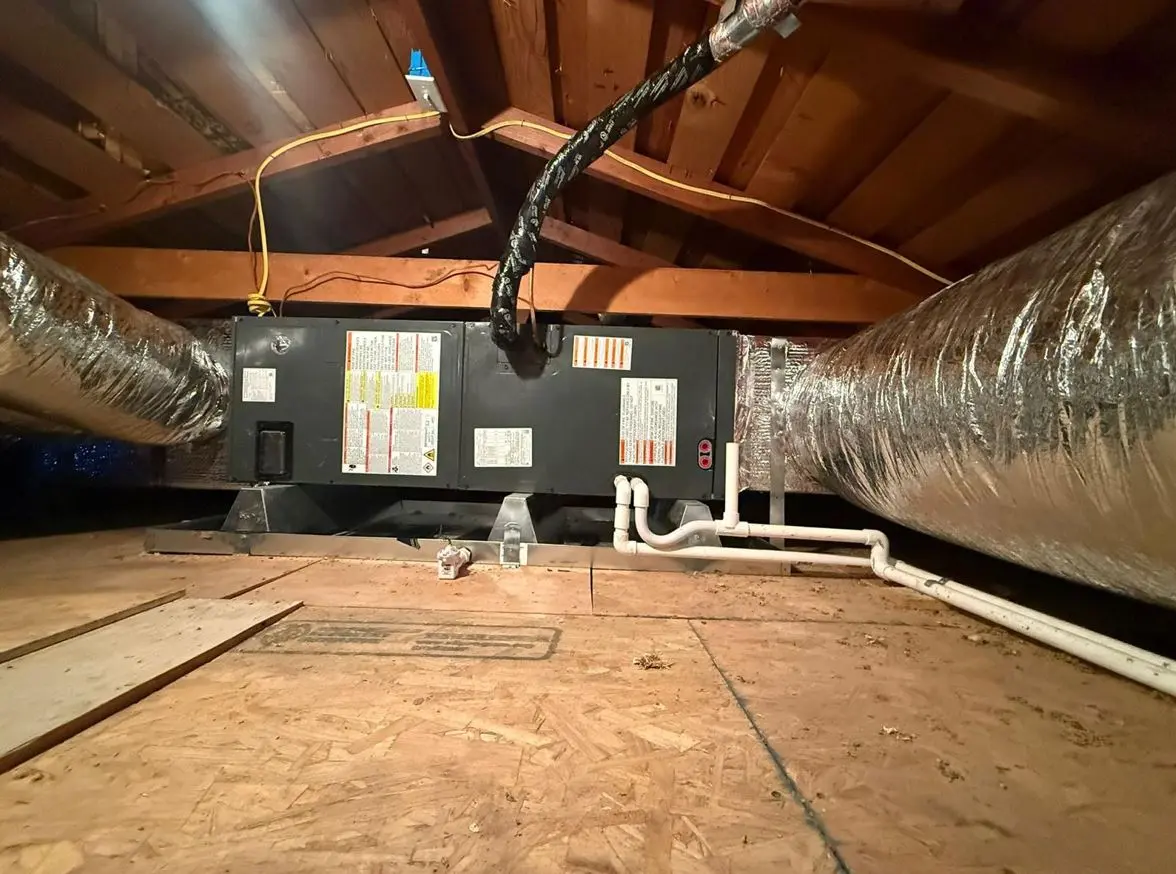
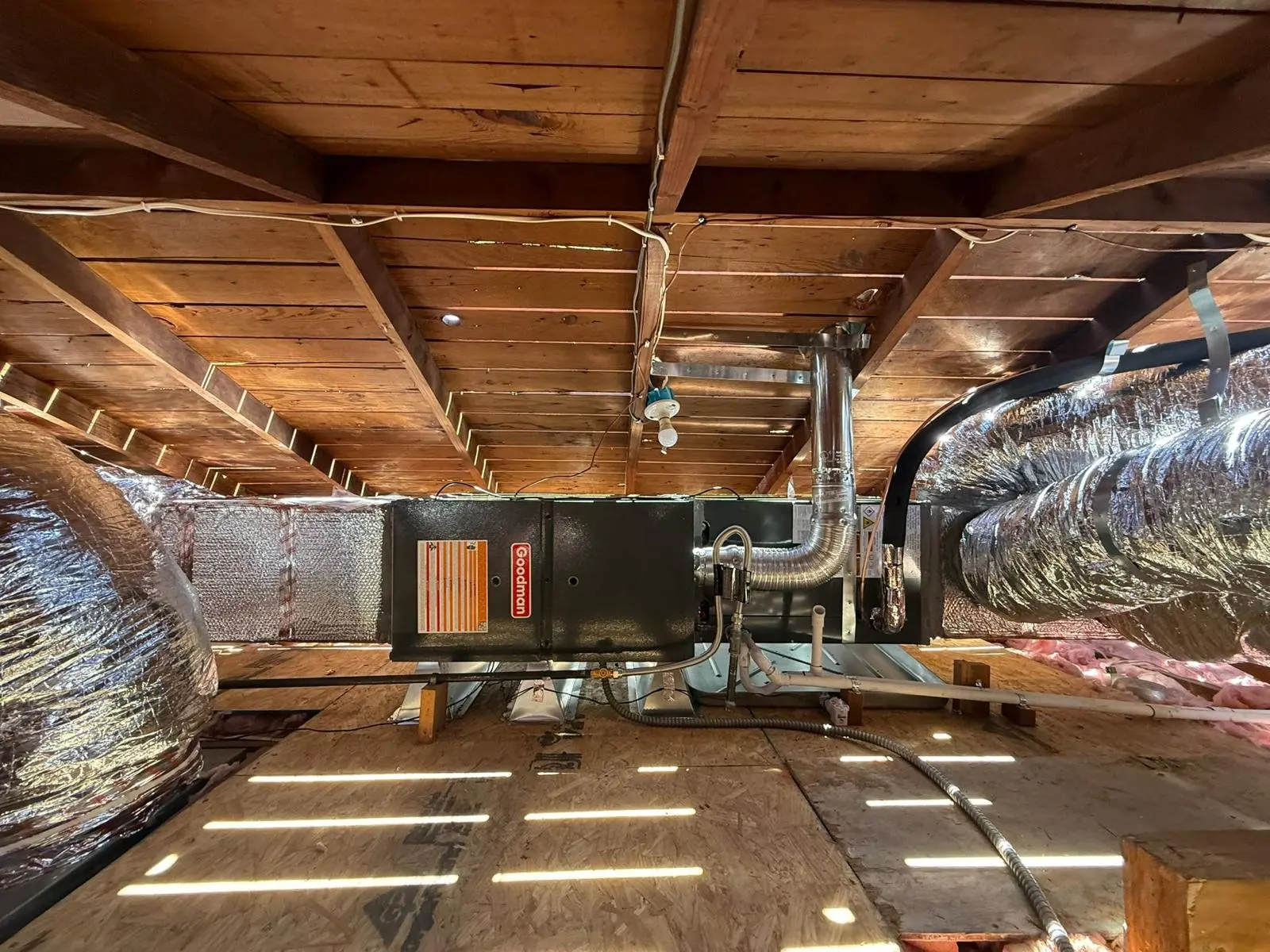
The new furnace or heat pump air handler is set in the designated location and connected to the supply and return duct system. Gas line connections are made and pressure-tested before the system is started. Electrical connections are made at the equipment and at the thermostat. Flue venting is installed and routed to the exterior for gas systems. For heat pump installations, the outdoor unit is set on a level pad or wall bracket and connected to the refrigerant lines and electrical disconnect. The thermostat is installed and programmed.
Step 5: System Startup and Verification
The system is started and tested for correct operation across a full heating cycle. For gas furnaces, we verify proper ignition sequence, heat exchanger integrity, and flue draft. For heat pumps, we verify refrigerant charge, defrost cycle operation, and correct airflow at registers throughout the home. Thermostat operation is confirmed across both heating and cooling modes for heat pump installations. Any adjustments are made before the crew leaves the property.
Step 6: Inspections and Closeout
We coordinate all required mechanical, gas, and electrical inspections with the applicable building department. At project closeout you receive the permit and final inspection sign-off, the 2-year workmanship warranty in writing, manufacturer equipment warranty documentation.
If you are ready to understand what a new heating system would cost for your home or want to compare furnace and heat pump options with real numbers, request a free estimate online or call (818) 483-8055 to schedule your on-site assessment.
Permits and California Requirements for Heating System Installation
Heating system installation requires a mechanical permit in all California jurisdictions without exception. Gas furnace installations require an additional gas line permit and a gas pressure test at completion. Heat pump installations require both a mechanical and electrical permit. Where new ductwork is installed, California’s Title 24 energy code requires a duct leakage test confirming that the new duct system meets maximum leakage rate standards for residential buildings. We handle every permit and inspection in that sequence and deliver the complete documentation package at project closeout.
California’s Title 24 energy code also sets minimum efficiency requirements for new heating equipment. For gas furnaces, the California Energy Commission requires a minimum AFUE of 80 percent for most residential installations, and high-efficiency furnaces at 95 AFUE and above exceed that minimum substantially. For heat pumps, California’s minimum HSPF2 requirements apply, and
The California Air Resources Board has adopted regulations prohibiting the sale of new gas furnaces and gas water heaters for residential use after 2030 as part of the state’s building decarbonization strategy.
Why Southern California Homeowners Choose Wise Choice for Heating System Installation
15+ Years of Combined Experience Installing Heating Systems
We have installed and replaced gas furnaces and heat pumps on Southern California homes spanning every era of construction, from 1950s stucco ranches with original gas floor furnaces to newer construction replacing first-generation equipment. Southern California’s housing stock presents a wide range of attic configurations, gas line conditions, and electrical service situations, and our crew handles each of them without treating nonstandard conditions as an excuse for change orders.
Licensed and Insured General Contractor
Every heating system installation we perform is completed under our general contractor license by crew members fully covered by our insurance. You carry no liability exposure for work our team performs in your home.
Equipment Recommendations Based on Real Calculations
We do not recommend equipment size based on rules of thumb or upsell efficiency tiers that do not recover their premium at your specific heating load. Every recommendation comes from a Manual J calculation and a plain comparison of upfront cost against operating cost. You receive a recommendation we can explain and defend, not a proposal sized for margin.
2-Year Workmanship Warranty
Our 2-year workmanship warranty covers all installation labor including equipment setting, gas connections, duct connections, flue venting, electrical work, and thermostat installation. If any workmanship-related failure occurs within two years under normal operating conditions, we return and correct it at no charge. The warranty is in writing and delivered at project closeout alongside the manufacturer’s equipment warranty.
Financing Available
Financing is available for qualified homeowners including $0 down options. Ask about current programs when you schedule your estimate or during the estimate visit.
Wise Choice Remodeling brings 15+ years of combined experience to heating system installation across Southern California. Whether you need a simple furnace replacement, are evaluating a heat pump for the first time, or are replacing a system that has been failing through the last several winters, the right starting point is an on-site assessment and a written estimate that shows you the real cost in writing. Call (818) 483-8055 to schedule yours.