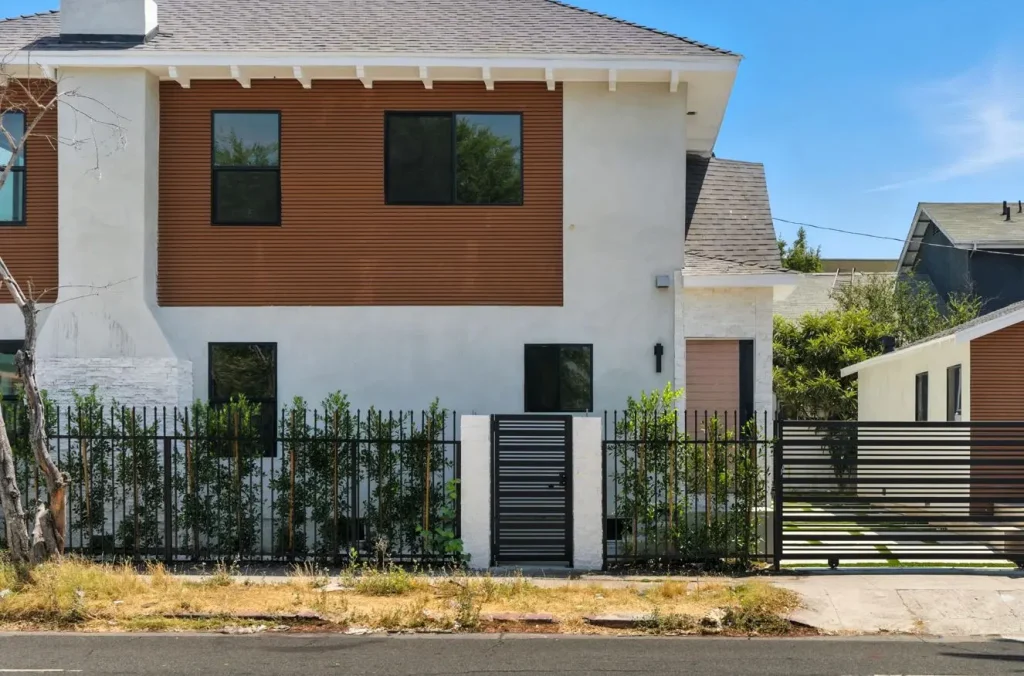
For a Los Angeles home, the choice between stucco and siding comes down to three things the code decides more than taste does: how the wall handles fire, what has to go behind the finish to keep water out, and how the permit works. Stucco is a noncombustible cement plaster that takes days of curing between coats. Vinyl, wood and engineered wood siding go up without curing time, but in a wildfire area they need a product labeled for the purpose or a wall built to one of the code’s fire-resistant methods.
This comparison covers the materials we install: stucco, and vinyl, wood and engineered wood siding. Prices depend on the house, so they are left to the estimate.
Side by side
| Stucco | Vinyl, wood and engineered wood siding | |
|---|---|---|
| What it is | Cement plaster applied in three coats over metal lath; LADBS calls for at least 7/8 inch in total | Panels or boards fastened over the wall; vinyl must be certified to ASTM D3679, and all siding is installed to the manufacturer’s instructions |
| What goes behind it | In Los Angeles County’s climate zone (IECC 3B), two layers of Grade D paper, or one heavier layer with a drainage space, and a weep screed at the base so trapped water drains out | At least one layer of water-resistive barrier, with flashing at windows, doors and other openings |
| Curing time the code requires | The second coat no sooner than 48 hours after the first, and the finish coat no sooner than seven days after the second | None |
| Fire | Generally treated as a noncombustible cladding | Not noncombustible; some products are labeled ignition-resistant or, for wood, fire-retardant-treated for exterior use |
| Wildland-urban interface area | Noncombustible material is on the code’s approved covering list | Has to be ignition-resistant material labeled for exterior use, fire-retardant-treated wood labeled for exterior use, or go on a wall built to one of the code’s fire-resistant methods |
| City of Los Angeles permit | Re-stucco is an express permit, and so is replacing existing siding with new stucco on a single-family home or duplex | Express permit when it goes over solid sheathing with an approved barrier, the product has an ICC evaluation report, and the wall is 5 feet or more from the property line |
| Small repairs | Before a re-stucco, LADBS allows cracks of 1/16 inch or less, with the lath still attached, to be patched | Damaged boards or panels are replaced and matched to the rest |
Sources: the 2025 California Residential Code, the 2025 California Wildland-Urban Interface Code with its January 2026 errata, the LADBS express permit list and re-stucco guide, and the U.S. Department of Energy’s Building America guidance.
Fire is the biggest difference in Los Angeles
The U.S. Department of Energy’s Building America guidance lists stucco among the noncombustible claddings it recommends for wildfire risk. Vinyl, wood and engineered wood are not noncombustible on their own. Since January 1, 2026, California’s wildfire construction rules sit in the California Wildland-Urban Interface Code, and they apply to buildings built or modified in a wildland-urban interface area. There, a wall either has to be built to one of the code’s fire-resistant methods, such as 1-hour fire-resistance-rated construction on the exterior side, or be covered with a material from its approved list.
Separately, any wall less than 5 feet from the property line on a home without fire sprinklers generally has to be fire-resistance-rated construction, whatever the finish. Siding on those walls is also off the LADBS express list, which covers walls 5 feet or more from the property line.
Water: both need the layer you cannot see
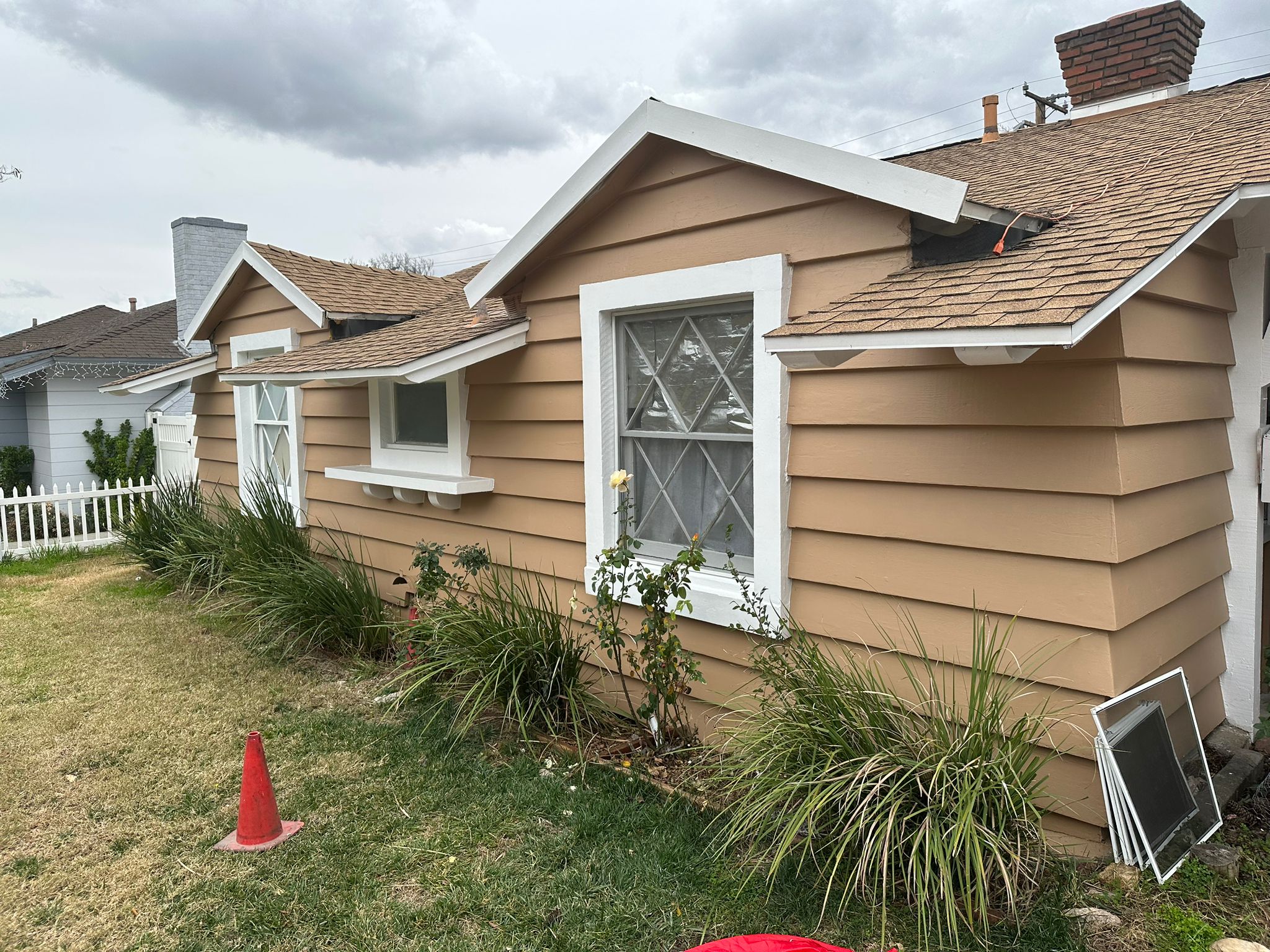
Neither finish is the waterproofing. Stucco relies on two layers of Grade D paper behind it in Los Angeles County’s climate zone, or one heavier layer with a drainage space, and on a weep screed at the bottom of the wall that lets trapped water out. The code sets that screed at least 4 inches above soil and 2 inches above paving. Siding relies on a continuous water-resistive barrier and flashing at every opening. That is why a repair on either one starts with what is behind the surface. When the damage is behind stucco, that work is stucco remediation.
Which fits your house
| If | What it points to |
|---|---|
| The home is in a wildland-urban interface area | Stucco is generally treated as noncombustible, which is on the code’s covering list; siding needs a labeled product or a wall built to one of the code’s fire-resistant methods |
| A wall is within 5 feet of the property line | Fire-resistance-rated construction either way, and siding there is outside the express permit |
| The existing stucco is sound | A new finish over it may be enough; see whether new stucco can go over old |
| The schedule is tight | Siding has no curing time; stucco cannot be rushed between coats |
| You want the look of boards or a mix of finishes | Siding, or siding on some walls and stucco on others |
How we handle it
Because we do both, the estimate does not have to argue for one. We handle siding repair and replacement in vinyl, wood and engineered wood, and stucco installation and stucco repair, and we check the permit route and any fire-area requirement for the address at the free on-site assessment.