A home needs rewiring when the wiring itself is a type that has aged badly or was flawed to begin with, not simply because the house is old. The two conditions that genuinely change the answer are knob and tube wiring, common in houses built before the 1950s, and solid aluminum branch circuit wiring, used in homes built or extended between roughly 1965 and 1973. Everything else on the usual warning list is a symptom worth investigating rather than a verdict.
That distinction matters because most advice on this subject leads with age. Plenty of Southern California houses are fifty years old, wired in copper, and entirely serviceable. Plenty of others look fine and have a condition in the walls that an electrician would want to see.
The two wiring types that actually decide it
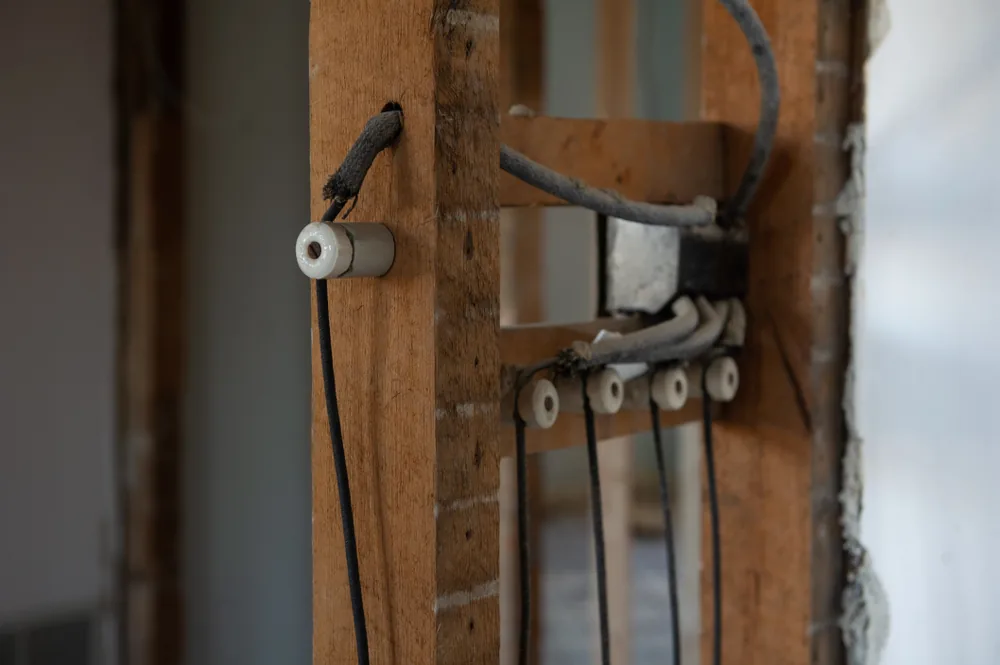
Knob and tube is the older of the two. It runs individual conductors through ceramic tubes and around ceramic knobs, with no ground conductor, and it was normal residential practice into the 1940s. The wiring itself can survive a long time; the problems come from the insulation growing brittle with age, from decades of amateur alterations spliced into it, and from the absence of a ground on circuits now feeding modern equipment. It also reacts badly to being buried in insulation, which is how insulation upgrades so often surface a wiring problem nobody was looking for.
Aluminum branch circuit wiring is the more surprising one, because the houses are newer. When copper prices climbed in the mid 1960s, solid aluminum conductor was substituted for copper on branch circuits. Aluminum expands and contracts more than copper as it heats and cools, and it forms an oxide layer at connection points, so the failure mode is at terminations rather than along the run: connections loosen, resistance rises, and the connection heats.
The Consumer Product Safety Commission’s finding is the one worth knowing. Homes wired with aluminum wire manufactured before 1972 are, in its words, 55 times more likely to have one or more connections reach Fire Hazard Conditions than a home wired with copper. The CPSC publishes an important qualifier alongside it, which most articles quoting the figure leave out: the survey behind it looked only at the wire connections at outlets, and did not cover other connection types and splices that can fail in the same way.
A pre-1965 house is not automatically clear
Homeowners tend to treat aluminum as a question about the year the house was built, and CPSC guidance says otherwise. Cable installed between 1965 and the mid 1970s turns up in additions and in circuits that were rewired during that period, not only in houses built then.
So a 1948 bungalow with a 1970 addition can have original knob and tube in one half and aluminum branch circuits in the other. That combination is common in Southern California housing stock and it is exactly the case that a quick look at the panel will not reveal.
Symptoms worth taking seriously
These do not diagnose the wiring on their own. They are the signals that make an inspection worth booking rather than deferring.
Breakers that trip repeatedly on the same circuit are reporting a real condition, either a genuine overload or a fault. Repeatedly resetting one is treating the alarm rather than the fire. Outlets or switch plates that feel warm, look discolored, or show scorch marks indicate heat at a connection, which is the aluminum failure mode precisely. A smell of hot plastic near an outlet or the panel should be treated as urgent.
Lights that dim noticeably when a large appliance starts point at circuit capacity or at a loose connection somewhere upstream. A mild shock or a spark when plugging something in is not normal. Buzzing or crackling from a wall, a switch or the panel is not normal either.
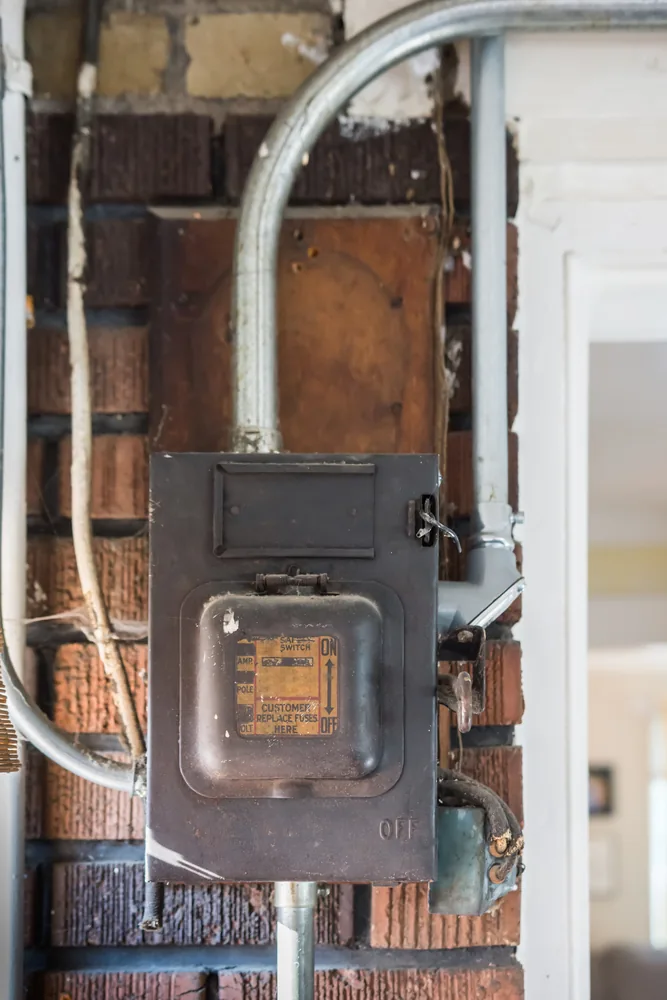
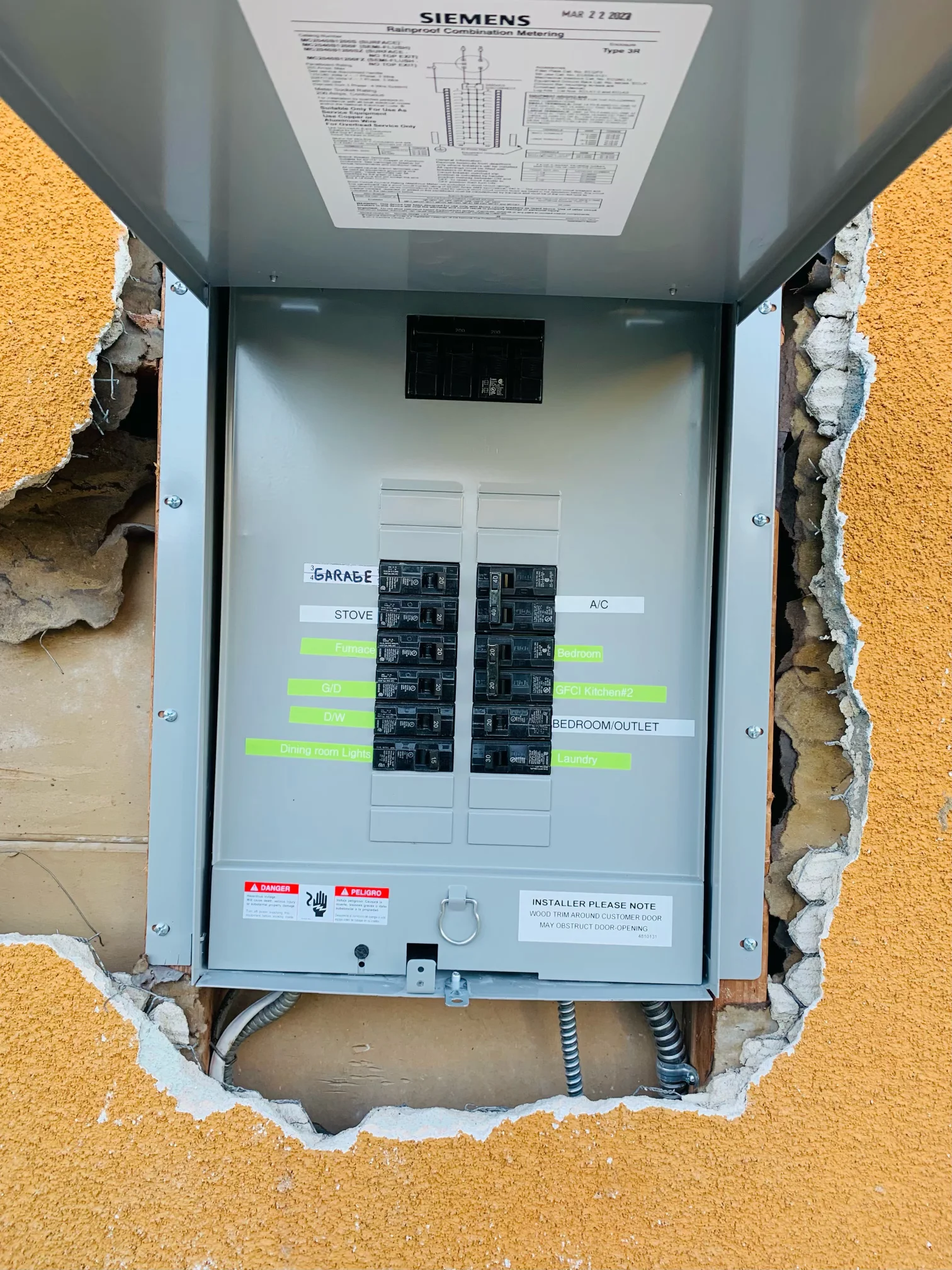
Two more are structural rather than electrical symptoms. Two-prong outlets throughout the house mean ungrounded circuits, which limits what can be safely plugged in. And a house running on a fuse panel rather than breakers is old enough that the wiring behind it deserves a look, whatever the panel’s own condition.
The project that finds the problem
Most rewiring conversations start somewhere else. A kitchen remodel, an added bathroom, an insulation upgrade, an electric vehicle charger or a heat pump all put load or attention on circuits that were adequate for a 1950s household and are not adequate now.
That is usually the sensible moment to deal with it. Rewiring is invasive because conductors run inside finished walls and ceilings, so the cost of access is a large part of the job. Doing it while walls are already open, or while an attic or crawl space is already being worked in, removes most of that. Whole home rewiring planned alongside work that is happening anyway is a very different project from rewiring as a standalone emergency.
It is also worth being clear that whole-house rewiring is not always the answer. Aluminum wiring in particular has recognized remediation approaches short of full replacement, and which one is appropriate depends on where the aluminum is and what it feeds. That is a decision for a licensed electrician who has actually opened the boxes, and CPSC is explicit that not every electrician is experienced with aluminum specifically.
What an inspection should establish
A useful inspection answers four questions. What type of wire is in the walls, and is it the same throughout. What condition are the terminations in, at outlets, switches and the panel. Is the service and panel capacity adequate for how the house is used now. And is any of the work unpermitted, since alterations made without inspection are where a lot of the genuinely dangerous conditions live.
Any work that follows requires a permit and an inspection. That is not a formality, and it is the part that protects the homeowner rather than the contractor: a signed-off permit is the record that the work was checked by somebody with no stake in the invoice.
The Consumer Product Safety Commission’s guidance on aluminum wiring, including its repair recommendations, is published as CPSC Publication 516.
Can a house be rewired without removing drywall?
Partly. New cable is fished through the wall cavities from above and below, using the attic and crawl space as routes, so the openings are small and targeted rather than whole sections of wall. Rewiring with no openings at all is rare. How many a house needs depends on how it was built.
| If the house has | What it means for the openings |
|---|---|
| One story with an accessible attic | Runs can be dropped from the attic into each wall cavity, so most openings are at the existing switch, outlet and fixture locations |
| A raised foundation with a crawl space | Cable can also come up from below, which helps reach first-floor outlets |
| A second story | First-floor walls cannot be reached from the attic, so runs usually need small openings where they cross the floor between stories |
| Fireblocking inside the walls | California code requires blocking in stud walls at every floor and ceiling level and at least every 10 feet horizontally. A cable cannot simply be fished past a block, so each one it has to cross is a likely opening |
| Plaster and lath walls | Harder to cut cleanly and patch than drywall, so each opening takes more care |
The openings stay open until the rough-in inspection passes, because the inspector has to see the new wiring before the walls are closed, and are patched after that. When a remodel is already opening walls, rewiring at the same time avoids opening them twice.
Frequently asked questions
At what age should a house be rewired?
There is no age at which a house should automatically be rewired. What matters is the wiring type and the condition of its connections. Copper cable installed from the mid 1970s onward is generally serviceable today, while knob and tube wiring from before the 1950s and solid aluminum branch circuit wiring from roughly 1965 to 1973 are the two conditions that commonly justify the work regardless of how the house looks.
What is considered an outdated electrical panel?
A fuse panel rather than a breaker panel is the clearest sign, and it usually indicates wiring of a similar vintage behind it. Beyond that, a panel is functionally outdated when its capacity no longer matches how the house is used, when it has no room for the circuits a modern household needs, or when it lacks the ground-fault and arc-fault protection required on current circuits. Some specific older panel makes and models are known problems in the trade and are worth identifying by name during an inspection.
Can I upgrade my electrical panel without rewiring my house?
Usually yes. A panel upgrade and a rewire are separate projects, and replacing a panel or increasing service capacity does not require replacing the branch circuits behind it. The limit is that a new panel does not improve the wiring it feeds. If the branch circuits are knob and tube or aluminum, a larger panel supplies more capacity to conductors and connections that were the actual concern.
Can a house be rewired without removing drywall?
Partly. Experienced electricians can fish new cable through wall cavities, attics and crawl spaces with limited openings, particularly in single-story houses with accessible attic space. Complete rewiring with no wall damage at all is rare. What is realistic is a plan that concentrates the openings where they are cheapest to repair, which is one of the reasons rewiring is far less disruptive when it happens alongside a remodel that was opening walls anyway.
Does aluminum wiring always mean the house has to be rewired?
No. Aluminum branch circuit wiring is a condition to assess rather than an automatic replacement, and recognized remediation methods exist that address the connections rather than replacing every run. Which approach is appropriate depends on where the aluminum is, what it feeds, and the condition of the terminations. The Consumer Product Safety Commission notes that not every licensed electrician is trained in aluminum wiring specifically, so it is worth asking about that experience directly.
What will a home inspector flag?
Knob and tube wiring and aluminum branch circuit wiring are both conditions home inspectors routinely identify and report, along with ungrounded two-prong outlets, fuse panels, visible unpermitted alterations and heat damage at outlets or in the panel. Because these appear in inspection reports during a sale, they tend to become a negotiation point, which is a practical reason to understand the condition of a house’s wiring before it is under contract rather than after.